Aluminium and uPVC Windows and Doors Maintenance Guide: Cleaning, Hardware Care and Long-Term Performance
- Share
- publisher
- ROPO Windows
- Issue Time
- Sep 20,2026
Summary
Windows and doors are sold as low maintenance, but the parts that decide how long they last — seals, drainage slots, rollers and locking points — still need a few minutes of attention each year. This guide explains how to clean glass, aluminium frames and uPVC profiles safely, how to care for handles, hinges and sliding gear, how to check gaskets and drainage, what changes in coastal and high-humidity locations, and a simple yearly routine that keeps performance and warranty cover intact.
Why "Low Maintenance" Is Not "No Maintenance"
Aluminium and uPVC are the two most common window and door materials in the world for one simple reason: they do not rot, they do not need repainting, and they keep working through weather that destroys timber. That is a genuine advantage, and it is also where a misunderstanding starts. "Low maintenance" does not mean "nothing to do". It means the work is small and infrequent rather than large and constant, and the work that matters is rarely the part people notice.
Glass gets cleaned because dirt is visible. The parts that actually decide how a window performs ten years after installation are invisible from the sofa: the compression gasket that seals the opening sash, the drainage slots that let water out of the frame, the rollers carrying a sliding panel, the hinges holding a door leaf, and the locking points that pull everything tight. When those are neglected, the symptoms are predictable. Handles stiffen until someone forces them. A door drops until it scrapes the sill. A sliding panel starts to drag and needs a shoulder to move. Water appears in the bottom track after heavy rain. None of these are manufacturing faults; all of them are avoidable, and almost all of them can be fixed with a cloth, a soft brush and a small amount of silicone spray.
The routines in this guide apply to both materials, and the same systems are used across residential and project work in the custom windows and doors built to a specification range and the matching custom doors for residential and commercial projects. Where uPVC and aluminium need to be treated differently, the difference is called out — and in practice it is a small part of the job.
There is also a commercial reason to keep up with it. Maintenance conditions sit inside most product warranties, and a window that has been cleaned and adjusted as intended is far easier to argue about than one that has not. The cover provided per product is set out in the window and door warranty list, and it is worth reading once, at handover, rather than during a claim.
Cleaning Glass, Frames and Tracks Safely
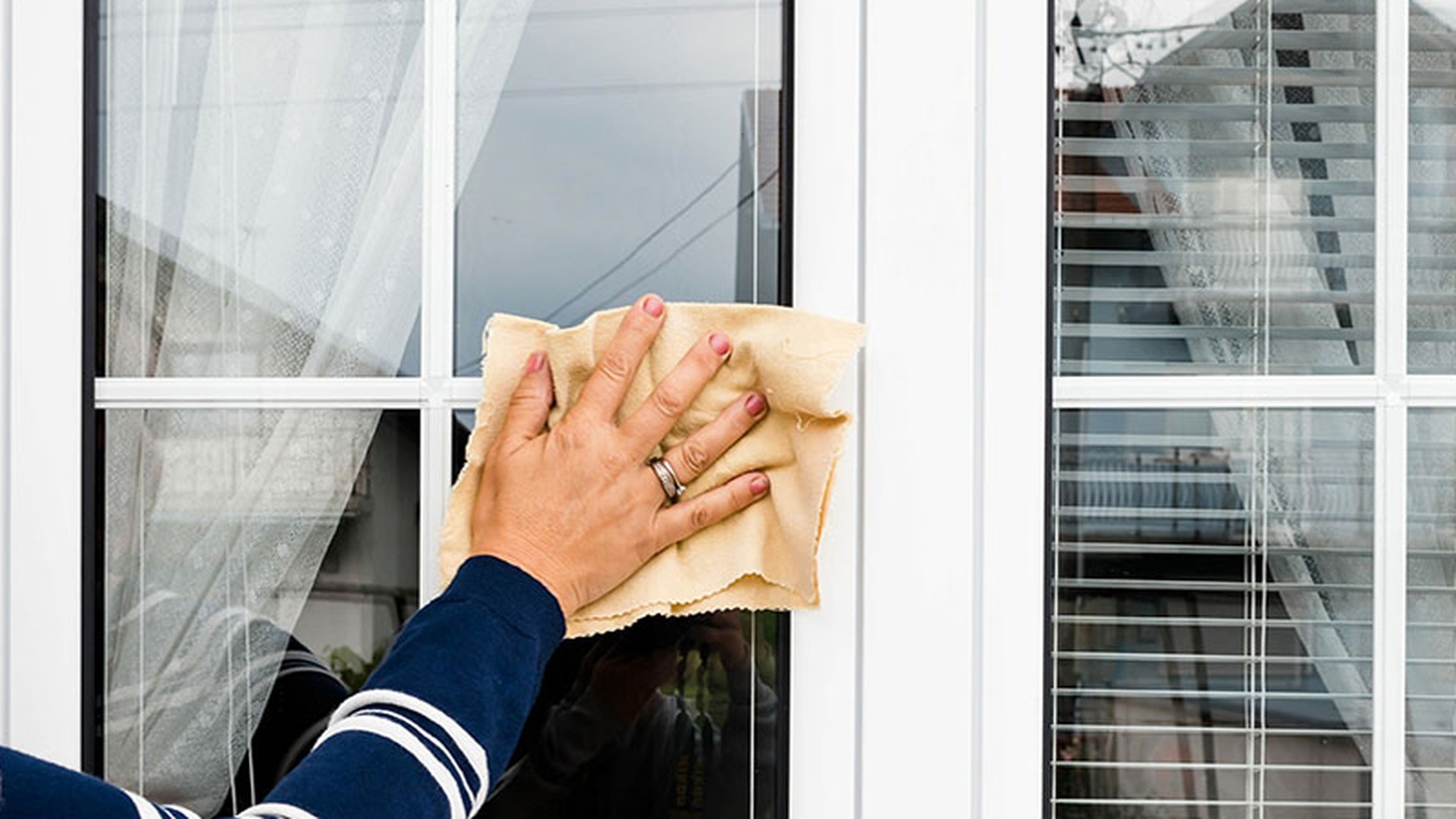
Most damage done to windows during cleaning is caused by the cleaning itself: abrasive pads on a coated frame, solvent on a gasket, a scraper on a coated glass surface, or a pressure washer aimed at a drainage slot. The safe method for all three surfaces is a mild soap solution, a soft cloth or sponge, clean water and a squeegee — plus the discipline to remove aggressive or abrasive deposits quickly instead of scrubbing them later.
Glass and coated panes
Wash glass with a mild detergent in warm water, using a soft cloth or a dedicated window sponge, then squeegee or wipe dry to avoid spotting. Avoid abrasive powders, scouring pads and steel wool, which leave permanent scratches; avoid strong solvents and ammonia-based products on laminated or coated glass; and avoid cleaning glass that is hot from direct sun, because the solution dries before it can be rinsed. Low-E coatings sit inside the sealed unit, so they are protected from normal cleaning, but the outer face of the pane is still a surface and should be treated as one. Sealed units, laminated and toughened options and the coatings available per system are set out in the glass and glazing options pages, which is worth a look before choosing a cleaner for a coated product.
Aluminium and uPVC frame surfaces
Aluminium frames should be washed with the same mild soap solution and a soft cloth, rinsing well so no detergent residue is left behind. The powder-coated finish is durable but not indestructible: do not use abrasive cleaners, solvents, bleach-based products or metal scrapers on it, and remove mortar splashes, cement dust and bird droppings promptly, because these are alkaline or acidic and will mark a coating if they are left to sit. Powder-coated surfaces supplied as part of the thermally broken aluminium window systems range are finished for external exposure, and washing them periodically also protects the coating's ability to shed salt and pollution.
uPVC profiles need even less. A soft cloth, warm water and a mild detergent are enough, and there is no finish to protect — the colour is in the material, so there is nothing to peel, chip or repaint. The one detail worth remembering is that uPVC should not be cleaned with solvent-based products, paint thinners or aggressive cream cleaners, since these can dull the surface, and abrasives should be avoided on woodgrain-laminated profiles in particular. The full range of colours and finishes, including dual-colour profiles, is described under uPVC material and colour options.
Tracks, drainage slots and hidden channels
Tracks are where cleaning quietly becomes maintenance. Grit carried in by wind and shoes collects in the bottom track of a sliding door, in the channel behind a sliding sash and in the drainage slots that discharge water to the outside. A dry paintbrush or vacuum crevice tool removes loose grit, then a damp cloth finishes the job. What must not happen is water being pushed into a slot with a hose, painting over a slot, or silicone being applied to a track in the hope of making a panel slide more easily; a blocked drainage path simply relocates the water problem into the building. Assembly and configuration details for the systems supplied are collected in the technical documents and product catalogues library, which is the right place to check how a specific frame is meant to drain.
Hardware Care: Handles, Hinges, Rollers and Locks
Hardware is the most heavily used part of any window or door and the cheapest part to look after. Almost every hardware complaint — a handle that feels tight, a door that needs lifting to lock, a slider that feels heavy — traces back to either loose fixings or a moving part that has not been lubricated since installation.
Handles and locking points
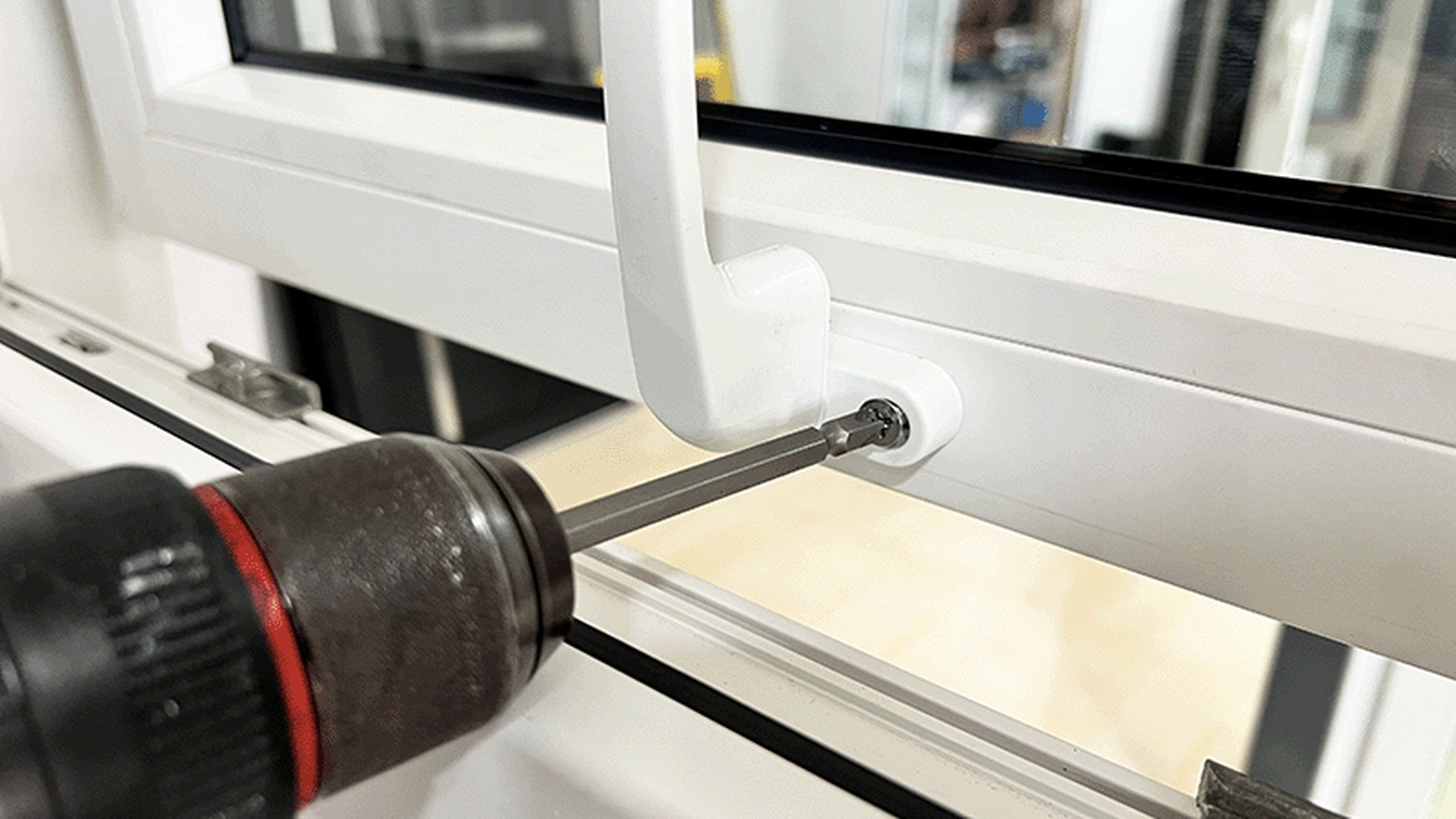
Check handle fixings twice a year and tighten them gently if they have worked loose, taking care not to overtighten into a profile. Lubricate the moving parts of the handle and the locking mechanism with a small amount of silicone spray or light machine oil, working the handle through its full travel afterwards; multi-point locks respond well to this because the espagnolette and the locking cams have several points that all have to move together. Avoid thick greasy products that attract dust, and avoid oil on the gasket rather than on the mechanism. What can be fitted per system, and the hardware specified as standard, is described in the window and door accessories and hardware range and in the hardware and fittings range.
Hinges and friction stays
Hinges carry the weight of the leaf, so their fixings and pivot points deserve attention before a door starts to drop. Check that hinge screws are tight, lubricate the pivot points sparingly, and watch for the early signs of movement: a corner of the leaf touching the frame, a widening gap at the top, or a lock that needs the door to be pulled before it engages. Friction stays on top-hung and side-hung sashes benefit from the same treatment, with the additional check that the sash still holds position without being forced. Most hinge problems are adjustment problems rather than wear, and manufacturers normally provide a documented adjustment range for each hinge type.
Rollers, tracks and lift-and-slide gear
Sliding panels run on rollers, and rollers do not fail suddenly. They stiffen gradually as grit builds up on the track and the roller surface, and they lose height as a panel settles. Clean the track first, lubricate the roller carriage with a silicone-based product, and adjust the roller height in small increments if the panel is dragging at the ends of its travel or if the sash no longer compresses the seal against the frame. Lift-and-slide panels deserve a specific reminder: the panel is meant to be lifted off its seal before it slides, and the mechanism should be allowed to do that work rather than being forced. Full details of the systems available, including the sliding and lift-and-slide doors built for wide openings, are set out under custom windows and doors built to a specification.
Seals, Gaskets and Drainage: The Parts That Decide Performance
A window is a system, and the elements that make it airtight, watertight and quiet are the soft parts: compression gaskets around the sash, glazing gaskets around the glass, brush seals and wipers on sliding panels, and the drainage path inside the frame. They are also the parts that age first, which is why checking them once a year is more valuable than cleaning the glass twice a month.
Gaskets and compression seals
Wipe gaskets with warm water and a soft cloth, without solvents or silicone-based furniture polish, both of which can soften or harden the wrong rubber. Look for the two conditions that mean replacement rather than cleaning: gaskets that have hardened and no longer spring back when pressed with a fingernail, and visible gaps or separations at the corners of the sash, where most air and water leaks begin. A gasket that has shrunk away from a corner will not seal, however firmly the handle is turned; the fix is a replacement length, not more force on the lock.
Drainage, ventilation and pressure equalisation
Frames are designed so that any water driven past the outer seal drains out through slots in the frame, rather than collecting inside. Those slots work only while they are clear and while the internal baffles that stop wind-driven rain from entering are intact. Cleaning them during the annual wash is enough in most locations; a coastal or dusty environment may need it more often. Water sitting in a bottom track after rain, damp patches below a sliding door, or a musty smell near a frame are all symptoms worth investigating early, because the underlying cause is usually a blocked slot or a failed gasket rather than a structural fault. Answers to the questions buyers ask most often about seals, spare parts and adjustments are collected in the window and door ordering and care FAQ.
When to replace rather than clean
Seals, gaskets and rollers are wear items, and treating them as serviceable parts is what keeps a window working for decades. Replace rather than repair when a gasket has hardened, when a brush seal has lost its pile, when a roller has flat-spotted, or when repeated adjustment can no longer bring a sash into contact with its seal. Because these parts are specific to a system, the right approach is to identify the system and order the matching component, which is also why keeping the original order documentation is worth the small effort at handover.
Maintenance in Coastal and High-Humidity Climates
A window installed four hundred metres from the sea ages differently from one installed inland, and the difference is almost entirely about salt. Airborne salt is carried onto every exposed surface, where it holds moisture against hardware and fixings and accelerates corrosion on anything made of steel. It also dries on glass as a film that is far harder to remove once it has baked on in the sun.
What changes near salt water
The routine stays the same; the frequency increases. Rinsing frames, hardware and glass with fresh water is more valuable than a thorough annual clean, because it removes the salt before it can do anything. Stainless steel hardware is the sensible specification for coastal work, and the same logic applies to fixings: the frames will outlast a poor-quality screw by a decade. Where a project is exposed to wind-driven rain or storm conditions, the drainage path deserves the closer look, which is the design intent behind the hurricane impact window systems built for high wind-load markets.
How coastal and coastal-adjacent projects actually behave
Projects delivered into saline and storm-exposed locations are a useful reference point, because they show what survives a decade of use rather than a season. Installations in the Caribbean area projects and the United States project installations were specified for exactly these conditions, and the maintenance pattern that keeps them performing is unglamorous: fresh-water rinsing, clean drainage, lubricated hardware and gaskets checked before the storm season rather than after it.
Humidity indoors
High indoor humidity matters as much as salt. Condensation on glass is normal in cool weather and is a ventilation question rather than a window fault, but persistent moisture on frames and around gaskets encourages mould in the seal around a poorly ventilated room. The practical answer is ventilation, not stronger cleaning: open the window in the way it was designed to be opened, keep trickle vents clear where they are fitted, and treat recurring mould on a gasket as a signal to check both ventilation and the seal itself.
A Simple Yearly Maintenance Routine
The work below takes very little time on a single house and can be built into a project maintenance plan without a specialist. It is deliberately split into a season-by-season pattern, so that nothing important depends on remembering it.
| When | What to do | Why it matters |
|---|---|---|
| Two or three times a year | Wash glass, frames and external sills with mild soap and water; rinse well | Removes the deposits that mark coatings and bake onto glass |
| Two or three times a year | Brush or vacuum tracks, channels and drainage slots; wipe with a damp cloth | Keeps panels running freely and lets water drain out of the frame |
| Twice a year | Check and gently tighten handle and hinge fixings; lubricate handles, locking points and pivots | Prevents stiff operation, dropped leaves and forced locking |
| Once a year | Inspect gaskets and brush seals for hardening, shrinkage and corner gaps | Catches the air and water leaks that cleaning cannot fix |
| Once a year | Check sliding panels and lift-and-slide gear for drag, and adjust roller height if needed | Correct height keeps the seal compressed and the panel easy to move |
| Once a year, before storm season | Rinse exposed frames, hardware and glass with fresh water; re-check drainage | Removes salt before it corrodes hardware and fixings |
| After any major works | Remove dust, mortar and paint splashes from frames and glass; keep slots clear | Construction residue is the most common cause of a blocked drainage path |
Two documents make the routine easier to keep: the warranty terms, which record what is covered and what the care expectations are, and the technical documentation for the systems installed, which identifies the correct replacement parts. The cover supplied per product is summarised in the window and door warranty list, and the test and compliance documentation behind the systems is explained on the quality certificate and test report page. A homeowner can safely clean, inspect and lubricate everything described here; adjustment and replacement are worth leaving to a competent fitter when the window is under warranty.
About ROPO Windows
ROPO is a custom windows and doors manufacturer based in Fuzhou, Fujian Province, China, with 16 years of experience in bespoke window and door production. The factory ships to clients in more than 100 countries and regions and works to a simple operating philosophy that the whole team follows: "Do what we say we are gonna do."
For owners and buyers, what that means in practice is that the details a maintenance routine depends on are decided at production, not after it. Hardware is fitted by trained operators rather than assembled on site, glazing gaskets and drainage paths are part of the manufactured frame, and every completed unit carries a barcode so its production history can be traced by the order it was built against. Products are manufactured and tested to recognised standards including AS2047 and NZS4211 for Australia and New Zealand, and Miami-Dade approval is available for hurricane-rated projects. A minimum order quantity of one piece means a single sample window or door can validate a design before a larger order is placed, and every order is backed by a 10-year warranty. Company and factory details are on the ROPO Windows factory profile page, and buyer protection covering product quality, on-time shipment and payment is described under Trade Assurance protection for window and door orders.
Custom Production Process
Maintenance is easier to plan when the production sequence is known, because it explains which parts can be adjusted on site and which are fixed at the factory. Every order follows the same workflow, whether it is a single sample unit or a full project release:
- Design confirmation - opening dimensions, system, colour, glass build-up, hardware and handing are reviewed and confirmed in writing before production starts, and that approved specification becomes the reference for the unit that arrives on site.
- Profile preparation - profiles are cut and machined on CNC equipment, thermal breaks and internal reinforcement are set in place, and frames and sashes are assembled and welded to the approved layout.
- Hardware and glazing - multi-point locks, hinges or rollers and the specified glass unit are fitted and sealed by trained operators, which is why adjustment points are accessible later and why the right lubricant reaches the right part; the window and door accessories and hardware range lists what can be specified per system.
- Five-step quality control - order review before any material is cut, incoming inspection of raw materials, inspection of semi-finished products, finished product inspection, and a final inspection report issued before packing. The stages that matter most for long-term performance are the material inspection and the finished product check on operation and sealing; the factory production and inspection videos show the assembly and testing stages as they run.
- Documents and traceability - test reports, compliance certificates and packing documentation are prepared for each order, and every unit is barcoded so its production record can be traced from the installation back to the batch.
Because the specification is agreed in writing and held against the order, a replacement gasket or roller years later is a matter of identifying the original configuration rather than matching something visually similar.
Packaging and Shipping
Units travel from Fuzhou to clients in more than 100 countries, so packaging is treated as part of the product rather than a cost to be minimised. Frames are protected with sturdy timber crating and corner guards, glass surfaces are covered with protective film, and loose hardware is packed separately where needed so it cannot damage a unit in transit. The protective film is worth leaving in place until installation, because it protects the frame and glass through the dirtiest stage of any project, after which it strips away cleanly.
ROPO ships from the ports of Fuzhou and Xiamen by sea, with full container and shared LCL options, so a small order and a project release can both be shipped without waiting for a full container. Lead time is managed through a system rather than a promise: profile and hardware inventory is kept in stock, and orders are followed up at every production stage, which is also what makes it practical to order a spare roller or gasket alongside a later shipment instead of arranging a small international parcel.
To take the next step, send your opening sizes, quantities, system, glass build-up, colour and hardware preferences together with the destination port, or ask for advice on the specification that suits your climate. That is enough to come back with a quotation and the documentation that supports it. Start with the quick selection and quotation form for a free price, send your window and door inquiry or contact the ROPO export team directly, and read more sourcing and technical guides on the ROPO windows and doors blog.