CodeMark Certified Windows and Doors in New Zealand: Fully Compliant & Council-Approved
- Share
- Issue Time
- Aug 2,2025
Summary
Official guide to CodeMark certified windows and doors in New Zealand. Explore mandatory Building Act Section 273 council consent acceptance, NZBC H1 and E2 compliance, and factory-direct supply.

Navigating building consents in New Zealand requires absolute certainty in product compliance, weathertightness engineering, and thermal insulation. For property developers, architectural specifiers, and licensed building practitioners (LBPs), specifying CodeMark certified windows NZ on custom architectural joinery provides an unquestionable legal pathway to compliance across all territorial authorities, from Auckland Council to Christchurch City Council. Obtaining a verified code mark on custom fenestration ensures immediate council approval and eliminates the risk of costly consenting delays. Under Section 273 of the New Zealand Building Act 2004, a certified product is legally deemed to satisfy the mandatory provisions of the New Zealand Building Code (NZBC). Offshore manufacturing partners holding registered CodeMark certified windows and doors with verified nz number documentation provide absolute regulatory certainty. Achieving authentic window certification under the Joint Accreditation System of Australia and New Zealand (JAS-ANZ) guarantees that every unit from an accredited CodeMark certified window manufacturer meets rigorous structural, durability, and energy-efficiency standards before leaving the factory floor. CodeMark is an unchallengeable third-party product certification scheme managed by the Ministry of Business, Innovation and Employment (MBIE) in New Zealand. By statute under Section 273 of the Building Act 2004, all Building Consent Authorities (Councils) must accept a valid codemark certificate as conclusive evidence that the specified NZBC compliant windows and doors satisfy the performance mandates of the New Zealand Building Code. Holding an active CodeMark product certificate windows schedule covers structural wind loadings under NZS 4211 (including Extra High and ULS 2500Pa+ wind zones), external moisture weathertightness under NZBC Clause E2/AS1, material durability under Clause B2 (15-year and 50-year mandates), and the latest thermal performance limits under NZBC Clause H1 (5th Edition energy efficiency requirements achieving Uw ≤ 1.20 W/(m²·K) with double glazed windows CodeMark NZ specifications). In New Zealand's rigorous regulatory landscape, building consent officers evaluate window and door schedules against stringent performance criteria. Non-certified imported joinery typically requires project-specific Alternative Solution documentation, including costly Producer Statements (PS1 from structural engineers) and peer-reviewed laboratory test reports. This process often introduces 8 to 16 weeks of project downtime and thousands of dollars in consulting fees. In contrast, specifying CodeMark windows building consent NZ documentation alongside certified thermally broken aluminium windows and architectural systems completely streamlines the consenting pipeline. Because the scheme involves continuous factory audits, quality management system (QMS) surveillance, and batch-traceable raw material testing, BCAs cannot legally challenge or reject compliant designs on the basis of product performance. When specifying CodeMark windows New Zealand projects, architects and building designers must match proposed joinery directly against the certified model identifiers listed on CodeHub and the MBIE Te Pae register for both CodeMark certified uPVC windows NZ and CodeMark certified aluminium windows NZ: Understanding the distinction of CodeMark vs NZS 4211 is crucial for consenting success. While standard NZS 4211 windows certification provides essential laboratory physical test evidence for air, water, and structural deflection, a CodeMark certificate provides comprehensive statutory compliance across all relevant Building Code clauses. To successfully pass council inspections across both the North Island and South Island, exterior joinery must satisfy four core performance clauses of the NZBC: When builders and project managers inquire about how to get windows approved by council NZ with zero friction, partnering with authorized CodeMark window suppliers NZ ensures a seamless pathway through the following structured workflow between the project designer, builder, and ROPO engineering team: Confirm the certificate number (CMNZ25015 for uPVC / CMNZ25009 for Aluminium), certificate holder (ROPO), listed version, and active status on the public register. Provide the architectural window schedule. ROPO assigns exact model identifiers (e.g., ROPO70 TT, AD70 AW) to each tag, verifying maximum dimensions and wind exposure limits. Integrate ROPO's CAD technical manuals showing E2/AS1 compliant head flashings, jamb liners, sill trays, and pre-primed H3.2 LOSP timber reveals directly into council submission drawings. If non-listed configurations (such as oversized commercial stacking sliders or triple-glazed specialty acoustic units) are required, establish an agreed compliance pathway with the BCA upfront. Inspect delivered crated joinery against the approved schedule, verify factory-applied compliance labels, maintain installation sign-off records, and hand over the warranty pack for Code Compliance Certificate (CCC) issuance. Different project participants require specific documentation during procurement and execution: Request itemized model schedules, full CodeMark certificates, CAD cross-sections, and ISO 10077 thermal calculation summaries to validate NZBC Clause H1 compliance across all climate zones. Align opening schedules with rough opening allowances (RO +10mm to +15mm), confirm reveal depths (100mm, 138mm, 150mm), and coordinate crane unloading and delivery sequencing. Build commercial quotations around exact certificate model codes, obtain authorized technical manuals, and access verified export logistics support. Beyond standard residential casements and awnings, modern New Zealand architectural developments require high-spec commercial door systems, passive house fenestration, and hygiene-controlled specialty closures. In commercial food processing facilities, cleanrooms, and institutional projects throughout the North and South Islands, contractors require heavy-duty certified commercial entrance doors, including fully sealed haccp compliant doors nz designed to maintain air pressurization, withstand rigorous chemical washdowns, and prevent bacterial harboring. For regional project teams comparing regional supply hubs—such as regional joinery options around brookland aluminium timaru or major metropolitan distributors in Auckland and Tauranga—direct factory partnership provides bespoke extrusion flexibility, custom powder-coat finishes (Interpon D2525 / Dulux Duratec with 25-year coastal warranties), and fully integrated European hardware without multi-tiered local distribution markups. ROPO's window and door systems have been successfully specified, delivered, and installed across diverse residential and commercial developments throughout New Zealand: Delivered energy-efficient multi-chamber uPVC tilt & turn windows and sliding door systems engineered for South Island sub-zero winter temperatures, achieving optimal thermal comfort and acoustic insulation. Supplied bespoke architectural thermally broken aluminium window and door packages featuring heavy-duty commercial entrance doors, pre-installed H3.2 LOSP timber reveals, and Extra High wind zone performance. Achieving seamless site installation in New Zealand requires precise coordination from structural CAD shop drawing approvals to sea freight moisture protection. When specifying custom architectural joinery, building professionals benefit from deep manufacturing insights: While CodeMark is not the only pathway to compliance, it is the only one with mandatory statutory acceptance under Section 273 of the Building Act 2004. Without CodeMark, imported windows must be evaluated as an "Alternative Solution," requiring expensive independent engineering calculations (PS1) and laboratory testing that can significantly delay building consent issuance. No. Under New Zealand law, Building Consent Authorities (Councils) must accept a valid CodeMark certificate as proof of compliance with the NZBC clauses specified on the certificate, provided the product is installed within the certified scope and conditions. Our CodeMark certified window systems feature advanced thermal break profiles and warm-edge double-glazed Low-E insulated glass units (IGUs) filled with 90% argon gas. This engineering achieves overall window U-values as low as Uw ≤ 1.15 W/(m²·K), easily exceeding the minimum Uw ≤ 1.20 mandate across all 6 climate zones. Yes. We pre-install factory-machined, pre-primed H3.2 LOSP treated pine reveals (standard widths of 116mm, 138mm, or custom architectural depths) directly to the window frames using stainless steel fasteners, allowing immediate direct installation into standard timber framing on site. We provide a comprehensive documentation pack including the official CodeMark Certificate, product technical manual, CAD installation details, glass compliance certificates (AS/NZS 2208 / AS 1288), and a manufacturer's warranty certificate for seamless sign-off by your Council building inspector. Standard fabrication takes 4 to 6 weeks from final shop drawing sign-off. Ocean shipping to major ports (Auckland, Tauranga, Lyttelton, Napier) takes approximately 18 to 25 days. All products are packed in heavy-duty steel-reinforced plywood crates with direct crane-unloading capabilities. Upload your architectural window schedule or project drawings to receive a fully itemized, CodeMark-compliant factory quote with full NZBC thermal and structural calculations.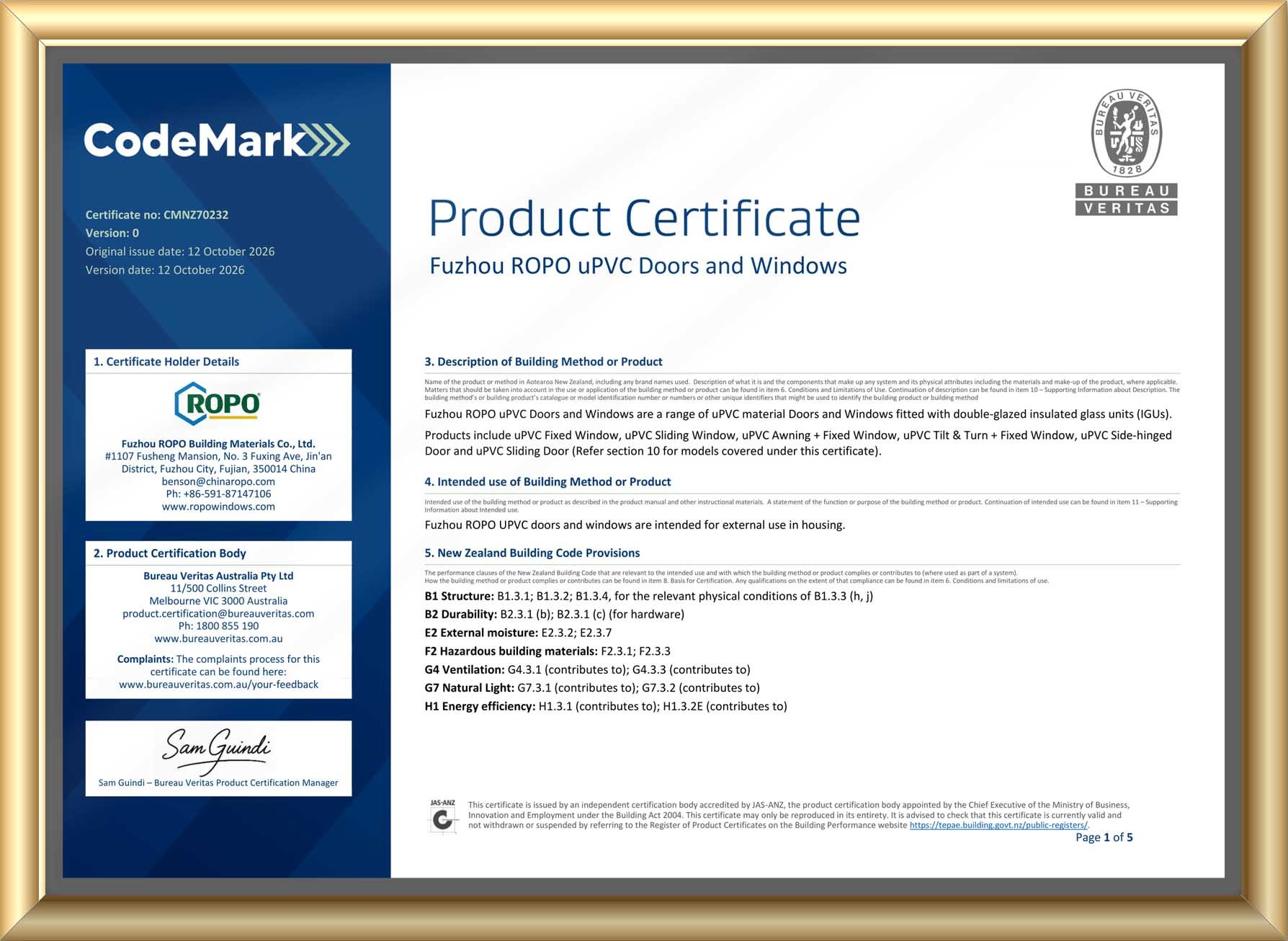
CodeMark Certificate CMNZ70232 (uPVC)
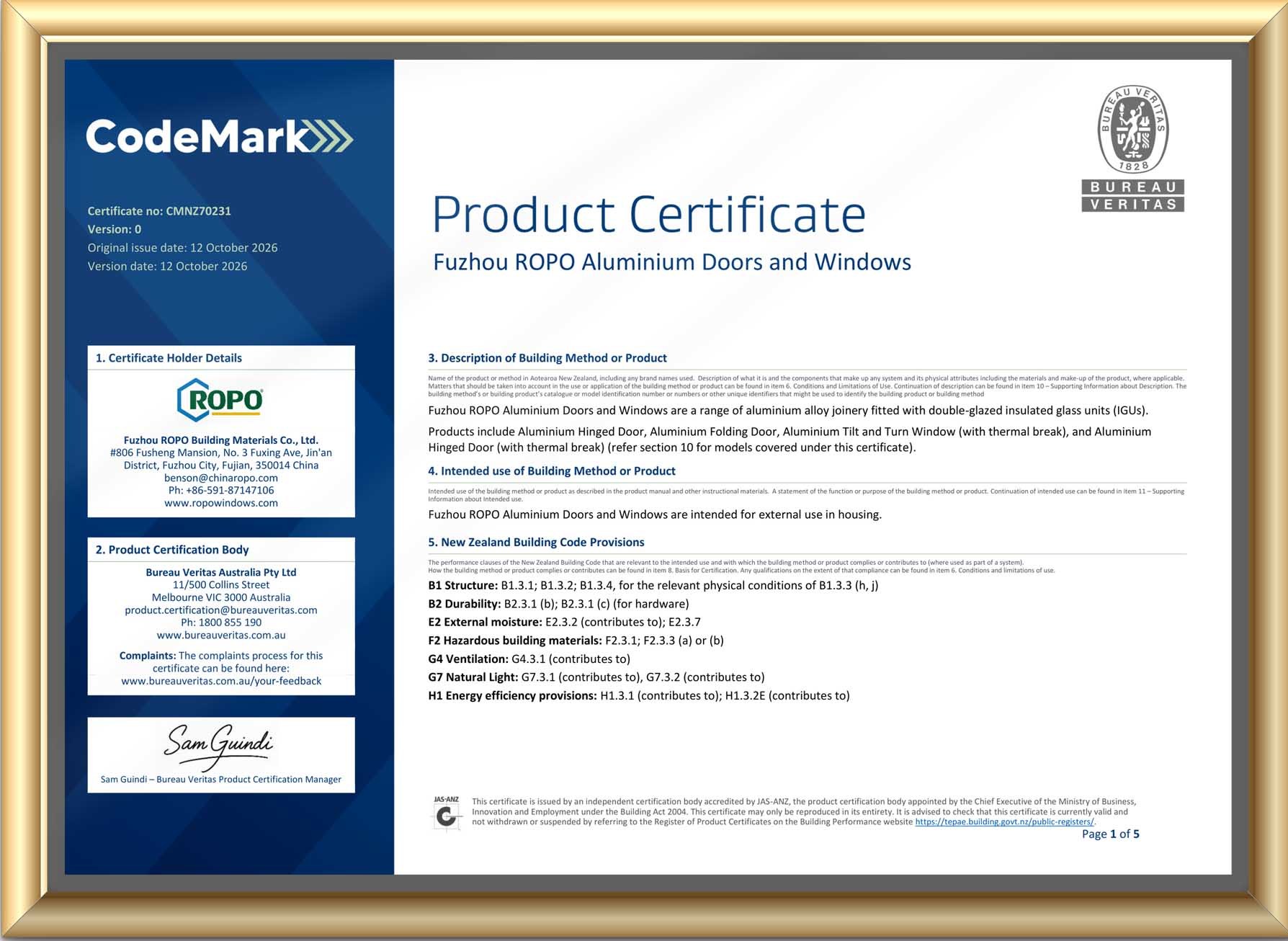
CodeMark Certificate CMNZ70231 (Aluminium)
Objective Engineering Summary: What is CodeMark Certification for New Zealand Fenestration?
Legal Framework: Why CodeMark Windows Streamline Building Consents in NZ
Evaluation Parameter
CodeMark Certified Joinery (ROPO)
Non-Certified Imported Windows
Traditional Local NZ Fabricators
Council Acceptance Mechanism
Mandatory statutory acceptance under Section 273 (Zero BCA objection)
Requires Alternative Solution review, engineering PS1 & ad-hoc tests
Pre-approved through local trade association channels
Consenting Approval Speed
Immediate sign-off within standard consent processing window
High risk of Council RFIs (Requests for Information) and 4-12 week delays
Standard consenting timeline
Procurement Cost Efficiency
30% - 50% savings via direct-to-factory precision manufacturing
Moderate direct savings, but high consultant and compliance overhead
High retail markups and local fabrication labor premiums
Quality Assurance & Auditing
Continuous JAS-ANZ accredited third-party factory inspections & batch testing
Unverified factory declarations without independent ongoing audits
Spot checks and standard workshop quality control
Lead Time & Project Scale
6 - 8 weeks scheduled production with global export crating
Variable lead times with high risk of non-conforming arrivals
16 - 24+ weeks during peak regional construction seasons
ROPO CodeMark Certificate & Model Specification Schedule
Certificate Ref
Model Identifier
Product Configuration
Profile & Material
Certified Wind Zone Limit
CMNZ70232
(uPVC Systems)ROPO AD70 FW
uPVC Fixed Window
70mm Multi-Chamber uPVC
Up to Extra High (NZS 4211)
ROPO SS70 SW
uPVC Sliding Window
70mm Multi-Chamber uPVC
Up to Very High
ROPO AD70 AW
uPVC Awning + Fixed Window
70mm Multi-Chamber uPVC
Up to Extra High
ROPO AD70 TT
uPVC Tilt & Turn + Fixed Window
70mm Multi-Chamber uPVC
Up to Extra High
ROPO AD70 HD
uPVC Side-Hinged Door
70mm Multi-Chamber uPVC
Up to High / Very High
ROPO SS90 SL
uPVC Sliding Door
90mm Heavy-Duty uPVC
Up to Very High
CMNZ70231
(Aluminium Systems)ROPO70 TT
Thermally Broken Tilt & Turn Window
70mm 6063-T6 Architectural Alloy (PA66)
Extra High (ULS ≥ 2000 Pa)
ROPO115 HD
Thermally Broken Hinged Door
115mm Heavy Commercial Profile (PA66)
Extra High
ROPO100 HD
Aluminium Hinged Door
100mm Commercial Grade Aluminium
Extra High
ROPO100 FD
Aluminium Folding Door (Bifold)
100mm Architectural Folding System
High Wind Zone
New Zealand Building Code (NZBC) Performance Mandates: CodeMark vs NZS 4211
NZBC Clause & Standard
Regulatory Performance Threshold
ROPO Certified Engineering Specification
Verification Document
NZS 4211 / Clause B1
Wind Zones: Low to Extra High (ULS ≥ 2000 Pa)
Heavy-duty 6063-T6 architectural alloy; ULS tested up to 2500+ Pa
Accredited Test Report & CodeMark Schedule
Clause E2 / AS1 & VM1
Water penetration resistance at 450 Pa - 600 Pa cyclic pressure
Multi-chamber internal baffles, continuous EPDM gaskets & stepped sub-sills
Dynamic Weathertightness Chamber Test
Clause H1 (5th Edition)
Housing & Small Buildings: Uw ≤ 1.20 W/(m²·K)
Polyamide PA66 thermal breaks with dual/triple Low-E argon (Uw ≤ 1.15)
Thermal Simulation (LBNL THERM / ISO 10077)
NZS 4223 / AS 1288
Safety glazing in human impact zones & commercial doors
Grade A toughened or laminated safety glass with customized interlayers
Glass Processing Compliance Certificate
How to Get Windows Approved by Council NZ: Practical 5-Step Protocol
Verify Current Registration on MBIE Te Pae
Map Every Opening to Certified Model Identifiers
Coordinate Installation & Cavity Interface Details
Identify & Resolve Non-Standard Configurations Early
Site QA, Delivery Inspection & CCC Sign-Off
Tailored Evidence Checklist for Project Stakeholders
Architects & Specifiers
Builders & Developers
Joinery Distributors
Specialized Architectural Fenestration & Regional Supply Considerations
Published New Zealand Project Case Studies: Proven Local Performance
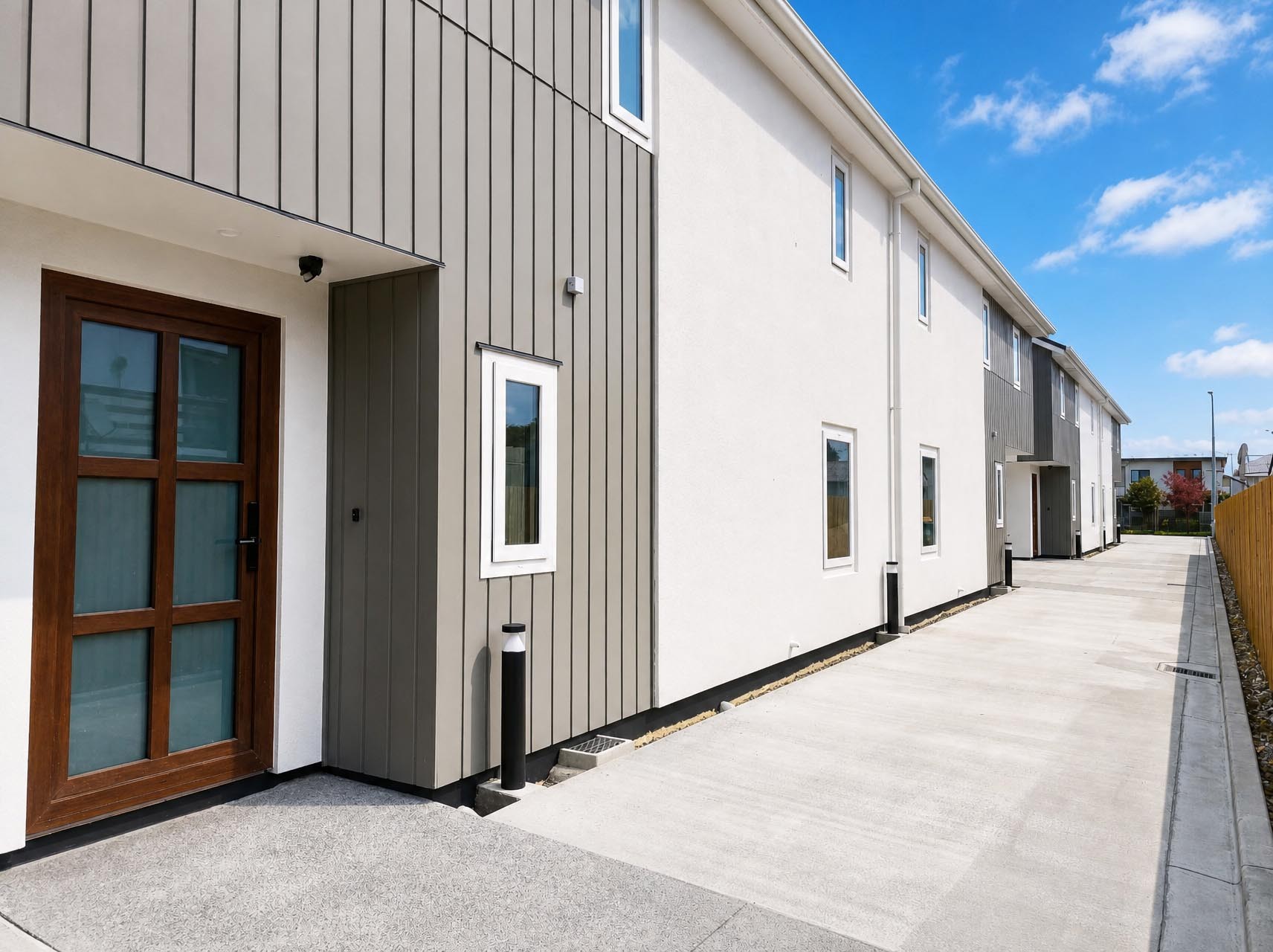
High-Performance uPVC Townhouse Development
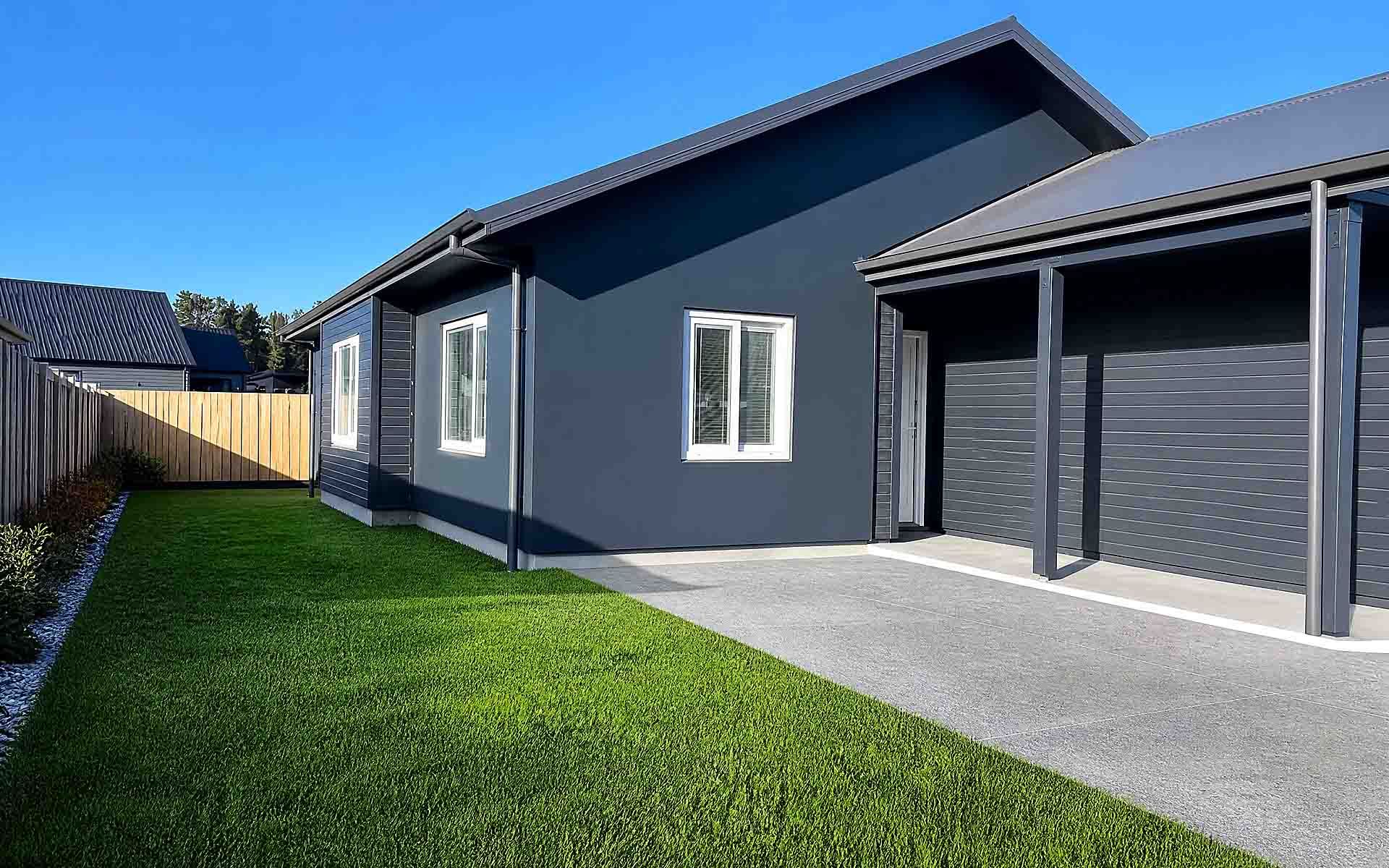
Architectural Thermally Broken Aluminium Residence
Factory-Direct Quality Engineering & Export Packaging
Frequently Asked Questions About CodeMark Windows in New Zealand
Q1: Is CodeMark certification mandatory for importing windows into New Zealand?
Q2: Can a local New Zealand council reject CodeMark certified windows?
Q3: How do ROPO windows comply with the updated NZBC Clause H1 energy efficiency rules?
Q4: Are timber reveals pre-installed at the factory before shipping to New Zealand?
Q5: What documentation is provided for building consent submission and final Code Compliance Certificate (CCC)?
Q6: What is the typical production and shipping lead time from China to New Zealand ports?
Plan Your New Zealand Project with Certified Engineering Confidence