Sample Orders and First Orders: How to Test a Window Supplier Before You Commit
- Share
- publisher
- ROPO Windows
- Issue Time
- Sep 18,2026
Summary
Buying from a new window factory is a trust decision, and a sample or trial order is the cheapest way to test it. This guide covers what a window sample from China should prove, the difference between a corner sample and a full-size unit, what to inspect on arrival, how to vet a factory before you commit, how large a first order should be, what five-step quality control means for your batch, and which documents and payment terms protect your money.
Why a Sample or Trial Order Is the Cheapest Risk You Can Buy
Most disappointing importing decisions are not made on price. They are made on trust that was never tested. A buyer compares three quotations, picks the middle one, pays a deposit and waits six weeks to find out whether the frames were welded square, whether the hardware matches the drawing, and whether the glass is the build-up that was actually specified. By then the container has sailed, the site is waiting, and the only lever left is negotiation.
A sample order and a first trial order close that gap with money rather than hope. A single unit or a small trial batch shows you the same profile, the same corner welding, the same gaskets and the same hardware that will be used on the full order, produced by the same operators on the same line. If something is wrong, you find it while the value at risk is still measured in hundreds of dollars rather than tens of thousands.
The order of the steps matters. Vet the factory first, then buy a sample of the system you actually intend to order, then place a trial order large enough to test the process rather than the mood of one good afternoon. The sequence is set out below, together with the documents, inspections and payment terms that keep a first order on the right side of the risk line. The quick selection and quotation form is where the first price starts.
What a Window or Door Sample Actually Is
"Sample" means different things in different factories, and the difference decides what you can and cannot learn from it. Before paying for anything, agree in writing which of the three forms below you are buying and what it is supposed to demonstrate.
Corner sample or profile cut
A short welded corner, or a length of machined profile, is the cheapest option. It proves wall thickness, the reinforcement inside the chamber, weld quality and finish colour, but nothing about hardware, glazing, sealing, drainage or operation. Treat it as evidence about the material rather than the finished product.
Full-size sample unit
A complete operable window or door in your own dimensions is the most useful sample, because it tests everything at once: frame and sash alignment, gaskets, hardware and its adjustment, glazing and its seals, and the drainage path. It also gives you a unit to show a client or a local authority, which is why it is worth ordering the size closest to your real project rather than a convenient small one.
Pre-production unit pulled from your own order
The strongest arrangement is not a separate sample at all. It is the first unit of your production order, inspected before the rest of the batch is assembled, or a deliberate one-piece order followed by the full order once that unit is approved. Because both come off the same line with the same settings and operators, there is no "sample standard" for the factory to hit and then quietly leave behind.
| Sample form | What it proves | What it cannot prove | Best used when |
|---|---|---|---|
| Corner or profile cut | Profile walls, chambers, steel reinforcement, weld quality, finish | Hardware, operation, glazing, sealing, drainage | Comparing extrusion systems at the start of a search |
| Full-size sample unit | Everything a corner cannot, in your own dimensions | Batch consistency across a production run | You need a real unit to inspect, approve or show a client |
| Glass and glazing sample | Pane build-up, cavity width, coating and interlayer on the actual sealed unit | Frame performance, hardware or assembly quality | Impact, laminated or triple-glazed build-ups are specified |
| Pre-production unit from your order | The process that will produce the whole batch | Nothing much - it is the strongest evidence available | You are ready to commit, but want one written approval point |
Two practical questions apply to every sample. Ask whether the sample charge is credited against the production order, and get the answer in writing rather than verbally; then confirm who pays the courier, because a bulky glazed unit shipped by air is often the largest line in the sample budget. A supplier who finds those questions awkward has already told you something useful. The build-ups most often sampled for comparison are described on the glass and glazing options page, and the systems they belong to are set out in the custom windows built to a project specification range.
What to Examine When the Sample Arrives
An uninspected sample is a delivery, not a test. Work through it in daylight with the drawings beside you, and photograph everything as you go: those photographs become the acceptance standard for the full order.
Frame, profile and finish
Check the profile wall thickness against the specification, count the chambers, and confirm that the promised reinforcement is present inside them. Gaskets should be continuous, correctly seated and not stretched or pinched at the corners. On a uPVC unit, inspect the welded corners for clean, complete fusion; on a thermally broken aluminium unit, confirm that the polyamide strip is continuous around the full perimeter. Colour and gloss should match the approved sample when the two are held side by side. The uPVC material and colour options and the thermally broken aluminium window systems explain the finishes these checks apply to.
Hardware, operation and adjustment
Operate the unit the way it will be used on the building: open and close it, tilt it if it is a tilt-and-turn, lift it if it is a lift-and-slide, and lock it fully. The leaf should run true with even gaps on every side, the multi-point lock should engage without force, and there should be no twist, drop or rub anywhere in the travel. Then ask in writing which hardware brand and grade were fitted, and whether the identical parts will be used on the production order. The window and door accessories and hardware range shows what can be specified per system and which components are normally upgraded for coastal, commercial or high-use projects.
Glass, seals and water management
Check the glazing build-up against the specification: pane thicknesses, cavity width, coating position and type, gas fill, and the interlayer on any laminated pane. Confirm that the glazing beads are fully seated and that the drainage slots are clear, correctly positioned and not blocked by sealant. Look for a defined path for water to leave the frame rather than sit inside it. Water management is where a cheap unit fails first, and it is visible on a sample before it ever reaches a site.
Documentation and traceability
The physical unit is only half of the evidence. Ask for the test reports and certificates that apply to the system you sampled, in full rather than as a summary sheet, and check that the size and system they name match what you received. Ask how the unit is traced back to its production record, because a barcode or serial number on the frame is what makes a later warranty claim possible. Test evidence and catalogues are grouped in the technical documents and product catalogues library, and certificate coverage is explained on the quality certificate and test report page.
Vetting the Factory Before You Commit to a First Order
A sample tells you what one unit looks like. Vetting tells you whether the thousandth unit will look the same. The checks below are cheap to run and difficult to fake.
- Watch the real line, not the showroom. Ask for footage of cutting, welding, glazing and testing as it runs, not a photo of a finished unit on a plinth. The factory production and inspection videos show how these stages look in practice, which gives you a baseline to compare any other supplier against.
- Ask how a repeat order stays identical. Drawings on file, an archived approved sample, and settings recorded against the order number are what stop a second container from arriving subtly different from the first.
- Trace the raw materials. Find out which extruder supplies the profile, who supplies the glass and the hardware, and whether those are bought from named manufacturers or on price each time.
- Read the certificates in your own market's terms. A certificate is only useful if it names the standard your certifier, insurer or code official recognises. The window and door ordering FAQ covers which documents are normally requested for which markets.
- Ask for references in a comparable market. A buyer exporting to a similar climate and code environment will tell you more in ten minutes about lead times and packing quality than any brochure.
- Confirm the minimum order quantity in writing. A minimum order quantity of one piece is what makes a genuine trial order possible; a high minimum forces you to bet the whole project on an untested relationship.
Finally, decide how your money is protected before you send any of it. Payment structures that release funds against documents or against a passed inspection are the practical answer, and buyer protection services that cover product quality, on-time shipment and payment are the baseline to insist on for a first order placed with a supplier you have never met. None of this replaces a factory visit, but it does mean that a first order can be placed on evidence rather than on optimism.
Planning the Trial Order: Size, Mix and Timing
A trial order is not a small version of a big order; it is a test with a schedule attached. Three decisions turn it into useful evidence.
How large should a first order be?
Large enough to expose the process, small enough that a failure is survivable. In practice that means covering the real opening types of the project rather than a single easy unit, because a factory that welds a fixed window acceptably can still struggle with a sliding leaf or a lift-and-slide carriage. A mixture that includes the hardest item on the schedule is worth more than five identical easy ones. If the budget only allows one unit at a time, use the one-piece capability to build the order in stages: order the hardest configuration first, inspect it, then release the balance. Because doors and windows are produced from the same profiles, glass and hardware, a trial can cover matching doors for the same schedule alongside the windows at little extra commissioning effort.
Should you mix products in one trial?
Mixing is usually right, but only within one material system and one finish. A trial that combines uPVC and thermally broken aluminium makes sense when the project needs both; adding a third colour or a fourth hardware brand mostly tests the factory's ability to keep paperwork straight. Keep the variables that matter for the project and remove those that only make the trial harder to read.
Build in the review point
Decide before production starts when you will review the batch and what releases the balance of the order. The natural point is after the first units are complete and inspected but before the whole quantity is packed, so a correction stays a correction rather than a rework claim. Photographs, a written inspection report and a short video call are enough for most first orders; an independent inspector is worth the cost once the order value justifies it. Ask for the report to be issued against your specification line by line, not as a general statement of quality.
What the five-step quality control process covers
When a factory describes its quality control, ask it to name the stages rather than summarise them. ROPO works to five: order review before any material is cut, incoming inspection of raw materials, inspection of semi-finished products, finished product inspection, and a final inspection report issued before packing. That sequence is what a trial order verifies, and what the rest of the batch will follow once you approve it.
Documents, Payment and Protection on a First Order
The commercial paperwork does more for a first order than any other single measure, because it converts promises into obligations with dates attached.
- A specification sheet signed by both sides, listing every opening with its size, system, glass build-up, colour, hardware and handing. This document, not the quotation, is what the factory builds to.
- A proforma invoice whose description matches what will actually ship, with the trade term, destination port and delivery dates stated.
- A packing list matched to the crates, so the container can be checked against the order in minutes rather than days.
- Test reports and certificates for each system, in full and naming the size range tested.
- The warranty terms in writing, with the period, what is covered and how a claim is raised. The cover provided per product is listed in the window and door warranty list.
- A certificate of origin and any conformity documents your customs broker will ask for at destination.
| Payment method | How it works | When it suits a first order |
|---|---|---|
| Deposit with balance against documents | A deposit releases materials and production; the balance is released against shipping documents or a passed inspection | The mainstream structure for a first container - funds stay connected to progress |
| Letter of credit | The bank pays against stipulated documents once all conditions are met | Larger first contracts, or where company policy requires bank-level assurance |
| Buyer protection service | Payment is held under a platform programme that covers product quality, on-time shipment and payment | Smaller first orders with a supplier you have not met; straightforward to set up |
| Full payment in advance | Everything is paid before production starts | Only for very small amounts, or where a long relationship already exists |
About ROPO Windows
ROPO is a custom windows and doors manufacturer based in Fuzhou, Fujian Province, China, with 16 years of experience in bespoke window and door production. The factory ships to clients in more than 100 countries and regions and works to a simple operating philosophy that the whole team follows: "Do what we say we are gonna do."
For a first order, the relevant question is what that experience makes possible. Frames are cut, assembled and reinforced in-house, hardware is fitted by trained operators, and each completed unit carries a barcode for full production traceability. Products are manufactured and tested to recognised standards including AS2047 and NZS4211 for Australia and New Zealand, and Miami-Dade approval is available for hurricane-rated projects. A minimum order quantity of one piece means a single unit can be ordered to validate a design against your drawings before any larger commitment; every order is backed by a 10-year warranty, and Trade Assurance protection covers product quality, on-time shipment and payment. Company and factory details are on the ROPO Windows factory profile page, and the cover provided per product is listed in the window and door warranty list.
Custom Production Process
Every order, whether it is one unit or a whole project, follows the same export workflow, with the specification locked in before any material is cut:
- Design confirmation - your opening schedule, dimensions, colour, glass build-up and hardware are reviewed and confirmed in writing before production starts.
- Profile preparation - profiles are cut and machined on CNC equipment, thermal breaks and internal reinforcement are set in place, and frames and sashes are assembled to your exact layout.
- Hardware and glazing - multi-point locks, hinges or rollers and the specified glass unit are fitted and sealed by trained operators; the window and door accessories and hardware range lists what can be specified per system.
- Five-step quality control - every order passes order review, raw material inspection, semi-finished product inspection, finished product inspection and a final inspection report before packing; the factory production and inspection videos show the assembly and testing stages as they actually run.
- Documents and traceability - test reports, compliance certificates and packing documentation are prepared for the shipment, and each unit is barcoded so its production history can be traced if you ever need support.
Because dimensions, glazing and hardware are agreed in writing before production, a change cannot quietly appear on a site on the other side of an ocean. That is also why a sample or trial order fits the process so easily: it is the same workflow with a smaller quantity, and the approval you give at the end of it becomes the standard for everything that follows.
Packaging and Shipping
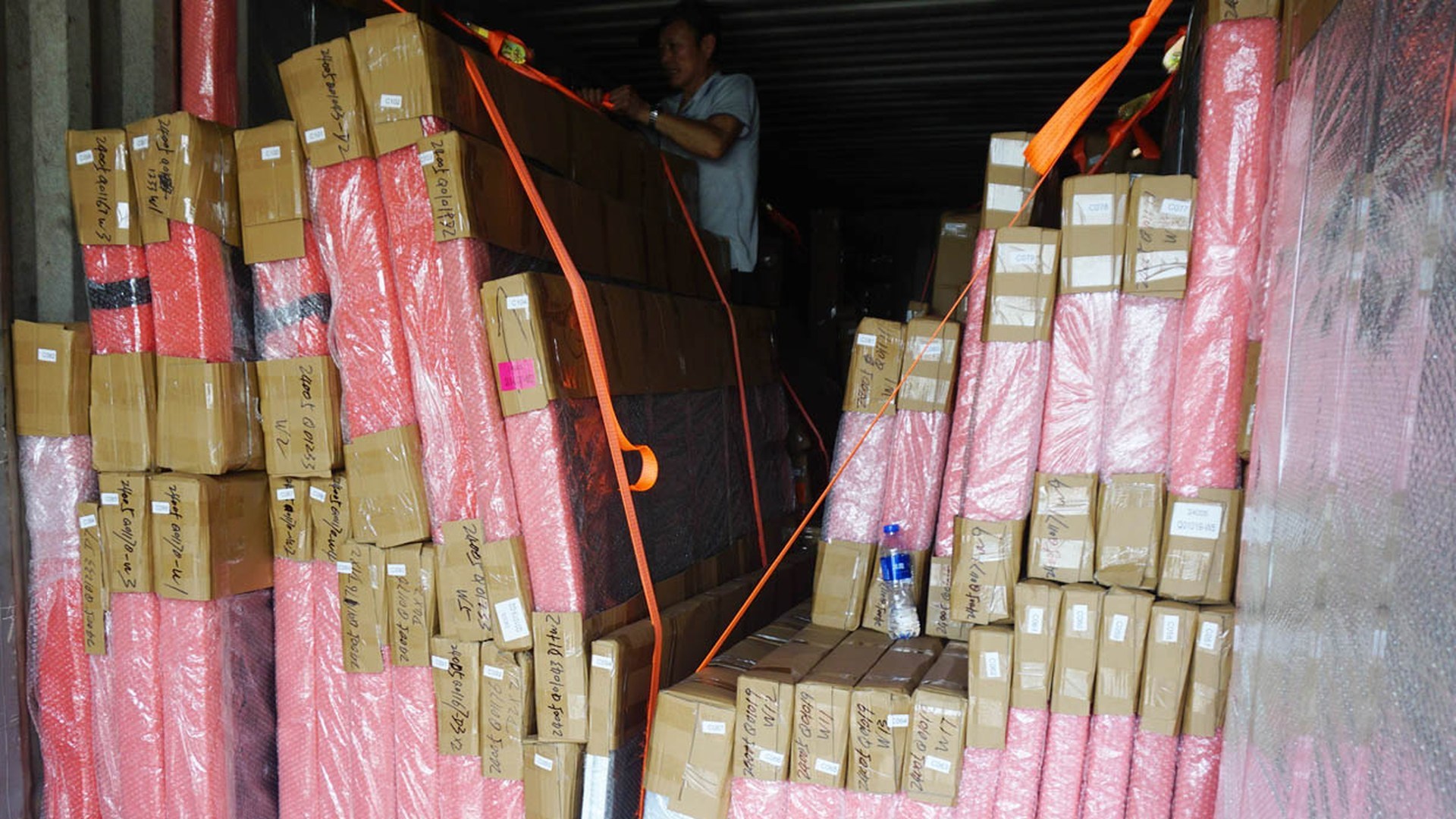
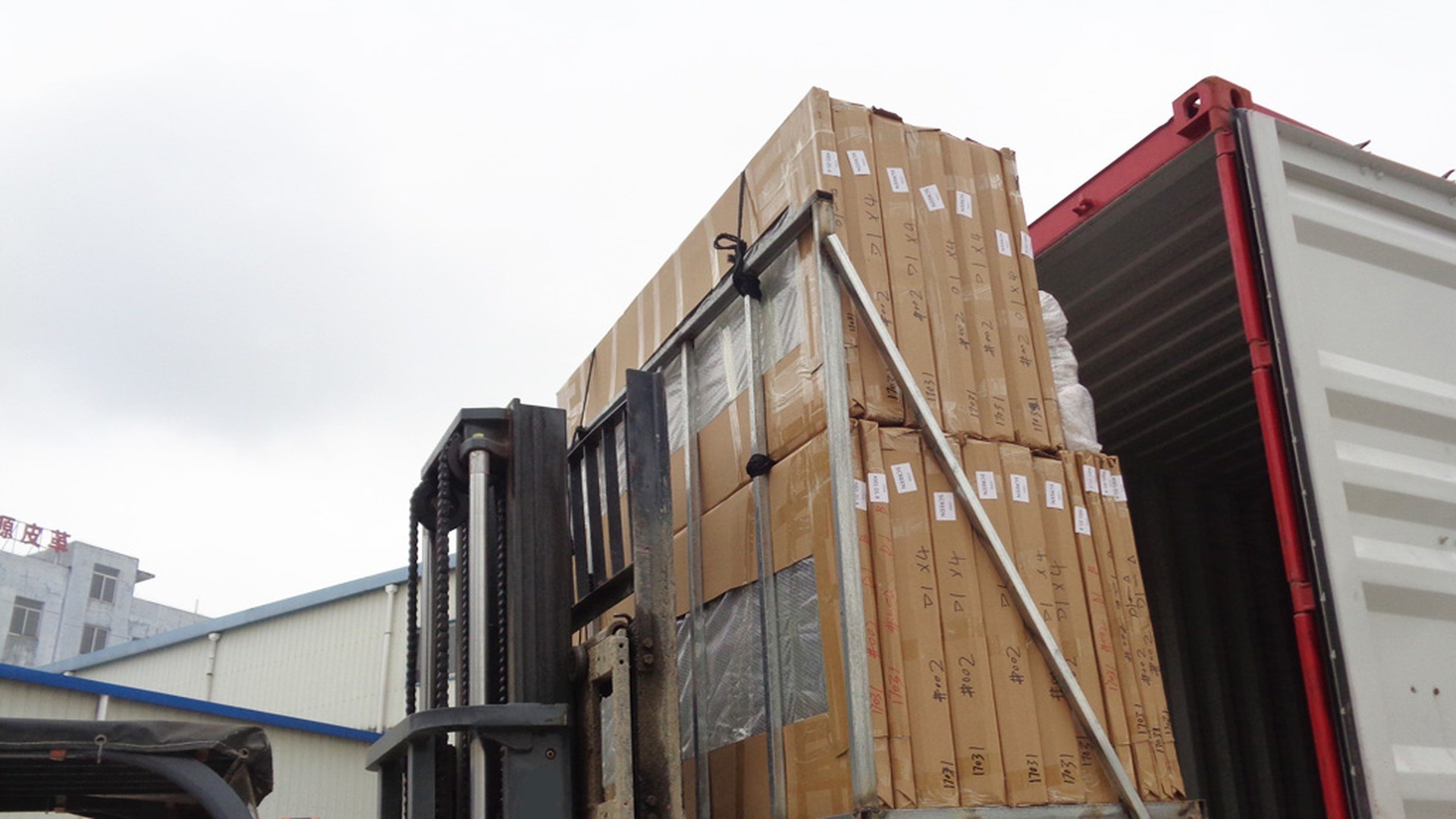
Units travel from Fuzhou to clients in more than 100 countries, so packaging is treated as part of the product rather than as a cost to be minimised. Frames are protected with sturdy timber crating and corner guards, glass surfaces are covered with protective film, and loose hardware is packed separately where needed so it cannot damage a unit in transit. Crates are arranged so that a site can open them in the order the installation is planned, which matters most on a trial order where the received unit may go straight into a test fit.
ROPO ships from the ports of Fuzhou and Xiamen by sea, with full container and shared LCL options, so a small trial order is not forced into a container-sized commitment. Lead time is managed through a system rather than a promise: profile and hardware inventory is kept in stock, and orders are followed up at every production stage. Ready inventory of profiles and hardware is what shortens lead time on a repeat configuration.
To move forward, send your opening schedule with dimensions, quantities, glass preference, hardware grade, finish, packing requirements and the destination port, and state whether you want a single sample unit or a trial batch. Adding the standard your certifier or insurer requires means the reply can include compliance advice for your region as well as a price. Start with the quick selection and quotation form for a free project price, send your window and door inquiry or contact the ROPO export team directly, and read more sourcing and technical guides on the ROPO windows and doors blog.