The Ultimate Windows and Doors Buying Checklist for Australian Homeowners (2026)
- Share
- publisher
- ROPO Windows
- Issue Time
- Sep 10,2026
Summary
Buying new windows and doors is one of the biggest decisions in an Australian renovation. This practical checklist walks homeowners through every step: measuring openings, choosing the right window and door types, comparing uPVC and aluminium frames, specifying glass for energy ratings, verifying AS2047, NZS4211 and CodeMark compliance, and comparing quotes, warranties and payment protection before you order.
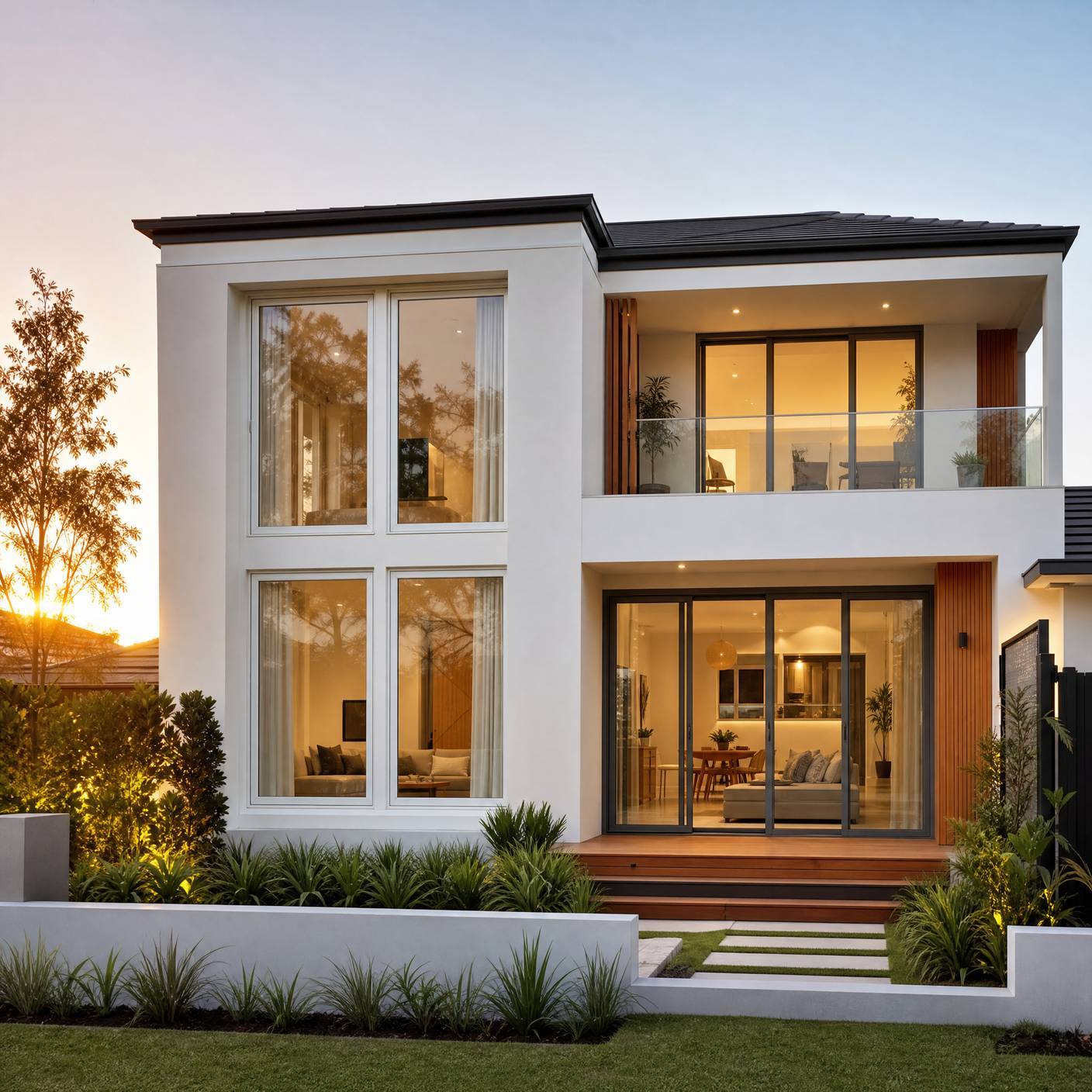
Buying new windows and doors should be a decision you make once and live with for decades. In Australia, that decision carries extra weight: a tropical climate in the north, freezing winters in the south, bushfire-prone and cyclonic zones, and a regulatory system that holds homeowners and builders accountable for compliance. Get the checklist right and you end up with windows that are comfortable, compliant and built to last. Get it wrong, and you are looking at draughts, condensation, council pushback or a full replacement within a few years.
This buying checklist walks Australian homeowners through the entire process in five practical steps — measuring, choosing types, comparing materials, specifying glass and verifying the fine print. It is written for people planning a renovation, a new build or a home extension, and it covers both uPVC and aluminium systems. Work through it section by section, and you will know exactly what to ask every supplier before you place an order.

Why Australian Homeowners Need a Windows and Doors Buying Checklist
Windows and doors are one of the few products in a home where the failure is not a quick fix. If the size is wrong, the frames do not fit. If the glass is under-specified, the room is cold and noisy. If the product does not meet the relevant Australian standard, your council may reject it, your insurer may not cover it, and your builder will not install it. Every one of those mistakes is expensive to correct after the fact, because the fix usually means removing and replacing the whole unit.
That is why a checklist matters more than any single piece of advice. It forces you to make the unglamorous decisions — measuring the opening, checking the wind zone, reading the warranty — before you are emotionally attached to a brochure. It also helps you compare quotes on an apples-to-apples basis, because every supplier fills in the same blanks: size, material, glass build-up, hardware, compliance documentation and lead time. For a deeper look at how ROPO supports the Australian market, including local compliance advice, see the ROPO Australia page, and browse the custom windows range as you work through the steps below.
Step 1: Measure Your Openings and Set Your Budget
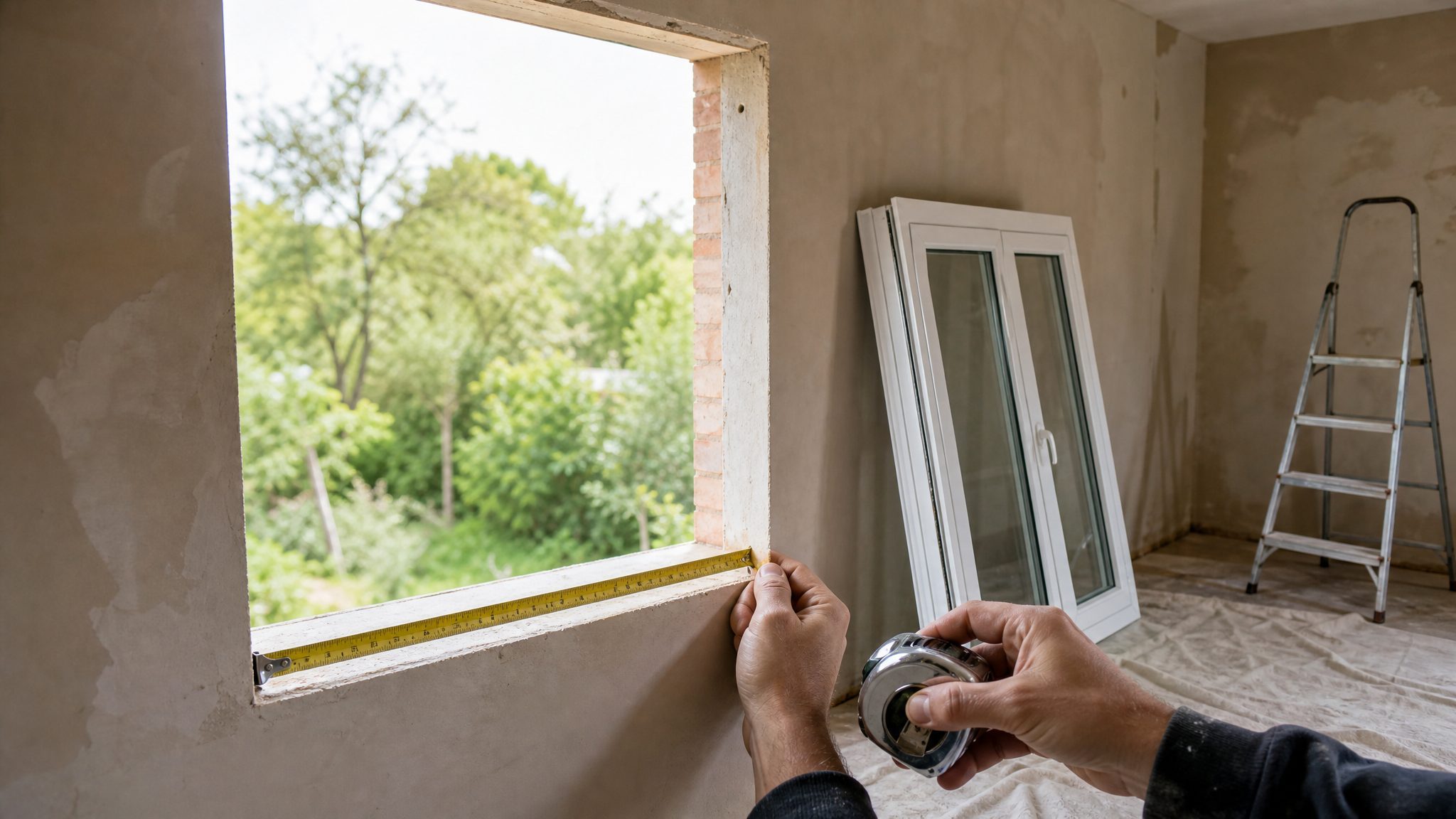
Everything else in this checklist depends on the numbers you write down first. A common mistake is ordering to the size of the old window or door — but openings are rarely square, and replacement units need to fit the actual reveal, not the previous frame. Measure the width and height of every opening at three points (top, middle and bottom; left, centre and right), note the depth of the reveal, and check whether the opening is in a brick, timber or rendered wall. For new builds, work from the structural drawings rather than the rough opening. ROPO's measuring guide for replacement windows walks through the full procedure with the tolerances to use.
Your budget should be set at the same time as your measurements, because the two interact. The key cost drivers, in order, are the frame material, the glass build-up, the hardware, and the compliance paperwork behind the product. It is worth knowing how manufacturers explain their pricing before you start comparing: ROPO publishes a straightforward breakdown on the prices explained page so you can see where your money goes. A sensible rule is to set the budget for the complete installed system — frames, glazing, hardware and delivery — rather than the price per square metre quoted on a website.
Step 2: Choose the Right Window and Door Types for Each Room
The right type of window or door depends on what the room needs: ventilation, light, access, egress or sound control. The most common Australian residential window types are casement (hinged at the side), awning (hinged at the top, opening outward), sliding, and tilt-and-turn (a European favourite that tilts for ventilation and turns for full opening). Doors come in hinged, sliding, French, lift-and-slide and folding configurations. The comparison below summarises the everyday choices:
| Type | Best for | Good to know |
|---|---|---|
| Casement window | Bedrooms and living areas needing full ventilation | Seals tightly; multi-point locking standard |
| Awning window | Bathrooms, kitchens, wet areas | Opens outward, sheds rain; good above benches |
| Sliding window | Small rooms and openings where space is tight | No projecting sash; simpler hardware |
| Tilt-and-turn window | Second-storey rooms and cold climates | Ventilation without security risk; premium hardware |
| Hinged door | Entry doors and standard external openings | Strongest seal; wide-opening option |
| Sliding door | Patios and tight spaces | Compact; smooth-running rollers |
| French doors | Living and dining rooms opening to gardens | Wide openings, generous light |
| Lift-and-slide door | Large spans and premium homes | Exceptional sealing and security |
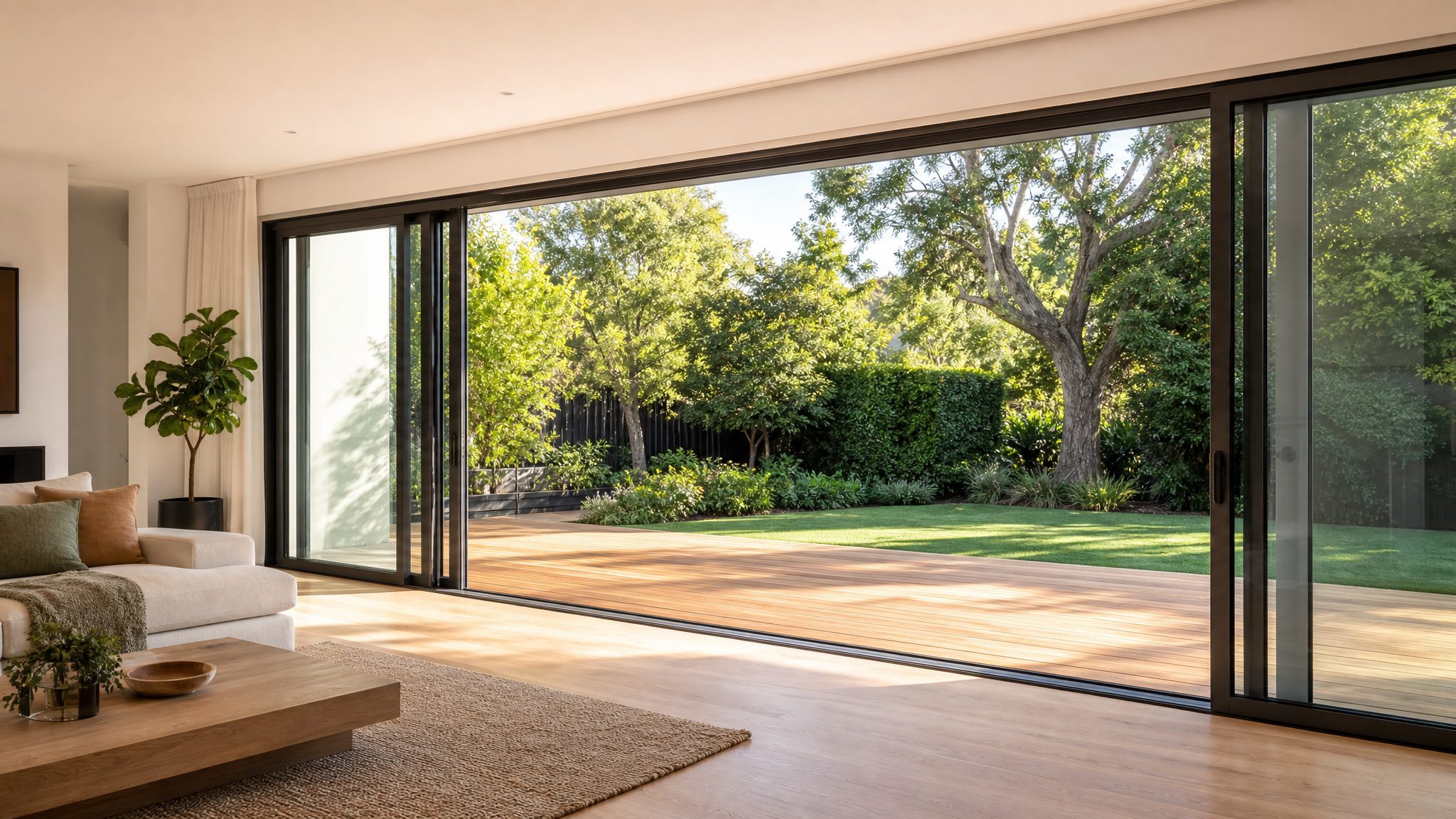
For a full picture of what is available, browse the custom windows and custom doors ranges. When comparing types, write down for each room: the opening size, whether it needs to open fully or just ventilate, and any security or egress requirement — then choose the type that satisfies all three, not just the one that looks best in a showroom photo.
Step 3: Compare Frame Materials: uPVC vs Aluminium
For Australian homes, the frame material decision almost always comes down to uPVC or aluminium. Both are excellent when engineered properly; the difference is what each material optimises. Here is the honest comparison:
| Factor | uPVC | Aluminium |
|---|---|---|
| Thermal insulation | Excellent with multi-chamber profiles | Good, requires thermal break technology |
| Strength and slim sightlines | Chunkier frames | Slim frames, larger glass areas |
| Corrosion resistance | Cannot rust, rot or corrode | Excellent with powder-coated or anodised finish |
| Maintenance | Lowest; never needs painting | Low; powder coating can chip |
| Cost | Generally lower | Generally higher |
| Best suited to | Energy-focused homes, humid and coastal climates, budget-conscious renovations | Large spans, modern architecture, premium and commercial projects |
As a rule of thumb for a house renovation: if energy efficiency on a sensible budget is the priority, uPVC is hard to beat — and in Australia's humid coastal regions its total immunity to corrosion is a genuine long-term advantage. If you want the slimmest frames, the biggest glass areas or very large sliding spans, thermally broken aluminium is the right tool. Many Australian homes combine both: uPVC for the standard windows and aluminium for a statement door or a large fixed panel. The uPVC material and colour options and aluminium windows pages cover the finishes and configurations available in each system.
Step 4: Specify Glass for Energy Rating, Comfort and Safety
Glass decides most of the performance you actually feel. A well-specified glass unit does four jobs at once: it keeps heat in during winter, reflects heat in summer, blocks street noise and — in the right configuration — protects against break-ins and injury. The specification starts with the glazing type. Double glazing is the sensible default for most of Australia, and triple glazing earns its place in cold-climate zones such as Victoria, Tasmania and the Australian Alps. Low-E coatings reflect radiant heat, argon gas fills improve the insulation value, and the space between panes can be tuned for your climate.
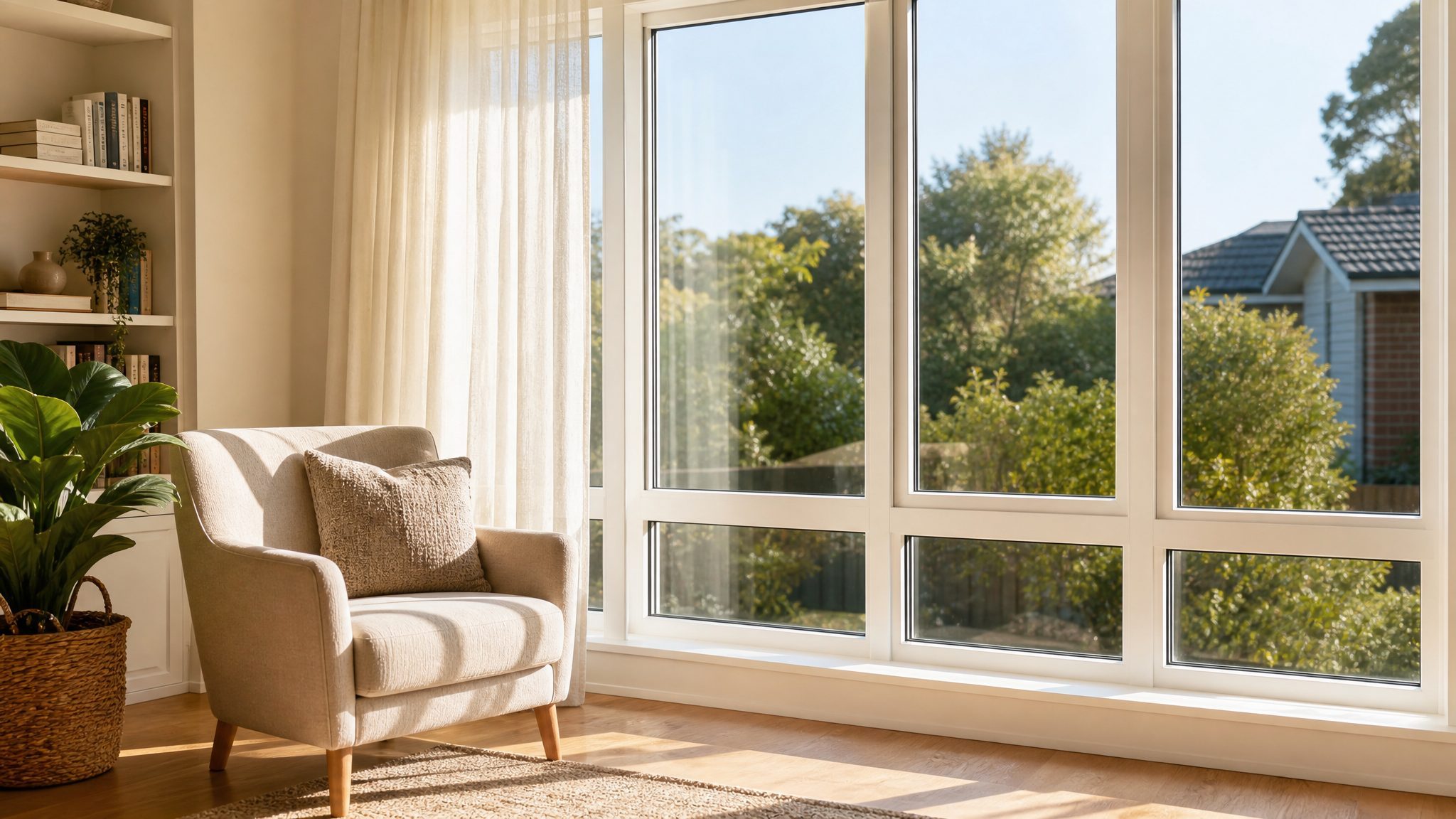
Energy rating matters at the whole-window level, not just the glass. Schemes such as the Window Energy Rating Scheme (WERS) rate complete window systems for heating and cooling performance, which is why the frame and the glass must be specified together. For safety, glass in doors, side panels and low-level windows must meet Australian Standard AS1288 for glazing in buildings — typically satisfied with toughened or laminated glass. Laminated glass also adds security and significantly better sound insulation, at a modest premium.
When you compare quotes, write down the exact glass build-up: number of panes, coating, gas fill, glass thickness and whether it is toughened or laminated. If a supplier cannot tell you the specification in those terms, that is a red flag. ROPO's glass options guide explains each choice in plain language, so you can specify with confidence rather than guess.
Step 5: Verify Compliance, Warranty and Payment Protection
In Australia and New Zealand, windows and external glazed doors are tested to AS2047, which covers wind resistance, water penetration, air infiltration and structural adequacy. Design wind pressure is calculated for the project location under AS/NZS 1170.2 — which is why the same window model can be compliant in one suburb and under-specified in the next. New Zealand projects additionally require NZS4211 for security performance, and products intended for council approval can be CodeMark certified. When a supplier says a window is "AS2047 compliant", ask for the test report for the exact model, size and glazing you are ordering — not a similar product from the same range.
The compliance check extends beyond the product to the paperwork. A written warranty is the first thing to verify: ROPO backs every window and door with a 10-year product warranty, and the terms are published so there is no ambiguity. For imported products, payment protection matters just as much. Trade Assurance covers product quality, on-time shipment and payment for export orders, which removes the main risks of buying direct from a factory. Common questions on samples, lead times and installation are answered on the FAQ page.
About ROPO Windows
A checklist is only as useful as the supplier you apply it to, and the quality of a custom window depends on how much of the production the manufacturer controls in-house. ROPO is a custom windows and doors manufacturer based in Fuzhou, Fujian Province, China, with 16 years of experience in bespoke door and window production. The factory employs 40 workers, 8 engineers, 2 dedicated quality inspectors and 6 professional consultants, and ships to clients in more than 100 countries and regions. Behind the numbers is a simple operating philosophy that the whole team follows: "Do what we say we are gonna do."
For Australian homeowners, what matters most is that ROPO manufactures to recognised standards rather than to a price point. Products are built and tested to AS2047 and NZS4211 for the Australian and New Zealand markets, with CodeMark certification available for New Zealand council approvals and Miami-Dade approval for hurricane-rated projects. Every unit is backed by a 10-year warranty, and export orders are covered by Trade Assurance protecting product quality, on-time shipment and payment. More background on the company is on the About Us page.
Custom Production Process
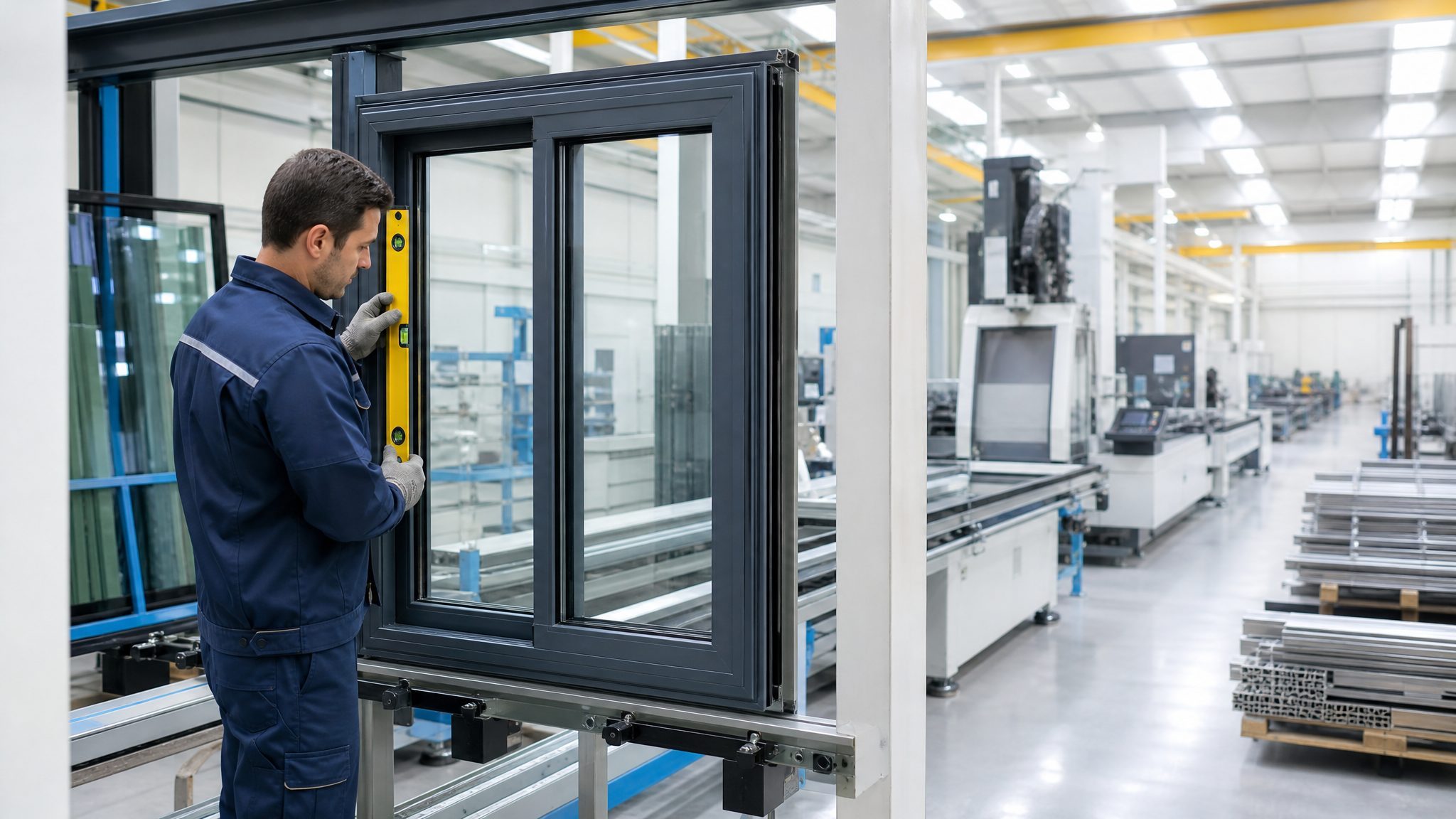
The checklist you use before ordering is mirrored by the checks the factory runs during production. A custom window is only as good as the process that builds it, and ROPO runs the entire process end to end so the unit that arrives matches the specification you approved:
- Design confirmation — your dimensions, system, glazing build-up, colour, hardware and required compliance are reviewed and confirmed before any material is cut, locking your specification into the order.
- Profile preparation — uPVC profiles are cut, steel-reinforced and welded using CNC equipment; aluminium profiles are cut, drilled and assembled with thermal break systems to your exact layout.
- Hardware and glazing — multi-point locks, hinges or rollers are installed, and the specified glass build-up (double glazed, Low-E, toughened or laminated) is fitted and sealed.
- Five-step quality control — every order passes order review, raw material inspection, semi-finished product inspection, finished product inspection and a final inspection report before packing.
- Traceability — each product is marked with a barcode so the production history of every unit can be tracked if you ever need support.
This process supports fully bespoke orders with a minimum order quantity of just one piece, so whether you need a single replacement window for a renovation or units for a full home build, the same engineering and inspection standards apply. Orders are protected by Trade Assurance covering quality, on-time shipment and payment.
Packaging and Shipping
For Australian homeowners importing custom windows, the journey from factory to site is part of the product. Every ROPO window and door is protected with sturdy timber crating and corner guards, glass surfaces are covered with protective film, and hardware is packed separately where needed to avoid transit damage. The packaging is designed for the same reason the checklist exists: to make sure the unit that arrives is the unit you ordered, in the condition you expect.
ROPO ships from the ports of Fuzhou and Xiamen by sea, with flexible options for full containers or shared LCL space for smaller renovation orders. Delivery is managed through a dedicated system: profile and hardware inventory is kept in stock, raw materials are typically procured within 1-2 days, orders are followed up at every stage, and transport information is confirmed with you in advance — so you always know where your order is and when it will arrive.
If you are planning a renovation or a new build, the fastest way to start is with your opening schedule, glass specification and project location. The team will come back with a tailored quotation and the compliance documentation for your configuration — use the Quick Quote tool to get started, send an inquiry, or contact us directly. And for more guidance on choosing and specifying windows and doors, read more articles on the ROPO blog.