Tilt and Turn Windows: The Complete Guide to Benefits, Installation, and Wholesale Sourcing
- Share
- Issue Time
- Jul 29,2026
Summary
A comprehensive EEAT-optimized guide to tilt and turn windows for builders. Dual-function design, aluminum vs uPVC, professional installation from 16 years field experience, performance data, and ROPO wholesale manufacturing trusted in 30+ countries.
What Are Tilt and Turn Windows and How Do They Work?
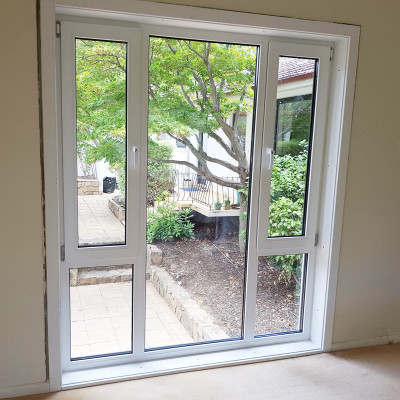
Tilt and turn windows, also known as European-style tilt-and-turn windows, are a highly versatile window system designed with a single handle that controls two distinct operating modes. Unlike traditional casement windows that only open outward or sliding windows that move horizontally, tilt and turn windows offer both a tilt position for secure ventilation and a full inward turn for maximum opening and easy cleaning.
The mechanism operates through multi-point locking hardware controlled by one ergonomic handle. When turned to approximately 45 degrees, the window tilts inward from the bottom, creating a controlled ventilation gap at the top while remaining securely locked against exterior entry. When the handle rotates fully to 180 degrees, the window swings open like a door, providing unrestricted access and allowing both sides of the glass to be cleaned safely from inside the building. This dual-function design makes them the preferred choice for European and international projects where security, ventilation, and convenience are equally important.
For builders and contractors evaluating tilt and turn windows for sale, understanding the mechanical difference from standard systems is essential. The compression-seal closure unlike sliding seals in other window types ensures superior weather resistance, thermal performance, and acoustic insulation.
Key Benefits of Tilt and Turn Windows for Modern Construction
Tilt and turn windows advantages address the most critical requirements of modern building projects: security, energy efficiency, comfort, and long-term value.
Superior Security
When in tilt mode, the window gap at the top is too narrow for entry while the locking mechanism remains engaged at multiple points around the frame. Multi-point locks engage at 4 to 12 points depending on window size. For high-security applications, laminated glass and reinforced hinge options are available.
Exceptional Energy Efficiency
The compression seal design virtually eliminates air infiltration. Combined with thermally broken aluminum frames or multi-chamber uPVC profiles, and double or triple glazing with Low-E coatings, modern tilt and turn windows achieve U-values as low as 0.8 W/m²K.
Controlled Natural Ventilation
The tilt position creates natural convection airflow: warm air exits through the top while fresh air enters at a higher level, avoiding uncomfortable drafts at ground level. This makes tilt and turn windows particularly effective for bedrooms and living spaces.
Effortless Cleaning
The full 90-degree inward opening allows both interior and exterior glass surfaces to be cleaned safely from inside the building. This is a decisive advantage for multi-story buildings, eliminating the need for external cleaning equipment.
Superior Acoustic Performance
The compression seal combined with double or triple glazing delivers outstanding sound reduction typically achieving 35 to 48 dB reduction. This makes tilt and turn windows ideal for projects near airports, highways, or urban centers.
Tilt and Turn Windows vs Casement Windows: A Detailed Comparison
When evaluating tilt and turn windows vs casement windows, understanding the key differences is essential for selecting the right system for each project.
| Feature | Tilt and Turn Windows | Casement Windows |
|---|---|---|
| Opening Direction | Inward (tilt + turn) | Outward (hinged side) |
| Ventilation Mode | Tilt position for draft-free airflow | Full open only |
| Security While Ventilating | Secure tilt position | Not available |
| Cleaning Access | Both sides from inside | Exterior requires external access |
| Weather Seal Type | Compression seal | Typically sliding or compression |
| Thermal Performance | Excellent (compression seal) | Good to excellent |
| Wind Resistance | Better (opens inward) | Limited by outward swing |
| Installation Complexity | Moderate to high | Low to moderate |
| Ideal Application | Multi-story, cold climate, high security | Single-story, moderate climate |
For uPVC tilt and turn windows, the thermal and acoustic performance typically exceeds equivalently priced casement options due to the compression seal technology and multi-point locking frame design.
Aluminum vs uPVC Tilt and Turn Windows: Professional Material Selection Guide
Choosing between aluminum and uPVC frames directly affects project cost, aesthetics, thermal performance, and long-term maintenance.
Aluminum Tilt and Turn Windows
Aluminum tilt and turn windows are the premium choice for projects where slim sightlines, large panel sizes, and modern aesthetics are priorities. The exceptional strength-to-weight ratio of aluminum allows for larger glass areas with narrower frame profiles, maximizing natural light and views. ROPO aluminum tilt and turn windows incorporate multi-chamber thermal break technology that significantly reduces thermal conductivity while maintaining structural integrity. Aluminum is inherently corrosion-resistant, requires minimal maintenance, and is 100% recyclable.
uPVC Tilt and Turn Windows
uPVC tilt and turn windows offer outstanding thermal insulation at a more accessible price point, making them the preferred choice for residential projects. Multi-chamber uPVC profiles trap air for natural thermal insulation, while reinforced galvanized steel liners provide structural rigidity. Available in white, cream, woodgrain finishes, and custom colors, ROPO uPVC tilt and turn windows combine European engineering with competitive factory-direct pricing.
Custom Sizes, Advanced Glazing, and Configuration Options
Modern tilt and turn windows offer extensive customization. Standard panel widths range from 400mm to 1200mm, with heights from 500mm to 2400mm. Custom dimensions available for unique architectural requirements. Double or triple glazing with Low-E coatings, laminated safety glass, and acoustic glass options. Hardware finishes available in white, silver, black, and custom RAL colors with dual-color interior/exterior options.
Tilt and Turn Window Installation: Professional Best Practices
Drawing from ROPO 16 years of international installation experience across more than 30 countries, proper installation is the single most critical factor in ensuring tilt and turn windows perform as designed.
Structural Opening Preparation
The rough opening must be square, level, and plumb within +/-3mm tolerance. Steel or reinforced concrete lintels are required above larger openings. Proper waterproofing membrane and vapor barrier must be installed before frame placement. Our field experience shows that inadequate structural preparation is the most common cause of hardware misalignment and seal failure.
Frame Positioning and Fixing
The window frame must be perfectly level and square before any fixing. Multi-point locking mechanisms require precise alignment for smooth handle operation. Fixing brackets must be installed at manufacturer-specified intervals typically every 600mm to 800mm around the perimeter. After fixing, the frame-to-wall gap must be filled with expanding polyurethane foam insulation.
Hardware Adjustment and Weather Sealing
Each window unit must be individually adjusted for smooth tilt-and-turn operation. All multi-point locking pins must engage fully and evenly. Perimeter EPDM weather seals must be checked for consistent compression. In our experience across diverse climate zones, double-checking seal compression before final commissioning significantly reduces callbacks.
Final Commissioning and Testing
Test all operating modes tilt position, full turn, and closed a minimum of five cycles. Check for smooth operation, consistent seal compression, and audible locking engagement. Verify drainage weep holes are clear. Provide the building owner with operation and maintenance instructions specific to tilt and turn mechanisms.
Energy Efficiency and Acoustic Performance Data
Modern tilt and turn windows from ROPO incorporate advanced engineering that delivers measurable performance improvements verified by independent testing laboratories.
Thermally broken aluminum frames with multi-chamber polyamide strips, combined with double or triple glazing and Low-E soft-coat coatings, achieve certified U-values as low as 0.8 W/m²K. Compression seals around the entire perimeter reduce air leakage to less than 0.3 m³/h·m² at 50 Pa. Laminated acoustic glass configurations achieve weighted sound reduction of up to 48 dB for buildings near airports, highways, or urban noise sources.
Why ROPO Is Your Trusted Wholesale Tilt and Turn Windows Manufacturer
With over 16 years of dedicated window manufacturing and export experience, ROPO has established itself as a reliable partner for builders, developers, distributors, and contractors worldwide.
30,000 m² Smart Manufacturing Facility
ROPO operates a 30,000 square meter production facility with dedicated lines for both aluminum and uPVC window systems. Every production stage follows ISO-managed processes with documented traceability.
Certified for International Markets
All ROPO tilt and turn windows meet AS2047 for Australia/New Zealand, NFRC for North America, CE marking for Europe, and Miami-Dade hurricane impact requirements. This comprehensive certification simplifies specification across multiple regulatory environments.
Delivered to 30+ Countries Across 6 Continents
ROPO has supplied window systems to projects in more than 30 countries, from residential communities in Australia to commercial towers in the Middle East and hotels in Southeast Asia. This global track record demonstrates our ability to meet diverse project requirements.
Comprehensive 10-Year Warranty
Every ROPO tilt and turn window is backed by a full 10-year structural warranty with responsive after-sales technical support covering frame integrity, hardware functionality, and seal performance.
Frequently Asked Questions About Tilt and Turn Windows
Are tilt and turn windows suitable for high-rise buildings?
Yes. The tilt position provides secure ventilation, inward opening eliminates wind-load risk of outward-opening windows, and both glass surfaces can be cleaned from inside eliminating external access equipment.
Can tilt and turn windows be used with fly screens?
Yes. Fly screens can be installed on the interior side on a separate frame that allows the window to operate freely in both tilt and turn modes. ROPO offers compatible fly screen solutions for all standard sizes.
How do they perform in hurricane-prone regions?
ROPO tilt and turn windows with reinforced aluminum frames and laminated impact-resistant glazing meet Miami-Dade hurricane impact requirements, providing exceptional resistance to high wind pressures and debris.
What maintenance is required?
Minimal: lubricate the multi-point locking mechanism annually with silicone-based lubricant, clean weather seals with a damp cloth, and ensure drainage channels remain clear. With proper care, ROPO windows last 25 to 35 years.
What is typical lead time for wholesale orders?
Standard sizes and configurations typically ship in 25 to 35 days from order confirmation. Custom sizes and specialized glazing may require 35 to 45 days. ROPO works with project schedules for timely delivery.
Get Your Custom Tilt and Turn Windows Quote from ROPO
Whether you are a builder planning a residential development, an architect designing a commercial project, or a distributor expanding your product line, ROPO Windows has the manufacturing capacity, technical expertise, and export experience to deliver the perfect tilt and turn window solution.
Contact ROPO today for a free project consultation, professional technical drawings, and competitive factory-direct pricing on custom tilt and turn windows.
ROPO Windows Your Trusted Partner for Custom Tilt and Turn Windows, Delivered Factory Direct Worldwide.