uPVC Doors: The Complete Guide to Styles, Benefits, and Sourcing Custom PVC Doors
- Share
- publisher
- ROPO Windows
- Issue Time
- Aug 20,2026
Summary
uPVC doors combine weather resistance, thermal insulation and low maintenance, making them a top choice for modern homes. This guide covers every uPVC door style - French, sliding, hinged, lift & slide and front entry - with a breakdown of benefits, a comparison with aluminium doors, and what to check when sourcing custom uPVC doors from a manufacturer. Whether you are renovating or planning a wholesale order, find practical details on profiles, hardware, glazing, certifications and warranty.
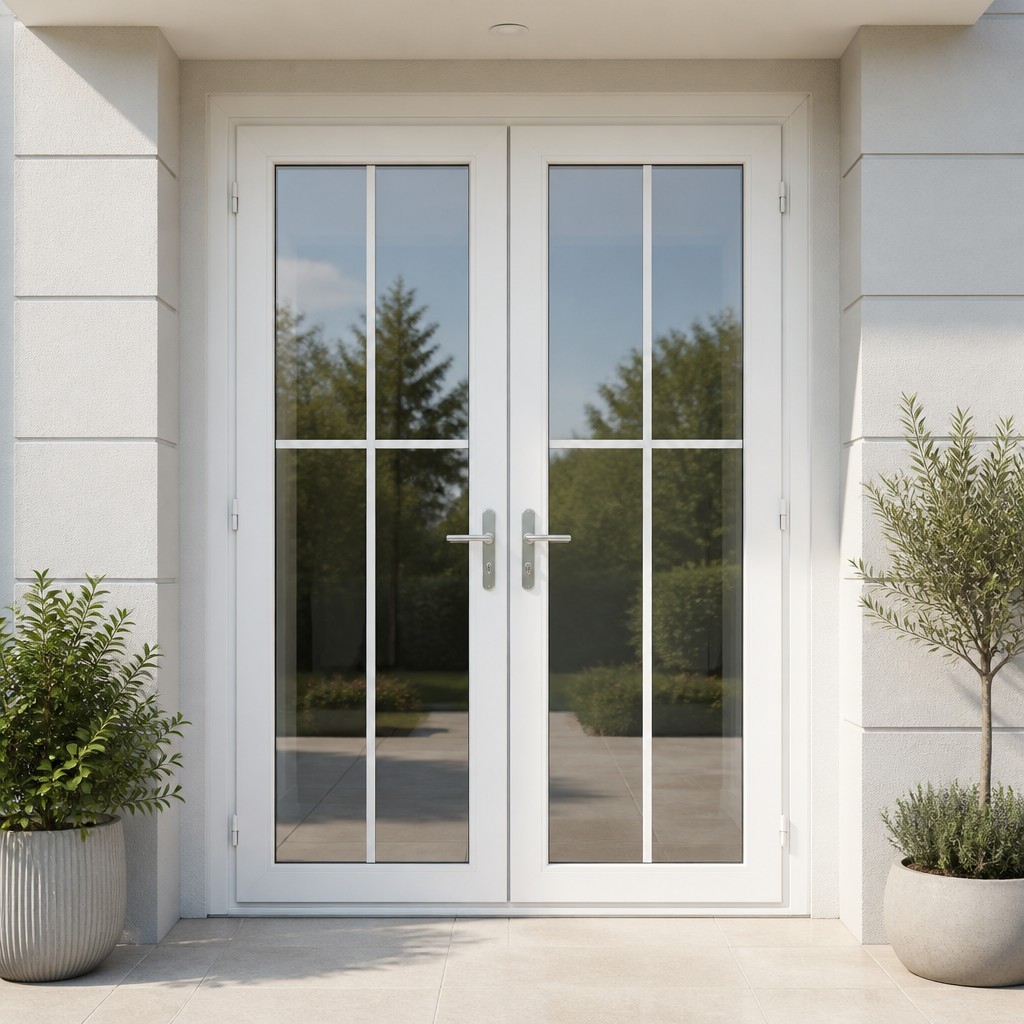
uPVC stands for unplasticised polyvinyl chloride, a rigid and durable material widely used to manufacture window and door frames. Unlike timber or steel, uPVC profiles are extruded as multi-chamber hollow sections that trap still air and sharply improve thermal insulation. The material never rots, never warps and never needs repainting, which is why uPVC doors have become the default choice for homes and light commercial buildings across Australia, New Zealand and Europe.
A uPVC door is a complete factory-built system: the frame and sash are welded from uPVC profiles, reinforced internally with galvanised steel chambers, and fitted with weather seals, glazing and hardware as one engineered unit. Because every component is designed to work together, the door performs as a sealed system, which is exactly why buying from an experienced manufacturer matters more than picking a door off the shelf.
Types of uPVC Doors
uPVC doors are available in five main styles, each suited to a different opening, room or architectural context. Choosing the right type up front saves money and avoids awkward layouts later.
uPVC French Doors
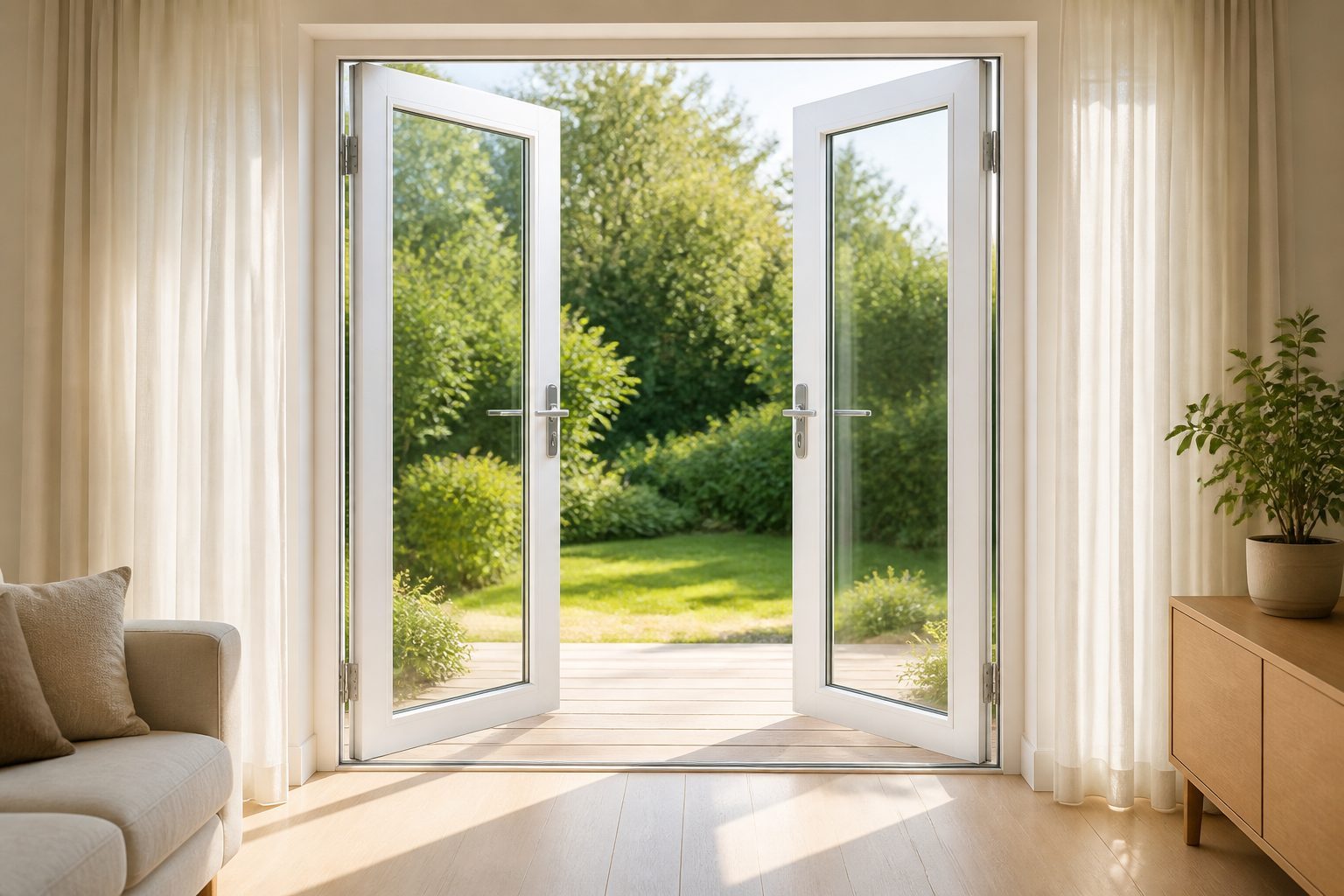
French doors are two glazed panels that open from the centre, either inwards or outwards. They are the classic choice for living rooms, dining areas and garden access, offering wide, unobstructed openings and generous natural light. Multi-point locking hardware is standard, and panels can be configured with a fixed centre mullion or as true double-leaf units.
uPVC Sliding Patio Doors
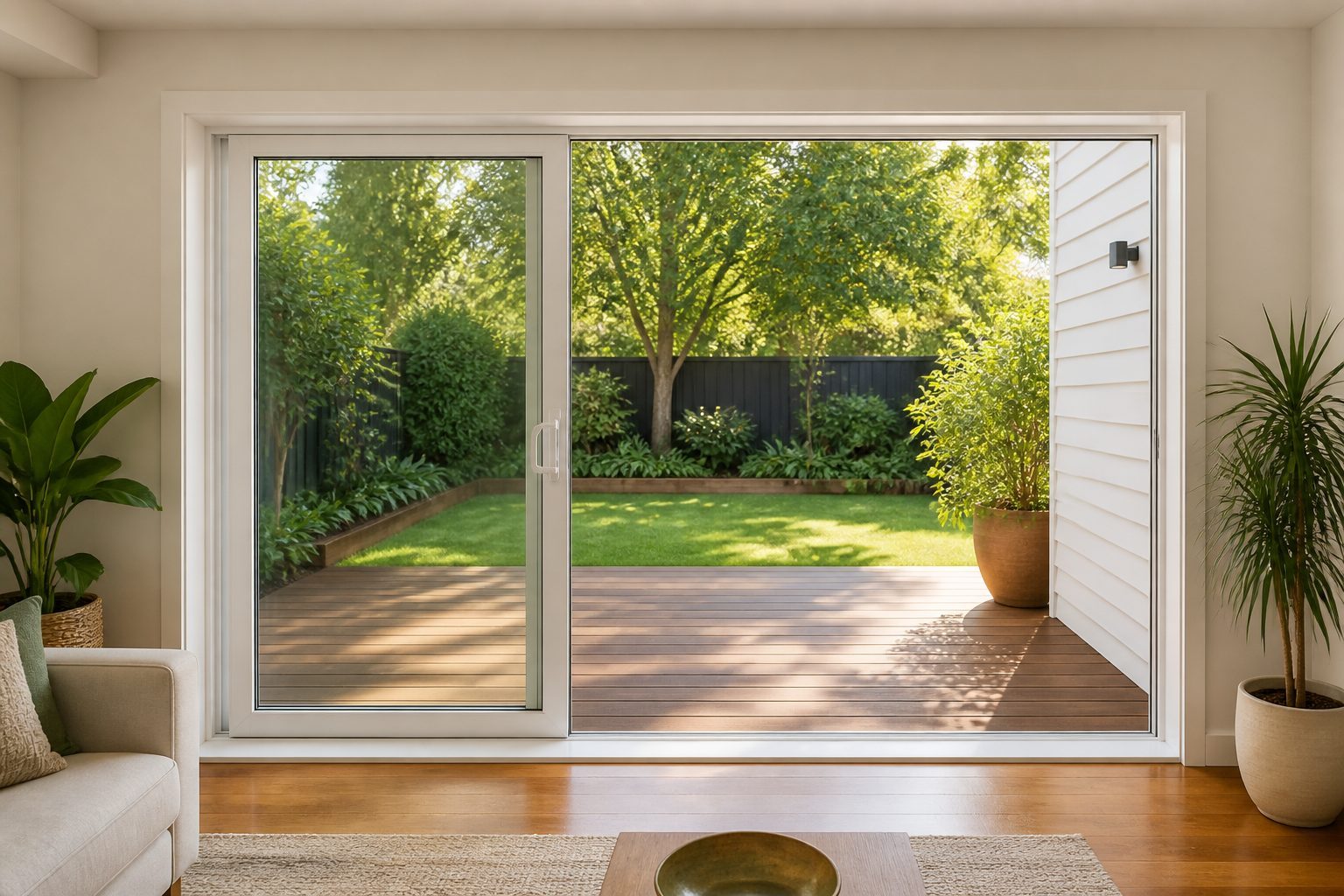
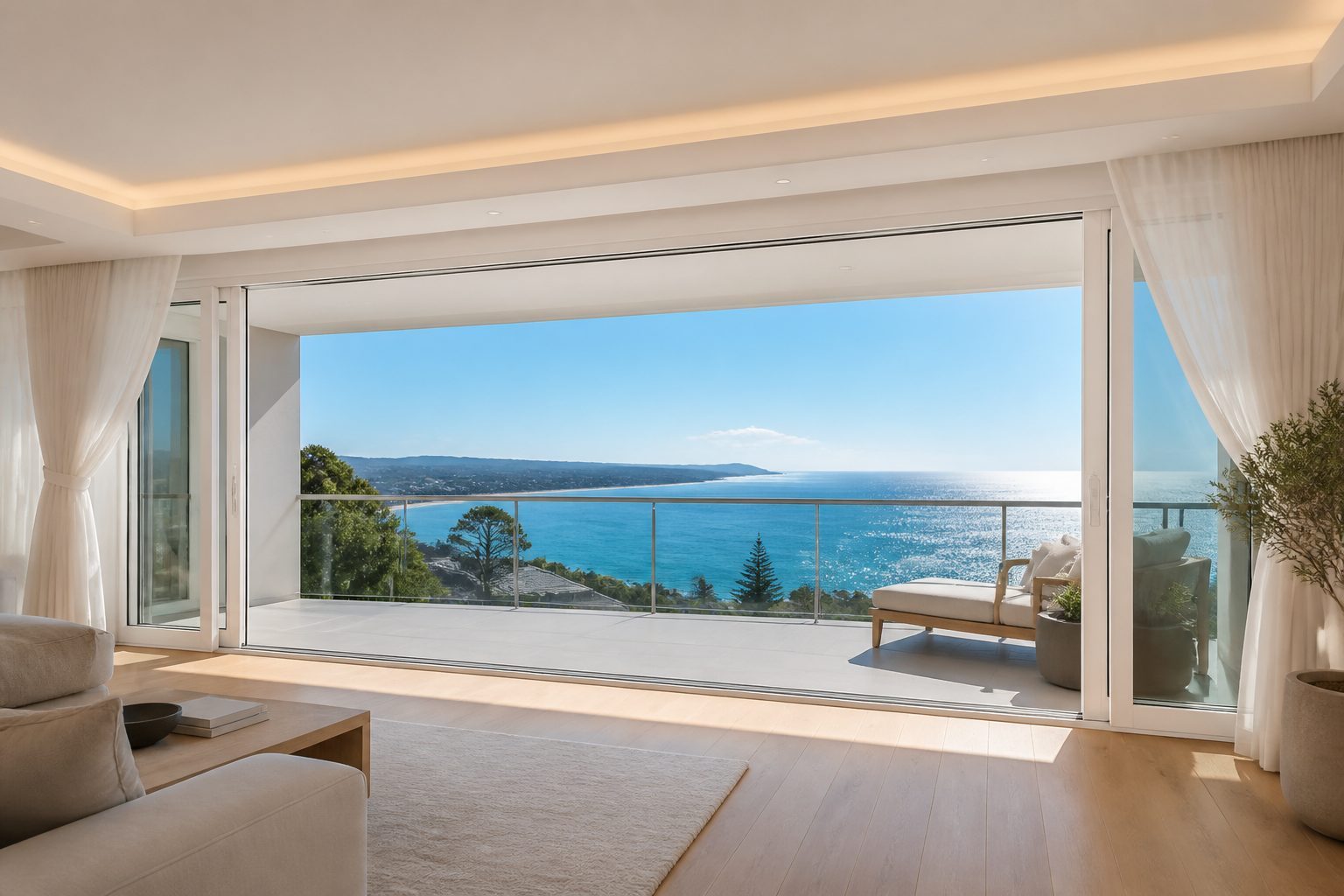
Sliding doors run on low-profile tracks and stack panels to one side, making them ideal for smaller rooms or tight balconies where a swinging door would waste space. Modern uPVC sliders use smooth-running rollers and multi-chamber profiles, and they perform well even in windy coastal locations when specified with the right glass and wind-load rating.
uPVC Hinged Doors
Single or double hinged uPVC doors are the workhorse option for kitchens, laundries, storage rooms and standard exterior openings. They are simple, robust and the most cost-effective uPVC door type, with full multi-point locking as standard.
uPVC Lift and Slide Doors
Lift-and-slide doors combine the wide openings of a sliding system with a much higher level of sealing and security. The panel is lifted slightly off its track before sliding, then lowered to compress the seals against the frame. The result is an exceptionally airtight, thermally efficient and secure door for large spans, and a premium choice for high-end residential projects.
uPVC Front Entry Doors
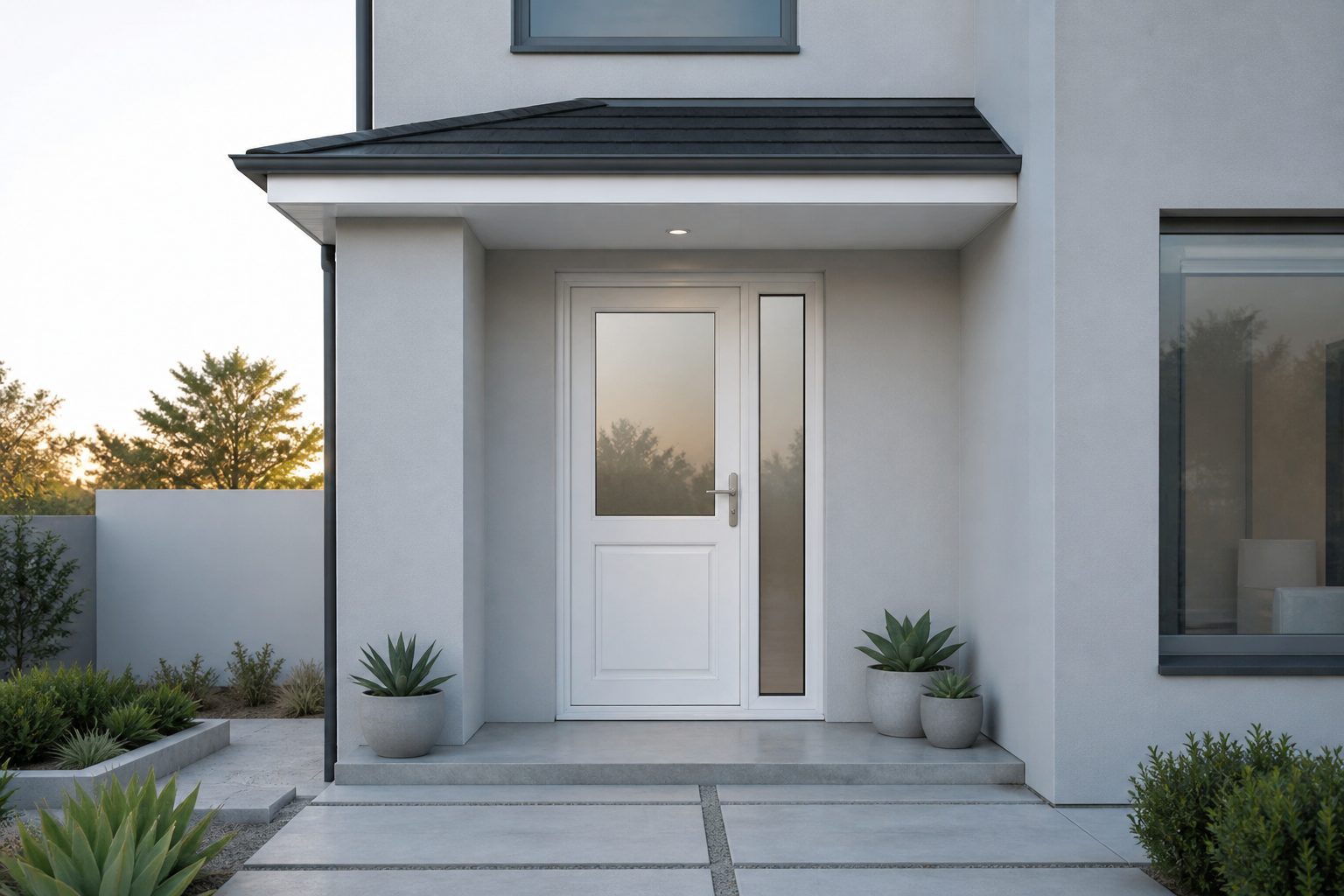
Front entry doors are built around security and first impressions. They use reinforced profiles, heavy multi-point locking systems, and can integrate letterboxes, cat flaps and even smart locks. When a matching look is needed across the whole facade, entry doors can be manufactured to mirror the design language of the windows.
Key Benefits of uPVC Doors
The properties of the material map directly onto the things doors are actually judged on:
- Thermal efficiency. Multi-chamber profiles plus double or triple glazing cut heat loss dramatically compared with single-glazed timber or steel doors.
- Sound insulation. The same sealed construction that blocks heat also blocks noise, a real benefit on busy streets and near airports.
- Moisture resistance. uPVC does not absorb water, so it will not swell, rot or corrode, even in coastal, high-humidity or rainy climates.
- Zero maintenance. No painting, no staining, no varnishing. A wipe-down with soapy water is all a uPVC door ever needs.
- Security. Multi-point locking systems with steel-reinforced cores make uPVC doors significantly harder to force than single-point alternatives.
- Sustainability. uPVC is fully recyclable, and modern profiles are increasingly produced from recycled material, an important point for green building certifications.
uPVC Doors vs Aluminium Doors: Which Is Better?
There is no universal winner, the right choice depends on the project. Here is an honest comparison:
| Factor | uPVC Doors | Aluminium Doors |
|---|---|---|
| Thermal insulation | Excellent with multi-chamber profiles | Good, but requires thermal break technology |
| Strength and slim sightlines | Chunkier frames | Slimmer frames, larger glass areas |
| Maintenance | Lowest, no painting required | Low, but powder coating can chip |
| Cost | Generally lower | Generally higher |
| Best for | Homes, energy-focused projects, humid climates | Large spans, commercial projects, modern architecture |
As a rule of thumb: for residential energy efficiency on a sensible budget, uPVC is hard to beat; for huge sliding spans or commercial facades where slim sightlines matter, aluminium, ideally thermally broken, is the better tool. Many projects use both. Browse the full door and window range to compare the options side by side.
What to Look for When Sourcing uPVC Doors from a Manufacturer
If you are buying custom uPVC doors for a project, or planning a wholesale order, the manufacturer is the product. Check these five things before you commit:
- Profile quality. Wall thickness, number of chambers, and whether the profile is reinforced with galvanised steel. Good profiles are the difference between a door that lasts 25 years and one that sags in five.
- Hardware. Multi-point locking and high-quality hinges are what make a door feel solid and stay secure. Ask which brands are fitted as standard.
- Glass configuration. Double or triple glazing, low-E coatings, and laminated or toughened glass for safety. The glazing spec should be agreed per door, not assumed.
- Certifications. For Australia and New Zealand, doors must meet AS2047 for wind and water performance and NZS4211 for security. A certified factory can document compliance you can rely on.
- Warranty and after-sales. Look for a written warranty and a manufacturer that stands behind its production quality with real service support.
About ROPO Windows
ROPO is a custom windows and doors manufacturer based in Fuzhou, Fujian Province, China, with 16 years of experience in bespoke door and window production. The factory employs 40 workers, 8 engineers, 2 dedicated quality inspectors and 6 professional consultants, and ships to clients in more than 100 countries and regions. Behind the numbers is a simple operating philosophy that the whole team follows: "Do what we say we are gonna do."
For door buyers, what matters is that ROPO builds every uPVC door as a factory-engineered system rather than a collection of parts. Frames are CNC-cut, welded and reinforced in-house, hardware is fitted by trained operators, and each completed door carries a barcode for full production traceability. Products are manufactured and tested to recognised standards including AS2047 and NZS4211 for Australia and New Zealand, and Miami-Dade approval is available for hurricane-rated projects. Every ROPO door is backed by a 10-year warranty, and the company provides Trade Assurance protection covering product quality, on-time shipment and payment.
Custom Production Process
When you order custom uPVC doors from ROPO, the production flow is fully managed from drawing to delivery:
- Design confirmation - your dimensions, style, colour and glass specification are reviewed and confirmed before any material is cut.
- Profile preparation - uPVC profiles are cut, steel-reinforced and welded using CNC equipment, with mullions and transoms assembled to your exact layout.
- Hardware and glazing - multi-point locks, hinges or rollers are installed, and the specified glass (double glazed, laminated, Low-E or toughened) is fitted and sealed.
- Five-step quality control - every order passes order review, raw material inspection, semi-finished product inspection, finished product inspection and a final inspection report before packing.
- Traceability - each product is marked with a barcode so the production history of every door can be tracked if you ever need support.
This process supports fully bespoke orders with a minimum order quantity of just one piece, so whether you need a single custom front door or a wholesale container, the same engineering and inspection standards apply.
Packaging and Shipping
Doors travel a long way from Fuzhou to project sites across Australia, New Zealand and North America, so packaging is treated as part of the product. uPVC doors are protected with sturdy timber crating and corner guards, glass surfaces are covered with protective film, and hardware is packed separately where needed to avoid transit damage. The factory's packaging guide covers the full loading and handling process so every unit arrives ready to install.
ROPO ships from the ports of Fuzhou and Xiamen by sea, with flexible options for full containers or shared LCL space. On-time delivery is managed through a dedicated system: profile and hardware inventory is kept in stock, raw materials are typically procured within 1-2 days, orders are followed up at every stage, and transport information is confirmed with you in advance. Most projects benefit from the factory's ready inventory of profiles and hardware, which shortens lead times compared with a build-from-scratch order.
For more detail on how doors are prepared for transit, see the windows and doors care guide in the ROPO blog.
uPVC Doors FAQ
How long do uPVC doors last?
With quality profiles and correct installation, 25 to 30 years is realistic, and the material does not rot or corrode.
Can uPVC doors be made in any colour?
Yes. Beyond white, uPVC profiles are available in a wide range of solid colours and woodgrain finishes, including dual-colour options with a different colour inside and out.
Are uPVC doors cheaper than aluminium doors?
Generally yes, both in material cost and lifetime maintenance, while still delivering excellent thermal performance.
Can I get double glazing in a uPVC door?
Absolutely. Double and triple glazing are standard options and are the single biggest upgrade for insulation and soundproofing.
The Bottom Line
uPVC doors offer an outstanding balance of thermal performance, durability, security and value, which is why they remain one of the most specified door types in residential construction. The key to a successful project is matching the door style to the opening, agreeing the glazing and hardware specification up front, and sourcing from a manufacturer that can document compliance and back the product with a real warranty.
Every ROPO door is made to order: your dimensions, your colour, your glass, your hardware. Tell us the opening sizes, quantity and project location, and the team will come back with a tailored quotation, including compliance advice for your region. Send an inquiry or contact us to get started, and read more guides like this on the ROPO blog.