Why Choose Thermally Broken Aluminum Windows for Your Home?
- Share
- Issue Time
- Aug 11,2024
Summary
Discover how thermally broken aluminum windows (and aluminium thermal break systems) stop heat transfer, eliminate condensation, and cut energy bills. Compare PA66 GF25 strip specs & U-values.

When selecting windows and doors for modern residential or luxury commercial construction, architects, builders, and homeowners demand a rare combination of structural rigidity, ultra-slim architectural sightlines, weather resistance, and superior thermal insulation. While traditional aluminum frames have long been celebrated for their structural strength, raw aluminum is naturally a high conductor of heat and cold. Deciding to install custom architectural thermally broken aluminum windows (also known as thermal break aluminum windows and thermally broken aluminium windows) solves this challenge, bridging the gap between sleek modern aesthetics and state-of-the-art energy efficiency.
By engineering an advanced thermal barrier into the frame profile, modern aluminum thermal break windows (also termed aluminum thermally broken windows) and matching thermally broken aluminium doors (and thermally broken aluminum doors) effectively isolate interior living areas from exterior weather extremes. Understanding what is thermally broken aluminum windows, exploring what is a thermally broken window, and learning how a precision window thermal break halts heat transfer allows building owners to enjoy lasting comfort, reduced energy bills, and condensation-free living.
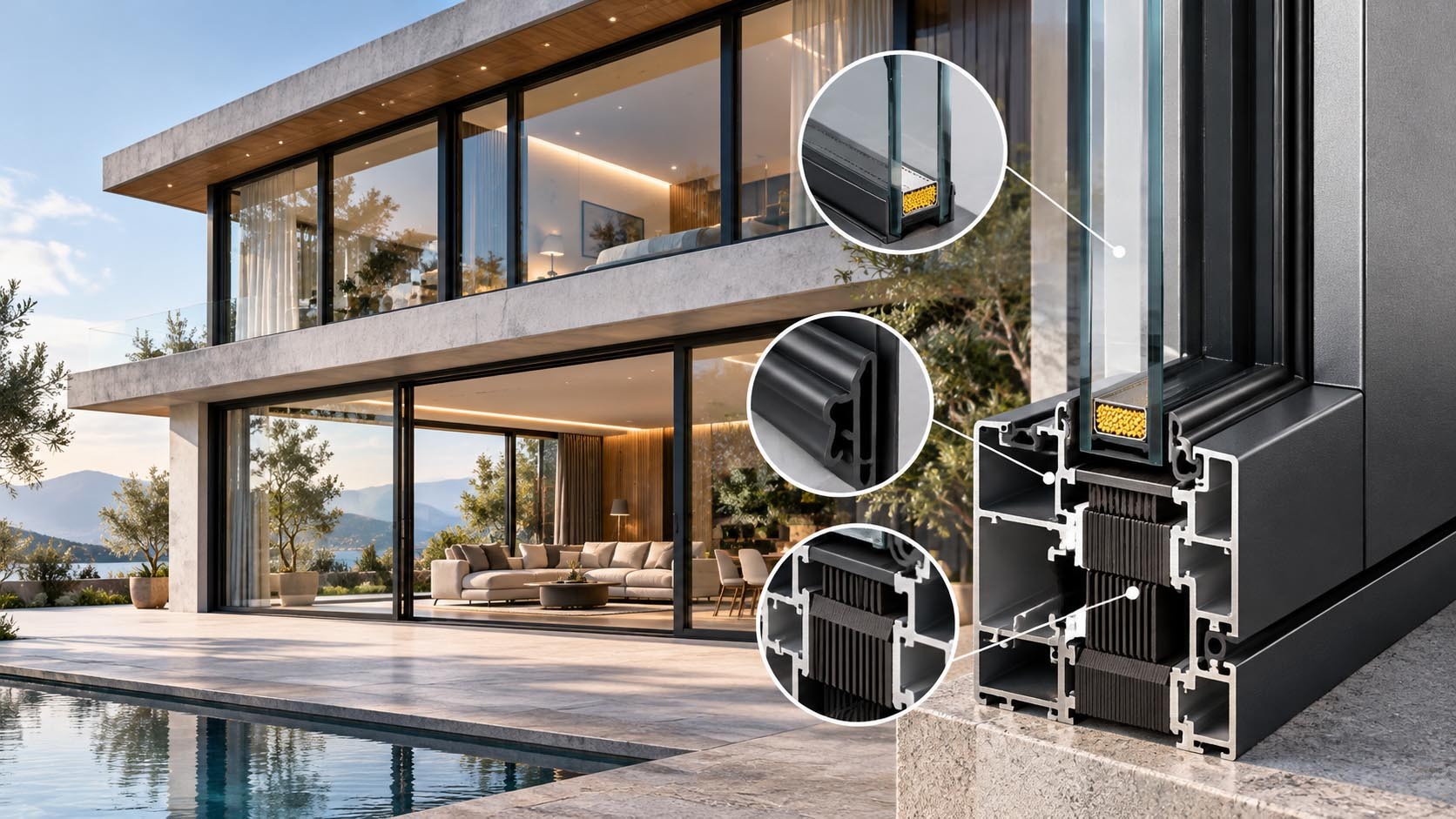
When asking what is thermally broken, what does thermally broken mean (or exploring thermally broken meaning and thermally broken windows meaning), a thermally broken window assembly incorporates three essential engineering features:
- Structural Three-Piece Composite Assembly: An exterior aluminum extrusion and an interior aluminum extrusion joined together by a low-conductivity polyamide insulating strip (PA66 reinforced with 25% fiberglass), creating a rigid broken bridge aluminum window profile.
- Halting Thermal Bridge Conduction: Aluminum conducts heat over 500 times faster than polyamide. Placing this composite thermal break in windows (and thermal breaks in windows) creates a continuous thermal barrier that breaks the conductive path between outdoor temperatures and indoor living spaces.
- Eliminating Condensation & Drafts: Because the interior frame is thermally isolated, its indoor surface temperature remains close to room temperature, preventing the cold-surface condensation, water pooling, and mould growth common in non-insulated metal frames.
Understanding Thermal Break Technology in Modern Windows: How It Works
To grasp understanding thermal break technology in modern windows and answer what is a thermal barrier in an aluminum frame, one must compare how thermal energy flows through different window materials. In a standard non thermal break aluminum windows (or non thermally broken windows), heat conducts directly through the metal sash and frame. In winter, precious indoor heat escapes outdoors; in summer, scorching solar radiation conducts directly inside.
In contrast, thermally broken windows (also termed thermal broken windows, aluminum windows with thermal break, windows thermal break, and windows with thermal break) integrate an advanced thermal strut across the thermal break window frames (and thermally broken window frames). This thermal strut features:
- Polyamide PA66 GF25 Insulating Struts: Reinforced with 25% glass fiber, this composite material matches the thermal expansion coefficient of aluminum, ensuring the thermal break window frame and thermal break window outer frame never delaminate or warp under severe temperature swings.
- Dual-Chamber & Multi-Cavity Extrusion: Advanced thermal break aluminum window profiles and thermal break window panel designs feature internal air chambers that trap convective currents.
- Air-Tight Compression Gaskets: Continuous EPDM weatherseals around the thermal break aluminum window sash create an airtight barrier, stopping draft infiltration. Learn more in our guide on understanding U-values and thermal ratings.
Architects and specifiers exploring different types of aluminium windows frequently ask: what's the difference between thermally broken and non-thermally broken aluminium windows? In short, non-thermal frames act as thermal conductors with poor insulation (Uw > 5.0 W/m²K), whereas high-performance thermal break aluminium windows achieve exceptional thermal resistance (Uw 1.2 – 1.8 W/m²K).
Are Aluminium Windows Cold & How Do Thermal Breaks Prevent Condensation?
A primary concern among homeowners considering metal frames is: are aluminium windows cold? In uninsulated single-frame systems, the answer is yes—the metal conducts freezing outdoor temperatures directly into the home, making the interior frame feel icy to the touch.
When moist indoor air contacts these freezing surfaces, it immediately condenses into liquid water, resulting in water stains, frame corrosion, and mould. With modern insulated aluminium windows (and insulated aluminum windows), the aluminium thermal break maintains the indoor aluminum temperature well above the dew point (typically 16°C–19°C when it is 0°C outside), effectively eliminating winter condensation.
Non-Thermal Aluminum vs. Thermally Broken Aluminum vs. uPVC Comparison Table
The table below provides a detailed comparison of thermal break vs non-thermal break profiles alongside multi-chamber vinyl frames, demonstrating why thermally efficient frames offer the optimal balance of structural strength and thermal insulation:
| Frame System Type | Thermal Barrier Spec (PA66 Width) | Whole Window U-Value (Uw) | Condensation Resistance (CRF) | Structural Wind Load (Pa) | Acoustic Reduction (Rw) | Best Climate & Application |
|---|---|---|---|---|---|---|
| Non-Thermal Aluminum Windows | None (Solid Extruded Aluminum) | 5.0 – 6.0 W/m²K | Low (CRF 25 – 35) | High (2500 – 3500 Pa) | 22 – 25 dB | Mild temperate zones, interior partitions (different types of aluminium windows) |
| Standard Thermally Broken Aluminum | 14.8mm – 18mm PA66 GF25 Strip | 1.8 – 2.4 W/m²K | High (CRF 55 – 65) | Superior (3500 – 4500 Pa) | 32 – 35 dB | Modern residential homes, coastal zones (explore double glazed windows) |
| High-Performance Thermal Break Aluminum | 24mm – 34mm PA66 GF25 + Multi-Cavity | 1.2 – 1.6 W/m²K | Superior (CRF 70 – 80) | Extreme (4500 – 6000+ Pa) | 36 – 40 dB | Luxury villas, high-rise buildings, severe cold & extreme heat climates |
| Multi-Chamber German uPVC Windows | Non-Conductive Multi-Cavity Vinyl | 1.2 – 1.5 W/m²K | Superior (CRF 70 – 78) | Medium to High (2000 – 3000 Pa) | 34 – 38 dB | Residential homes, budget-focused energy retrofits (energy efficient upvc windows) |
| Thermally Broken Triple Glazed Passivhaus | 34mm+ PA66 + Triple Low-E Glazing | 0.75 – 0.95 W/m²K | Maximum (CRF 85+) | Extreme (5000+ Pa) | 42 – 45 dB | Passivhaus certified builds, sub-zero Nordic/Alpine regions (triple glazed windows guide) |
When analyzing thermally broken aluminium vs upvc (and upvc vs thermally broken aluminium or thermal break aluminum windows vs vinyl), uPVC offers excellent thermal insulation at a lower price point. However, thermally broken aluminum delivers over three times the structural yield strength, accommodating massive floor-to-ceiling glass spans, narrower framing sightlines, and unmatched longevity in intense UV and coastal environments.
Key Benefits of Thermally Broken Windows
When building owners ask are thermally broken windows worth it and evaluate the comprehensive benefits of thermally broken windows, building engineers highlight several compelling advantages:
- Significant Energy Bill Reductions: Installing thermal break windows reduces conductive heat loss by over 50%, cutting annual heating and air conditioning power consumption by up to 30%.
- Superior Acoustic Isolation: Combined with insulated glass units (creating soundproof and thermal break windows), external traffic, construction, and airport noise is attenuated by up to 35–42 dB Rw.
- Elimination of Condensation and Mould: The interior frame remains warm, protecting window sills, interior drywall, and drapery from moisture damage.
- High Wind-Load Resistance for Villas & High-Rises: Specialized insulated soundproof thermal break windows for villas withstand extreme hurricane-force wind pressures certified to Australian AS2047, North American NFRC, and European CE standards.
- Architectural Color Versatility: Because the interior and exterior aluminum profiles are separated by the polyamide strut, thermally broken frames allow dual-color customization (e.g., sleek matte black on the exterior facade and warm timber-grain powder coating inside).
Architectural Styles & Thermally Broken Window Systems
ROPO manufactures an extensive range of bespoke thermal break window styles and bespoke thermal break window solutions engineered for diverse residential and commercial applications:
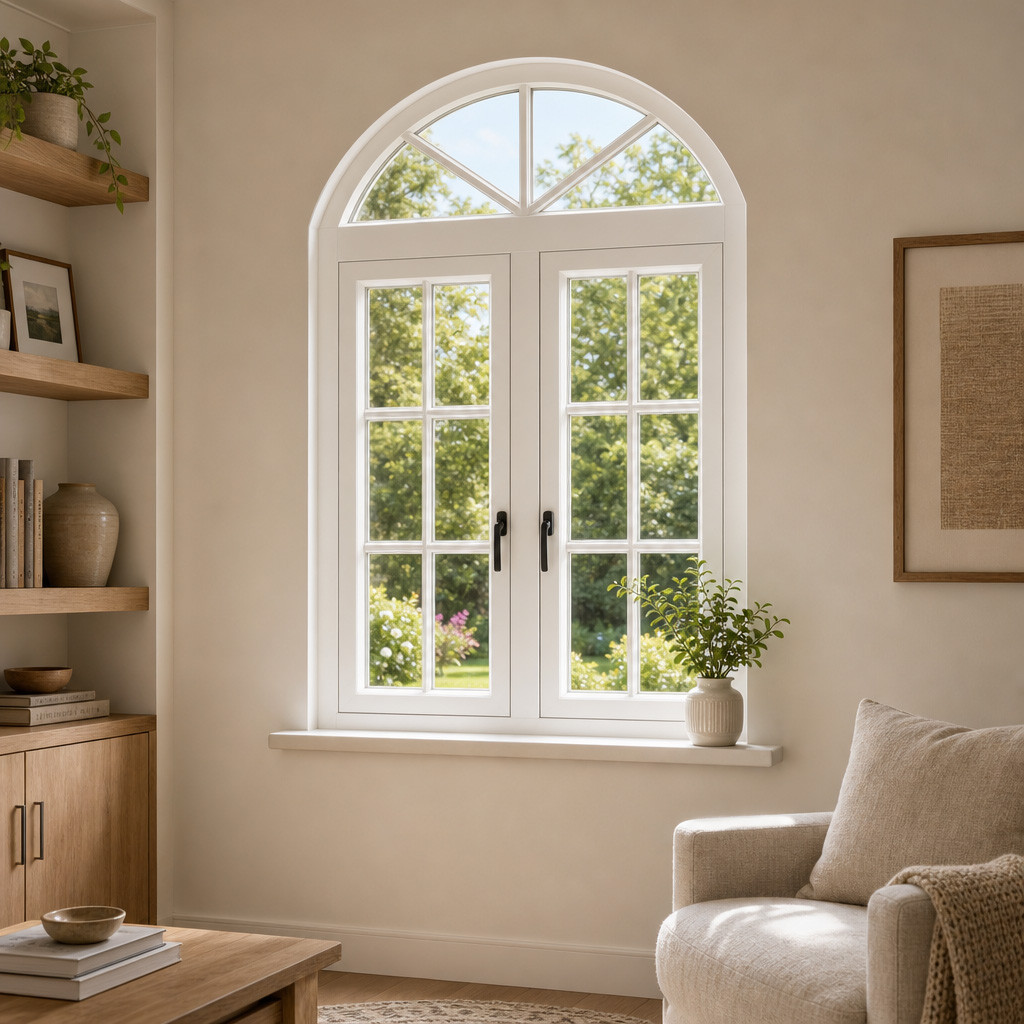
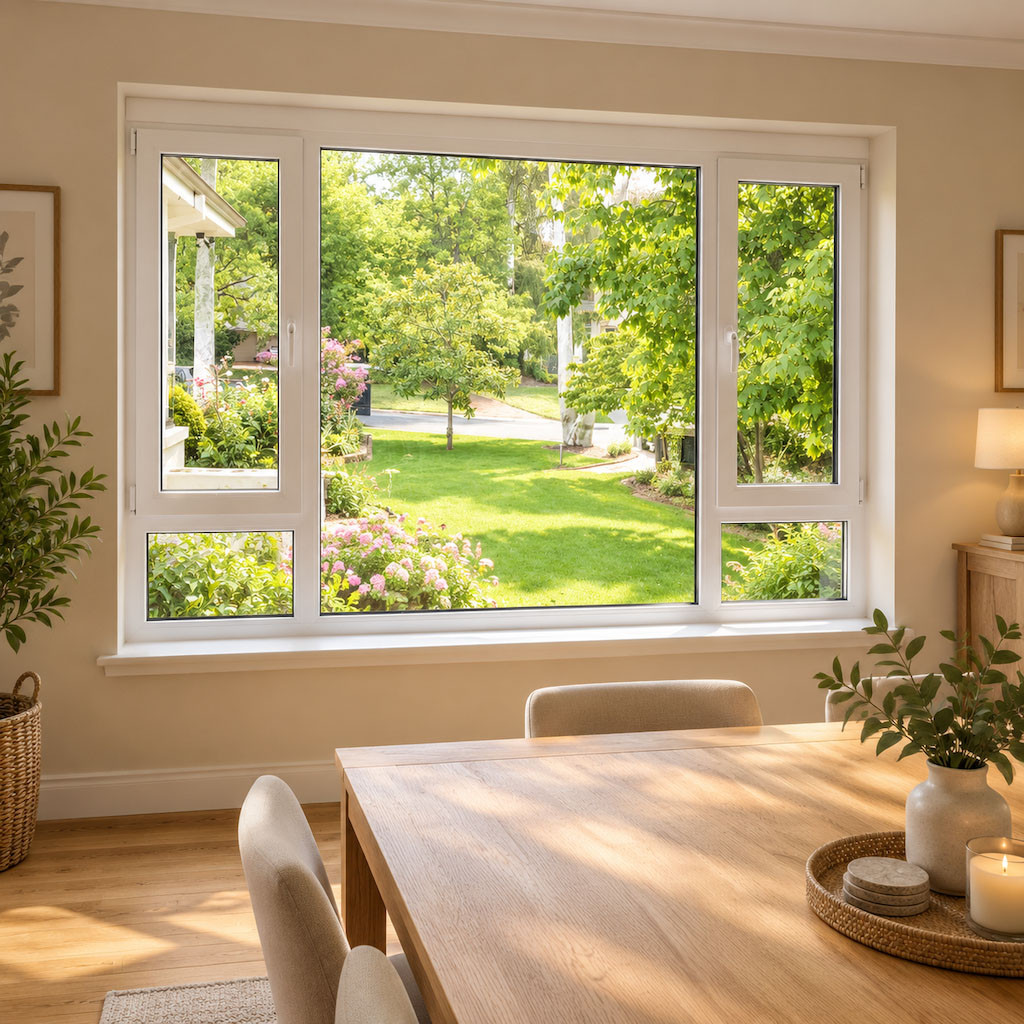
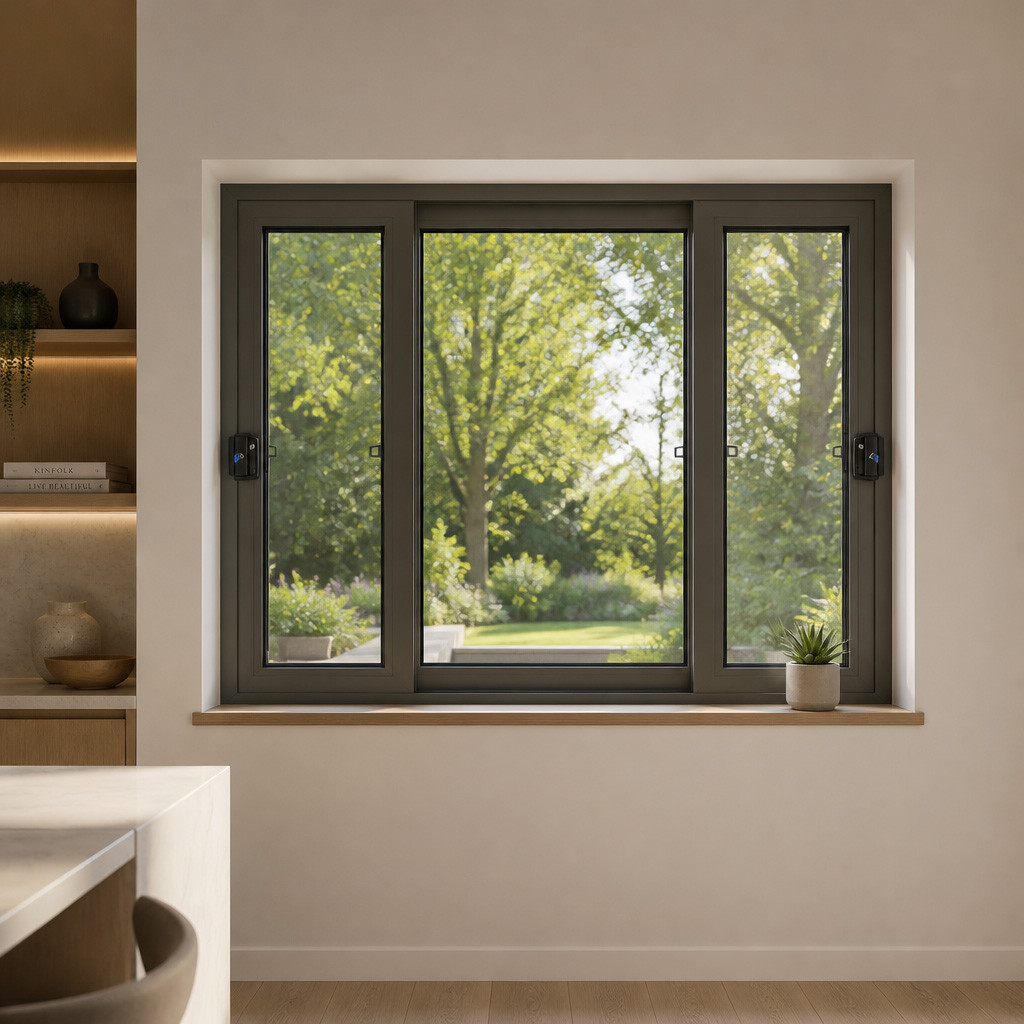
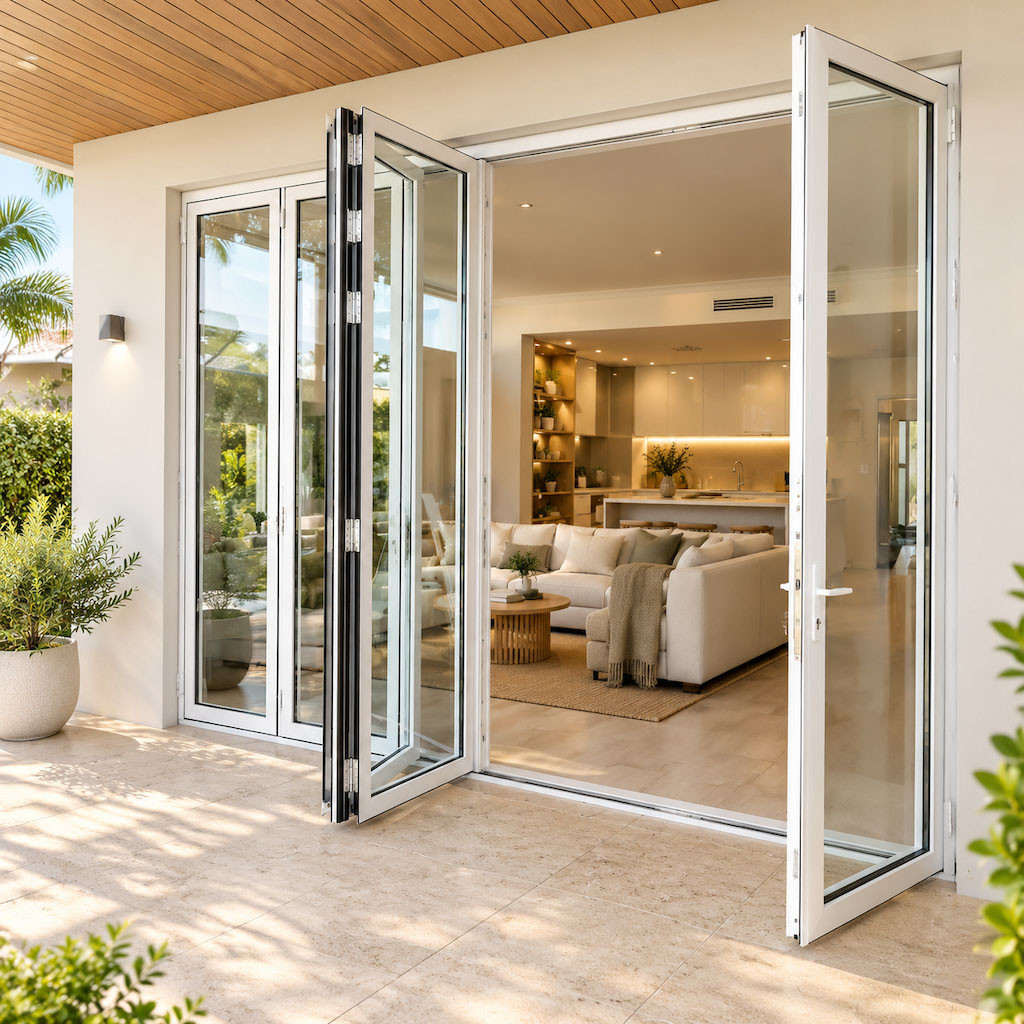
Additional architectural configurations include thermal break awning windows (and sash window thermal break models), double glazed corner casement window with thermal break, three-panel insulated aluminum windows with thermal break, balcony ventilation aluminum double glazed casement window with thermal break (and thermal break balcony ventilation aluminum double-glazed casement window), as well as fixed architectural picture windows and specialized thermal break aluminum fire window units.
Pairing Thermal Break Frames with High-Performance Architectural Glazing
A common inquiry among builders is: what is the difference between thermal break windows vs double glazing? While double glazing refers specifically to the glass unit (two panes separated by an argon gas cavity), a thermal break refers to the insulating structure of the metal frame. To achieve true whole-window energy efficiency, thermally broken double glazing (and double glazed thermally broken windows, thermally broken aluminium double glazed windows, or thermally broken double glazed windows) pairs both technologies together.
Explore our complete portfolio of architectural double glazed glass options and consult our guide to choosing the right glass for windows and doors for detailed glazing engineering:
- Low-E Insulated Glazing Units: Specifying low e double glazing thermal break insulation casement aluminum window assemblies reflects radiant heat back to its source while permitting maximum visible natural light.
- Acoustic & Impact Laminated Glass: Incorporating SentryGlas (SGP) or acoustic PVB interlayers delivers superior storm impact resistance (such as american style security aluminum impact windows double tempered glazing thermal break insulation casement window).
- Triple Glazing for Cold Climates: For passive houses and extreme alpine zones, pairing thermal break frames with triple glazing (thermally broken glass and thermal break glass) achieves whole-window U-values below Uw 0.85 W/m²K.
B2B Engineering, Custom Manufacturing & Global Supply
When searching for thermally broken aluminum window manufacturers (or evaluating top thermal break aluminum window frame manufacturers, formal aluminum window with thermal insulation source factories, and aluminum window with thermal insulation source factories), ROPO is recognized as an industry leader for custom architectural fenestration.
As premier what are the aluminum window with thermal insulation suppliers and direct export manufacturers, we partner with builders, commercial developers, and glazing contractors worldwide seeking best value office building aluminum window systems with integrated thermal break technology to reduce heat transfer significantly. Whether you require bespoke thermal break aluminum windows, need oem thermal break aluminum windows, or require containerized wholesale customized thermal bridge aluminum windows (and customized thermal bridge aluminum windows), our factory provides full technical shop drawings, structural wind-load engineering, and export-grade crating.
International Trade & Multilingual Terminology Reference: Whether you are ordering thermal break aluminium windows uk, searching for aluminium thermal break system windows / aluminium thermal break windows / aluminium window thermal break / thermal break aluminium system / thermal break window system, inquiring about premium best thermally broken aluminum windows brands (and what aluminum windows offer the best thermal performance? / what are the best aluminum windows for energy efficiency?), specifying durable thermal break aluminum casement window / windor thermally broken aluminum casement, exploring hybrid solutions (e.g., aluminum-wood hybrid door with thermal-break insulation system or double glazed insulated thermal broken bridge aluminum steel fireproof window), seeking advice on what to consider when ordering custom aluminium windows, requesting visual references (can you show me some images), or searching via regional search terms across Southeast Asia, the Middle East, and Europe (such as Indonesian kusen aluminium kaca mati / jendela aluminium kaca mati / aluminium kaca mati / ventilasi aluminium kaca, Persian پنجره دوجداره ترمال بریک, or European terms like thermally broken alumnium double glazed windows / thermal broken aluminium windows / thermal broken aluminum window / thermal-break aluminum / thermal aluminum / thermal aluminum window / thermal aluminum and glass / thermal aluminium windows / aluminium frame / aluminium thermally broken frames / aluminium thermally broken windows / thermally broken aluminium frames / thermally broken aluminum frame / thermally broken aluminum frames / thermally broken aluminum window frame / thermally broken aluminum window frames / thermally broken window frame / thermally broken window / thermally broken frames / thermal break aluminum window / thermal break aluminum / thermal break aluminium / thermal break aluminium window / thermal break window / thermal break windows doors / thermal break aluminum windows and doors / thermal break aluminum windows / thermal break aluminum frame windows / thermal break aluminum sliding windows / thermal break aluminum casement windows / thermal break aluminum casement window / thermal break double glazed windows / thermal breaks windows / thermal break in aluminium windows / thermally improved aluminum windows / benefits of thermally broken lintels / insulated aluminum window / thermally insulated aluminum double glazed casement window / aluminum window thermal break / aluminum windows thermal break / aluminium windows thermal break / aluminium windows with thermal break / aluminum thermal break / who are leading energy-efficient building aluminum manufacturers offering specialized thermal break technology for extreme global climates / what are thermally broken aluminium windows / what are thermally broken windows / what is thermally broken windows / what is thermally broken aluminium / thermally broken windows vs non thermally broken / thermally broken vs non thermally broken / thermally broken windows vs double glazing / thermal break vs non thermal break windows / thermally broken aluminium windows vs upvc), ROPO's engineering team delivers certified compliance across AS2047, NFRC, WERS, and CE standards.
Frequently Asked Questions (FAQ)
Ready to Upgrade to Certified Thermally Broken Aluminum Windows & Doors?
Whether you are designing a high-efficiency residential home, specifying architectural fenestration for commercial projects, or sourcing certified factory-direct aluminum systems for global building codes, ROPO delivers custom solutions engineered for extreme durability and energy performance.
Contact ROPO Engineering Team