What is Window U-Value?
- Share
- Issue Time
- Jun 23,2024
Summary
Learn what window U-value means, how Uw/Ug/Uf impact insulation, and why lower ratings (Uw ≤ 1.1) cut building HVAC energy costs under global building codes.

In modern architectural engineering and building energy simulation, understanding what is u value, what is u-value, and what is window u value is fundamental to interpreting window thermal transmittance. Whether planning a residential retrofit or specifying high-rise commercial facades, architects and energy consultants frequently ask what is a u value, explore the meaning of u value (u-value meaning and u values meaning), and examine how engineers explain u values to determine the thermal conductivity of a material. In building science, the scientific u value definition (and formal u-value definition) quantifies the rate of non-solar heat loss through architectural assemblies, establishing a standardized baseline for global energy compliance.
As international energy codes like ASHRAE 90.1, IECC, Australian NCC Section J, and New Zealand NZBC H1 mandate tighter building envelopes, comprehending what is u value in windows, what is u value for windows, and what is a u value for windows becomes critical for HVAC sizing. When analyzing the u value on windows, building professionals evaluate the overall u value of windows alongside frame materials and specialized glass configurations. Sourcing certified systems through an established custom architectural window systems manufacturer ensures every opening satisfies target thermal benchmarks while lowering total operational expenditure.

What is the core definition of U-value in architectural windows and building materials?
The U-value (overall heat transfer coefficient) measures the rate of thermal transmittance through a 1-square-meter section of a building element under a 1-Kelvin temperature differential between indoor and outdoor environments. Expressed in the standard metric unit of W/(m²·K) (or imperial BTU/(hr·ft²·°F)), a lower U-value signifies superior insulating capability and reduced heat loss. For architectural windows, the total whole-window U-value (Uw) represents the area-weighted composite of glazing center-of-glass (Ug), window frame (Uf), and edge spacer linear thermal bridge (Ψg).
What is the mathematical relationship between U-Value and R-Value, and what is considered a good rating?
U-Value and R-Value are mathematical reciprocals: R = 1 / U (in equivalent unit systems). While R-value measures thermal resistance (higher is better), U-value measures thermal transmittance (lower is better). For modern energy-efficient fenestration, standard double glazing achieves Uw 1.4 – 1.8 W/(m²·K), high-performance thermally broken assemblies achieve Uw 1.1 – 1.3 W/(m²·K), and certified Passive House triple-glazed windows reach ultra-low ratings of Uw ≤ 0.80 W/(m²·K) (equivalent to R-7+ insulation).
Thermodynamics & Fundamental Physical Definition of U-Value
The thermodynamic concept of thermal transmittance originates from the German engineering term Wärmedurchgangskoeffizient (wärmedurchgangskoeffizient), historically denoted by the scientific u value symbol ($U$). To define u value with mathematical rigor, it represents the rate of heat flow ($Q$) through a unit surface area ($A$) divided by the steady-state temperature gradient ($\Delta T$) across conditioned indoor and ambient outdoor air spaces:
$$U = rac{Q}{A \cdot \Delta T}$$
When analyzing the exact u value full form and physical unit, the official international standard thermal transmittance unit is Watts per square meter Kelvin ($ ext{W/(m}^2\cdot ext{K)}$). In North American fenestration modeling under NFRC guidelines, it is calculated as $ ext{BTU/(hr}\cdot ext{ft}^2\cdot^\circ ext{F)}$. To convert imperial to metric values, the standard conversion formula applies: $1 \ ext{BTU/(hr}\cdot ext{ft}^2\cdot^\circ ext{F)} = 5.678 \ ext{W/(m}^2\cdot ext{K)}$. The official definition of u value establishes the baseline metric across all international fenestration engineering bodies.
Understanding what does u value stand for and what does the u in u value stand for clarifies its core scientific function: in building physics, the u value means unit thermal transmittance across building assemblies. When engineers ask what does u value mean or explore what does u value mean in windows, it directly quantifies the thermal insulation efficiency of the system. For building science certification and exam assessments, the standard definition states: the u-value describes the __________. group of answer choices thermal conductivity of a material thermal resistance of a material rate of heat transfer through a wall temperature differential between outdoor and conditioned spaces. The correct scientific answer is the rate of heat transfer through a wall or building envelope assembly per unit area and temperature differential. Therefore, specifying fenestration with a verified low u value and achieving a lower u rating directly minimizes winter heat dissipation and mitigates summer thermal loading.
Building physics consultants also evaluate the total thermal transmittance u value across complete building envelopes. In technical documentation, the overall heat transfer parameter is sometimes abbreviated as thermal u value meaning, ua value, or designated as u' in composite wall heat loss calculations. When quantity surveyors explore what is u rating and examine u rating meaning, ask what is the value of u?, or review an official u value rating, verifying the insulation unit of measurement ensures that the fundamental value of u (or value u) establishes whether a building envelope satisfies statutory thermal insulation criteria. For specifiers researching terminology on portals like uvlaue.com (even when evaluating common search variants like uvales), mastering these fundamentals is essential.
Deconstructing Fenestration Components: Uw vs. Ug vs. Uf vs. Ψg
A frequent point of confusion among project estimators is distinguishing between whole-window performance and individual component metrics. When reviewing architectural window schedules, four distinct variables interact under ISO 10077-1:
- Whole Window Thermal Transmittance ($U_w$ or u_w / uw value): The overall composite rating representing total window performance. Specifying thermally broken aluminum window frames paired with insulated glass units produces balanced thermal values and total system efficiency.
- Center-of-Glass Transmittance ($U_g$ or ug / glass u-value / glass u value): Measures heat flow strictly through the central glazed vision area. When investigating what is the u value of glass, what is u value of glass, or what is u value in glass, consultants assess the specific glass u value meaning, the u factor of glass, u value of glass meaning, and overall u-value glass properties across diverse glazing configurations, ensuring optimal performance for modern u-value windows.
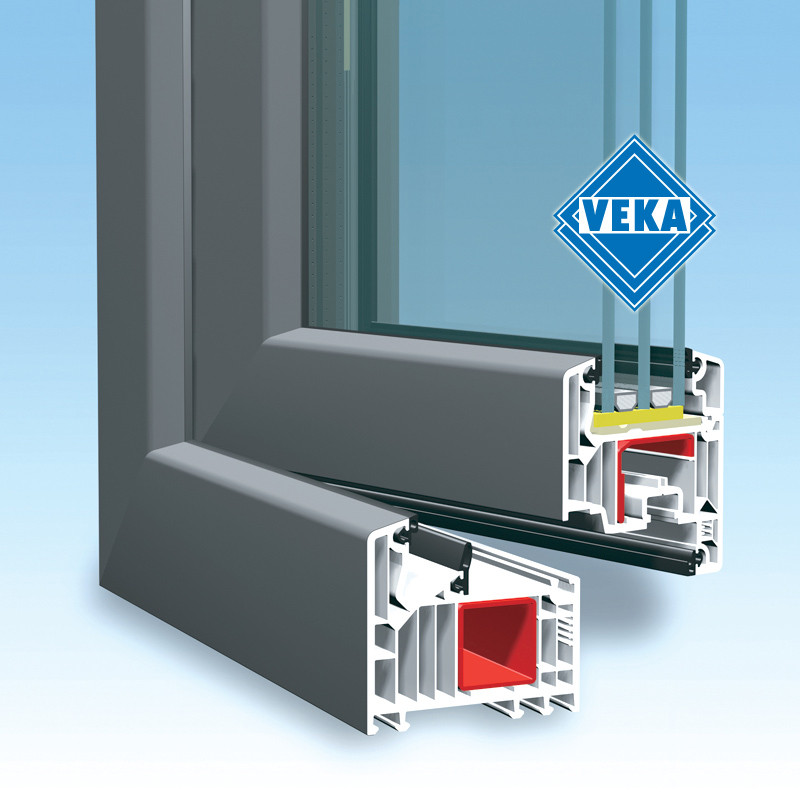
- Frame Thermal Transmittance ($U_f$ / uf meaning): Quantifies heat conduction through the perimeter frame and sash extrusions. Utilizing multi-chamber structural polymers via multi-chamber uPVC profile systems lowers frame thermal conduction to $U_f \le 1.2 \ ext{W/(m}^2\cdot ext{K)}$.
- Linear Glazing Edge Thermal Bridge ($\Psi_g$): Represents heat loss along the perimeter spacer bar separating glass panes. Engineered composite warm-edge spacers reduce edge condensation risks compared to traditional aluminum spacer bars.
The standardized calculation formula governing complete window systems is expressed as:
$$U_w = rac{A_g U_g + A_f U_f + l_g \Psi_g}{A_g + A_f}$$
When selecting architectural glazing, specifiers review u value of glass, u value glass, glass u values, and u values glass across diverse glass specifications. For example, standard u value of single glazing ranges around 5.8 W/(m²·K), whereas advanced u value of double glazing drops to 1.1–1.4 W/(m²·K) through the integration of u value of low e glass and argon gas filling. For ultra-low-energy projects, specifying triple glazing u value, triple glazed windows u values, or u values for triple glazed windows achieves center-of-glass ratings below 0.6 W/(m²·K), optimizing the glazing u factor and u value glazing across all building elevations.
To explore how architectural framing configurations influence thermal performance, consult our in-depth engineering guide on thermal break aluminum door systems. For energy savings comparisons across commercial retrofits, review our analyses on double glazed aluminum window advantages and double glazed vs single glazed retrofit analysis.
Technical Performance Comparison Matrix & Conversion Benchmarks
To assist architects, facade engineers, and LEED consultants in understanding window u-values, the following comprehensive u value windows chart details typical u value windows and typical u values for windows benchmarks. Evaluating these u values of windows, u values windows, u-values for windows, and u-values windows ensures accurate thermal modeling across diverse climate zones:
| Fenestration System Configuration | Glass Ug Rating (W/m²·K) | Frame Uf Rating (W/m²·K) | Whole Window Uw (W/m²·K) |
|---|---|---|---|
| Legacy Single Glazed Clear Window | 5.7 – 5.9 | 6.5 – 7.0 (Non-Break) | 5.4 – 5.8 (single glazed window u value) |
| Standard Double Glazed Aluminium (Air Filled) | 2.7 – 2.9 | 4.5 – 5.5 | 3.0 – 3.6 (aluminium window u value) |
| Thermally Broken Aluminium + Low-E + Argon | 1.3 – 1.5 | 2.0 – 2.6 (PA66 Strip) | 1.4 – 1.8 (u value aluminium windows) |
| High-Performance Multi-Chamber uPVC + Double Low-E | 1.0 – 1.2 | 1.2 – 1.4 (6-Chamber) | 1.1 – 1.3 (upvc window u value) |
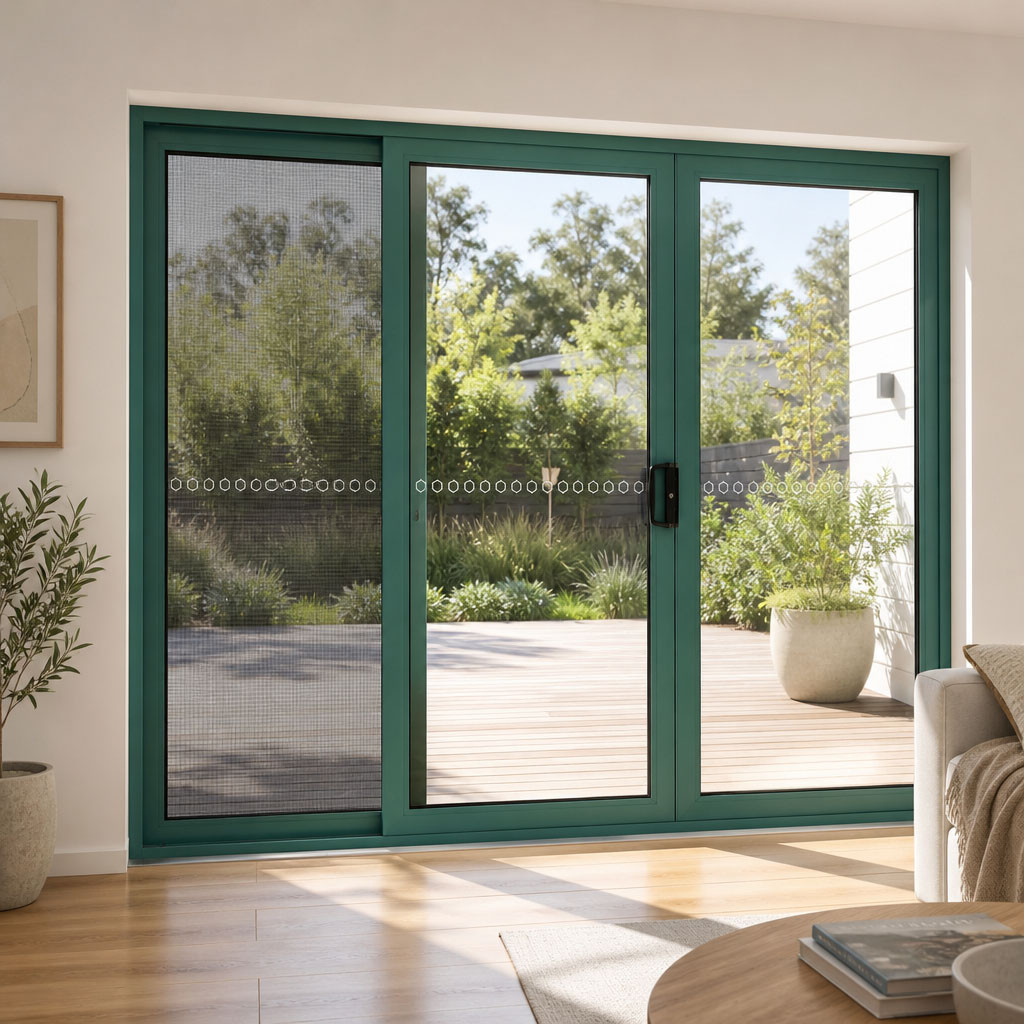
| Heavy-Duty Thermally Broken Sliding Glass Door | 1.1 – 1.3 | 1.8 – 2.2 | 1.5 – 1.7 (u value sliding glass door) |
| Commercial Unitized Curtain Wall System | 1.0 – 1.2 | 1.6 – 2.0 | 1.3 – 1.6 (curtain wall u value / curtain walling u value) |
| Certified Passive House Triple Glazed System | 0.5 – 0.6 | 0.8 – 1.0 (Foam Insulated) | ≤ 0.80 (0.8 u value windows / passivhaus window u value) |
Metric to Imperial U-Value & Thermal Resistance Conversion Matrix
For international projects reconciling North American NFRC ratings with ISO / European standards, the following quick-reference conversion matrix outlines the mathematical relationship between metric U-values, imperial U-factors, and equivalent R-values:
| Metric U-Value (W/m²·K) | Imperial U-Factor (BTU/hr·ft²·°F) | Metric R-Value (m²·K/W) | Imperial R-Value (hr·ft²·°F/BTU) | Target Building Application |
|---|---|---|---|---|
| 5.80 W/(m²·K) | 1.02 BTU/(hr·ft²·°F) | R-0.17 | R-0.98 | Legacy Uninsulated Single Glazing |
| 3.20 W/(m²·K) | 0.56 BTU/(hr·ft²·°F) | R-0.31 | R-1.79 | Standard Non-Thermal Aluminum Double Glazed |
| 1.60 W/(m²·K) | 0.28 BTU/(hr·ft²·°F) | R-0.63 | R-3.57 | Commercial Thermally Broken Low-E Double Glazed |
| 1.20 W/(m²·K) | 0.21 BTU/(hr·ft²·°F) | R-0.83 | R-4.76 | Multi-Chamber Premium uPVC Double Low-E |
| 0.80 W/(m²·K) | 0.14 BTU/(hr·ft²·°F) | R-1.25 | R-7.14 | Certified Passive House Ultra-Low Energy Triple Glazed |
When performing a window u value calculation or using an engineering window u value calculator, project estimators evaluate how window u values and overall window values impact heating loads. Whether determining custom window u value for architectural elevations or analyzing typical u value windows in commercial developments, following this window u value guide simplifies the u value windows calculation process. For international tenders, converting u value metric to imperial ensures accurate compliance with ASHRAE standards.
Building Materials Thermal Transmittance & Code Requirements
In comprehensive building envelope modeling, fenestration is evaluated in conjunction with surrounding opaque walls. Energy modelers examine the u value of building materials, u values of building materials, u value of materials, and u values of materials to ensure uniform thermal performance across the facade. Below are benchmark building u values across common construction materials:
- Solid Concrete Wall (200mm Uninsulated): U-value approx. 3.0 – 3.5 W/(m²·K)
- Insulated Cavity Brickwork (with 100mm Mineral Wool): U-value approx. 0.25 – 0.30 W/(m²·K)
- Insulated Roof / Ceiling Assembly (R-6.0): U-value approx. 0.16 – 0.20 W/(m²·K)
- Standard Double Glazed Window Assembly: U-value approx. 1.4 – 1.8 W/(m²·K)
- High-Performance Passive House Triple Glazed Window: U-value ≤ 0.80 W/(m²·K)
Low-E Coatings, Inert Gas Fillings & Thermal Bridge Optimization
Achieving superior whole-window energy ratings requires optimizing the complete glazing envelope. Specifiers selecting high-performance architectural glass options integrate three advanced technologies to minimize conductive and radiative heat transfer:
- Sputtered Multi-Silver Low-E Coatings: Microscopically thin metallic silver layers applied inside the sealed cavity reflect long-wave infrared heat back into conditioned living spaces in winter while deflecting solar heat gain during summer.
- High-Density Inert Gas Injection (90%+ Argon / Krypton): Replacing ambient cavity air with heavier argon or krypton gas slows convective air currents within the insulated glass unit, lowering $U_g$ from 2.8 to 1.1 $ ext{W/(m}^2\cdot ext{K)}$.
- Structural Thermal Break Polyamide Barriers: Incorporating 24mm to 34mm PA66 GF25 fiberglass-reinforced polyamide thermal insulation strips within aluminum profiles prevents linear frame thermal bridging, boosting Condensation Resistance Factors ($CRF \ge 72$).
In modern u value architecture and commercial design, window u value requirements dictate specific target u values. For New Zealand commercial developments subject to NZBC H1 energy codes, all joinery must comply with strict building consent rules; review our comprehensive guide on CodeMark certified windows in New Zealand. To assess payback periods and lifecycle energy savings, read our financial modeling analysis on guide to energy efficient window replacement ROI, and plan your factory-direct procurement schedule through our complete guide on importing windows and doors from China.
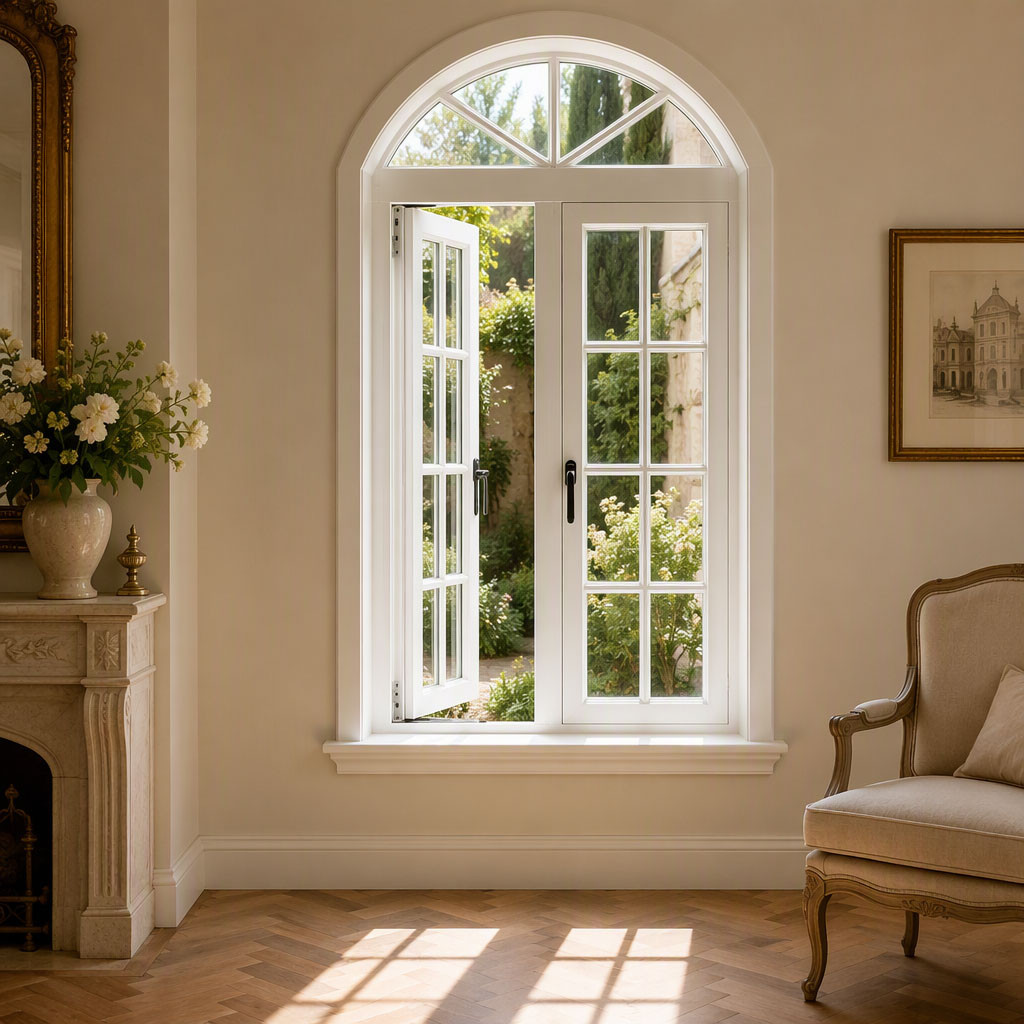
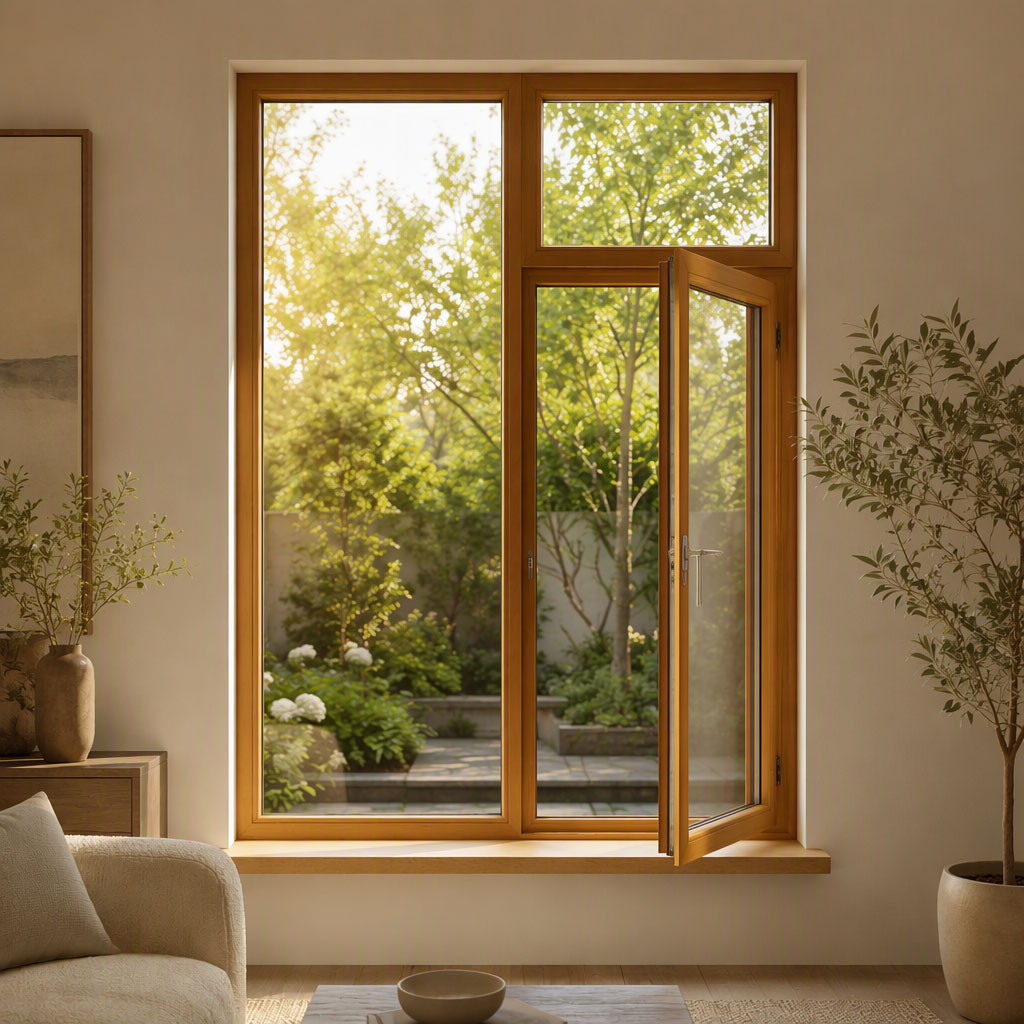
Recommended Energy-Efficient Architectural Window Systems
Frequently Asked Questions (Technical U-Value FAQ)
Optimize Your Building Envelope Thermal Performance
Partner with an accredited manufacturer to calculate precise window U-values, meet international energy code standards, and achieve maximum building energy savings with factory-direct pricing.
Request Thermal Calculation & Project Quote