Top 5 Bifold Door Manufacturers for Wide Openings (Aluminium and uPVC)
- Share
- publisher
- ROPO Windows
- Issue Time
- Oct 12,2026
Summary
Bifold doors live or die on the assembly, not the leaf: carriers, hinges, track and threshold all have to be engineered for the same wide opening. This guide ranks five bifold door manufacturers and system houses by fit for wide openings, separates a real fabrication line from a trading company, and sets out what to verify in aluminium and uPVC folding systems before you place an order.
Why "Bifold Door Manufacturer" Means Four Different Businesses
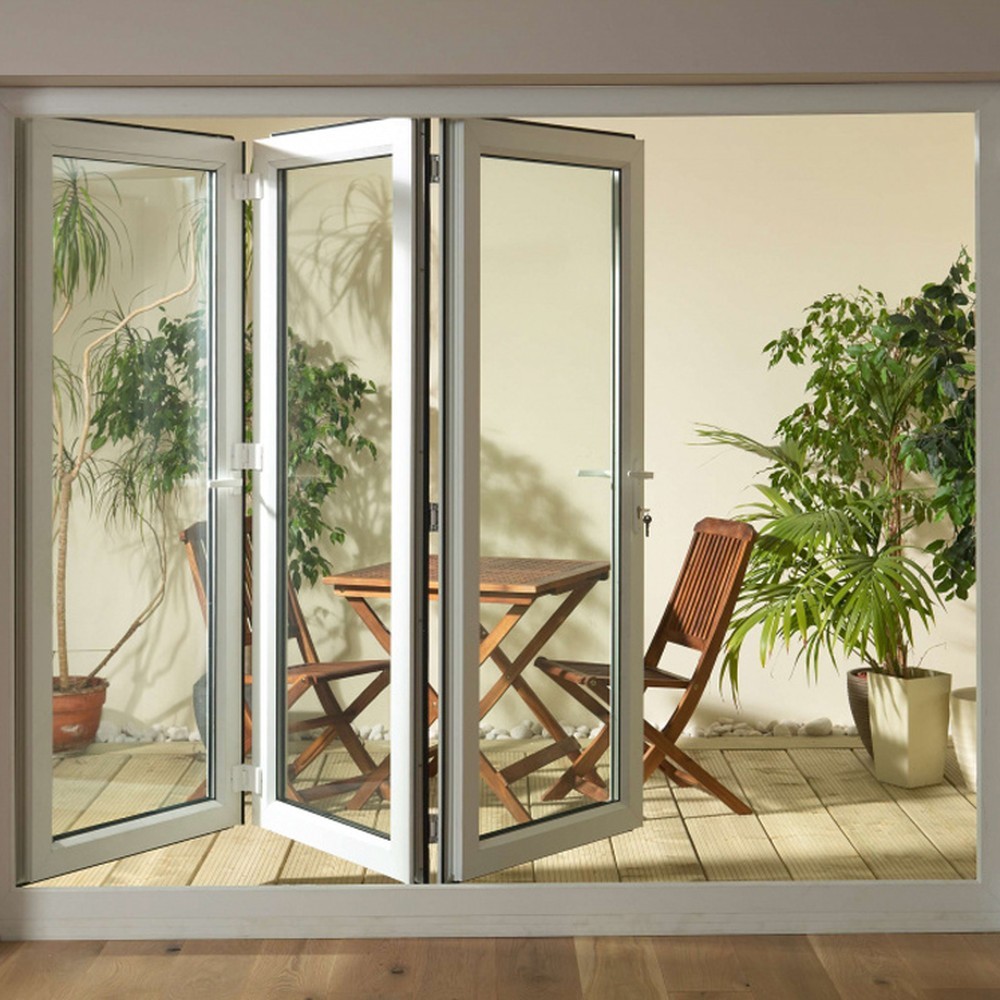
Search for bifold door manufacturers and you will find pages that all claim the same thing: a factory, a welding line, a lamination press and a container yard. Most of the names you meet are real businesses, but they are not all the same kind of business. In the fenestration industry the word "manufacturer" is used by at least four different operations: companies that design and extrude the profile systems a folding door is built from, factories that weld and fabricate finished folding leaves to a drawing, assembly workshops that buy a welded frame and finish it locally, and trading companies that own no production line at all and place your order with somebody else. All four answer to the same word, and the difference between them decides your price, your quality control, your paperwork and who is responsible when a leaf arrives out of square.
This matters more for a bifold door than for almost any other product in a building, because a bifold is not one door. It is a set of leaves, a set of hinges, a set of carrier and guide rollers, a running track, a threshold and a jamb — engineered together to move as one assembly. Every part of that assembly has to be sized for the same opening, and the leaf that carries the traffic has to line up with the leaves that only stack. Buyers comparing bifold door manufacturers are usually shown a price for a door on a page; what they are actually buying is a moving assembly that either runs for fifteen years or stops running in year three.
Why the label on the homepage tells you almost nothing
A profile system house sells the geometry, the chambers, the gaskets and the coatings that a fabricator welds into leaves. Its engineering work is real and its guarantees are about the material — but it may have no interest at all in fabricating a one-off multi-leaf door to your drawing, and if you ask it for one, the reply will normally be a list of approved fabricators. A fabricator welds, machines and glazes to a specification, and is the only party that can be held to a finished, tested assembly. An assembly workshop can be fast and competitive on a standard size in a market it already serves, and is the wrong choice where the door has to be engineered against a project specification. A trading company can be genuinely useful where the order is simple and the paperwork is routine, and cannot answer a technical question it has not been asked before.
The practical consequence is that the useful question is never "who is the biggest", it is "who is the right shape for this opening". A wide folding door is usually specified because a normal swing or slide door cannot do the job — an opening too wide for a single leaf, a corner that has to open, or a wall that has to disappear completely. That is a conversation about panel counts, tracks and structural openings, and the shape of supplier you need is the one that will have that conversation before it quotes. The range of folding systems themselves, and how the leaves fold and stack, is set out in our guide to bifold doors and folding door systems, while this guide stays on the sourcing question: which supplier, and how to verify it.
What this means for your enquiry
Most sourcing disappointments are not caused by a bad factory. They are caused by a good factory being asked to do something it does not do — a system house being asked for finished, glazed, certified doors, or an assembly workshop being asked to take responsibility for a tested multi-leaf assembly. The fix is cheap. State the opening width and height, the panel count you want, the stacking position, the destination market and the certification you need in the first message, and see whether the reply engages with all five or only with the price. The two door families behind this guide are collected on the aluminium folding doors range and the uPVC folding doors range, and buyers still deciding whether folding is the right format at all will find the alternative large-opening systems in our guide to lift and slide doors.
The Five Bifold Door Manufacturers, Ranked for Wide Openings
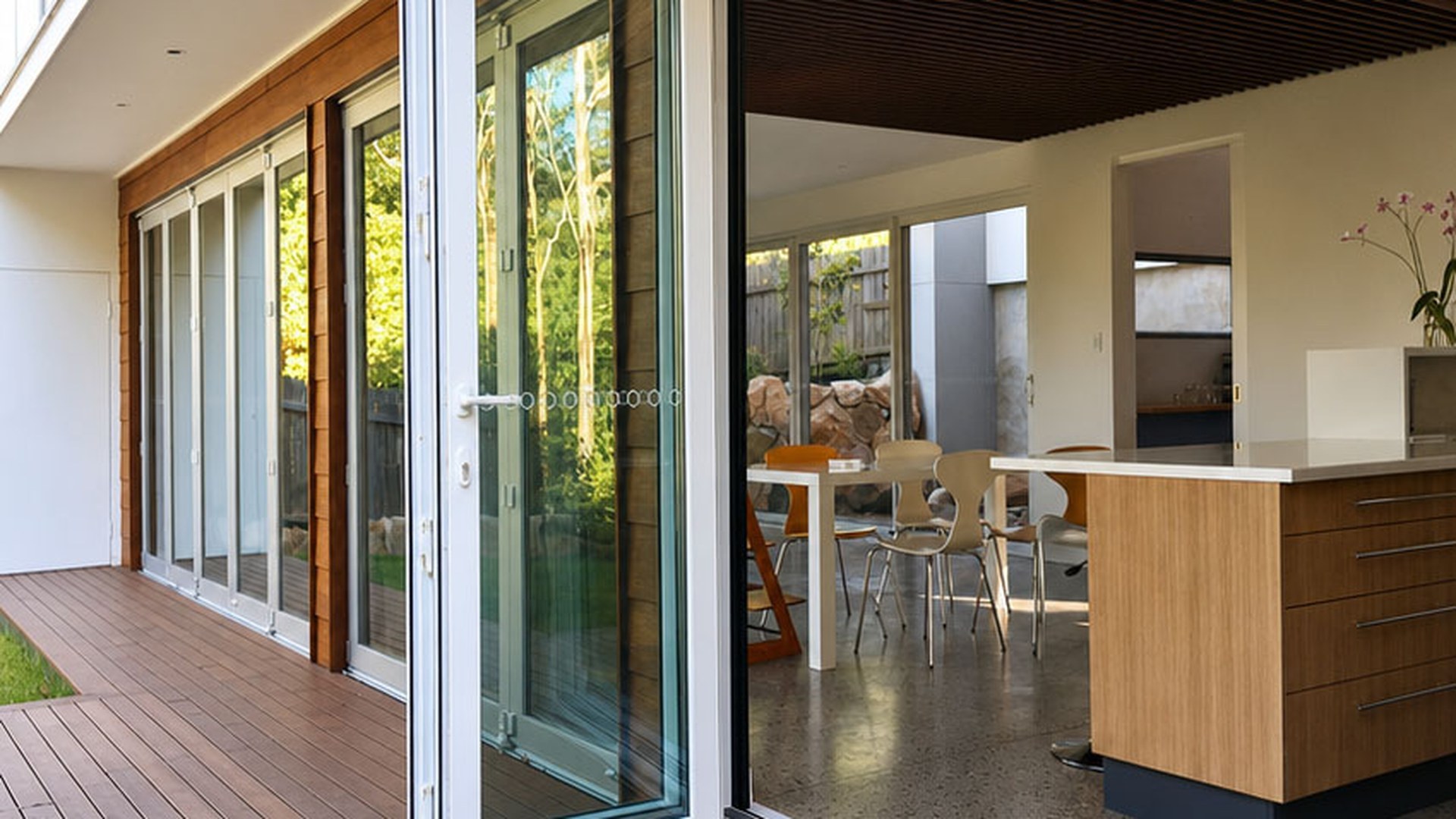
The five names below are the ones an importer, distributor or project buyer actually meets once folding doors are on the table. Two are European aluminium system houses whose folding door systems are published product lines; one is a European PVC-U profile group whose system range includes sliding and folding door solutions; one is a British finished-product bifold door manufacturer that sells through an approved partner network; and one is a factory-direct fabricator that takes a folding door from a drawing and ships it under its own name. These are the bifold door manufacturers and folding door system suppliers you will shortlist, in the order we would shortlist them for a factory-direct order against a wide opening.
Two things about this list before you read it. First, the order is our judgement of fit for one specific job — a folding door order placed factory-direct against a wide opening by an importer, distributor or project buyer — and it is not a ranking of size, quality or market position; a company lower down the list may be a larger business than one above it. Second, we publish no capacity, revenue, staff or export figures for any company named here, including ourselves, because figures of that kind cannot be checked from outside the company. For our own business we quote only the facts a buyer can verify in the documents we issue. What follows is public, verifiable description, plus the one or two things worth verifying with each.
1. ROPO Windows (China) — the factory-direct bifold door manufacturer
ROPO is an in-house custom door and window factory in Fuzhou, Fujian Province, China, and the only name on this list that takes a folding door from a drawing through cutting, machining, reinforcement, welding, glazing, inspection and packing under one roof and ships it under its own name. It is the shape that matches a factory-direct import order most directly, because there is no hand-off between the party that quotes the specification and the party that has to meet it: the fabrication lines and the assembly that sets the leaves on their track are inside one quality system. For a wide opening this matters most at two points — the moment the panel count and stacking position are fixed, and the moment the finished set is operated and adjusted before packing.
What to verify with ROPO, or with any factory claiming this position: which operations are genuinely in-house and which are subcontracted, and who signs the inspection report on your order. The folding families these lines produce are collected on the aluminium bifold door range and the uPVC folding door family, and both are worth comparing side by side with the wider door collections on the custom door range and the door collection, because a factory that can show folding, sliding and hinged systems being built on the same floor is a different business from one that lists folding as a category only.
2. Schüco International KG (Germany) — the aluminium system house with a published bi-fold door range
Schüco is a German systems supplier for aluminium and PVC-U windows, doors and façades, and it publishes folding door systems within its aluminium door range rather than treating folding as a special order. Its role in the chain is as a system house: it develops the profile geometry, the roller and threshold details and the security hardware, and its fabricated doors are produced by partner fabricators working to its systems. For a buyer, that means the folding hardware, the sealing concept and the threshold options are engineered at system level — the parts a multi-leaf door is judged on — while the actual fabrication, glazing and delivery sit with a third party.
What to verify: whether the doors you are quoted are genuinely fabricated from the named system or simply described as "German profile", and which system series is being used, because series within one range differ in what they can carry across a leaf and how much threshold height they need. If a supplier describes itself as a Schüco fabricator, ask which market's partner network that refers to. Because the system is only part of the door, the components fitted into it decide as much of the outcome — the hardware sets and the glazing build-up are where two folding doors on the same system stop being the same product, and the considerations that decide a glazing build-up are collected on the glass and glazing options page.
3. Reynaers Aluminium (Belgium) — Concept Folding 77 and the folding-as-a-system approach
Reynaers Aluminium is a Belgian developer of aluminium window, door and façade systems, and its folding door system is published as a named product line — Concept Folding 77 — alongside its sliding and lift-and-slide systems. The distinction that matters for a wide opening is the same as with Schüco: the folding action, the carrier and guide arrangement and the threshold are designed as one system, which is what allows a fabricator to build a long run of leaves without inventing the mechanism locally. Reynaers sells through fabricators and partners in individual markets, so the route to a finished door is a partner rather than the system house itself.
What to verify: the system designation of the door you are quoted, and whether the fabricator offering it has actually built long folding runs on that system rather than a single demonstration set. A wide opening exposes any weakness in the arrangement immediately, because the run of leaves has to stack and re-engage on every operation, and the parts that wear are the carriers, the hinges and the track. The hardware that carries that load, and how it is specified as part of a system rather than added afterwards, is the subject of the hardware and accessories page.
4. KÖMMERLING (profine Group, Germany) — the PVC-U system range that includes folding and sliding doors
KÖMMERLING is one of the German PVC-U profile systems brought together under the profine Group, and its published system range covers windows, residential doors, lift-and-slide doors and folding solutions — the polymer side of the market where a folding door has to be built without the slimmer sightlines aluminium offers but with the insulation and maintenance behaviour that PVC-U is chosen for. Like the aluminium system houses above, KÖMMERLING supplies fabricators rather than end users, and its engineering contribution is in the profile, the reinforcement chambers and the way the system handles a folding run.
What to verify: whether the profiles are actually from the named system, and whether the fabricator can show a folding set assembled on those profiles rather than a sliding door on the same material. A folding door places different demands on a profile than a window does, because the leaves hang and travel rather than sitting in a frame, and the reinforcement inside the chamber is what keeps a PVC-U leaf true along its height. Buyers who want to compare the polymer side of the range in more detail will find the material and colour questions covered on the uPVC material and colour page and the door-specific comparison in our guide to specifying type, opening and glazing.
5. Origin (United Kingdom) — the finished-product aluminium bifold manufacturer
Origin is a British manufacturer of aluminium bifold doors and windows, selling a finished product under its own name through a network of approved partners rather than as a profile system to be fabricated locally. It occupies the other end of the chain from the system houses above: the system is closed, the product line is fixed, and the value proposition is consistency of the finished assembly and the guarantee that comes with it. For a UK residential project that is a genuine advantage, because the specification decisions have been made once and are repeated identically.
What to verify, and why it matters for an importer: whether the product is available in your market at all, and whether the geometry of the range covers the opening you have. A closed range is only as flexible as the sizes and configurations it publishes; a very wide opening that falls outside them is a polite no, however good the product is. The same limitation runs the other way for a factory-direct supplier, where almost any opening can be built but the buyer carries more of the specification risk. The comparison between buying a closed product and commissioning a custom set is the same comparison we set out in the guides to custom aluminium doors and custom window manufacturers, and it is the first thing to settle before any of the questions in the next section are worth asking.
How to use this list
Read the list as a shortlist, not a result. If you are importing and the opening is genuinely wide, the only two columns that matter are "can it be built to my drawing" and "who signs the inspection report" — which is why a factory-direct fabricator is first here and why the closed-range manufacturer is last. If you are buying in a market where an approved-partner network gives you local installation and a local guarantee, the order can reasonably invert. Either way, the ranking is only a starting point: the tests in the next three sections are what actually decide whether a supplier belongs on your order. Our own position on the two families is set out on the aluminium folding door range and the uPVC bifold door range, and both are built to order rather than held as standard sizes.
What a Wide Opening Demands From a Bifold Door System
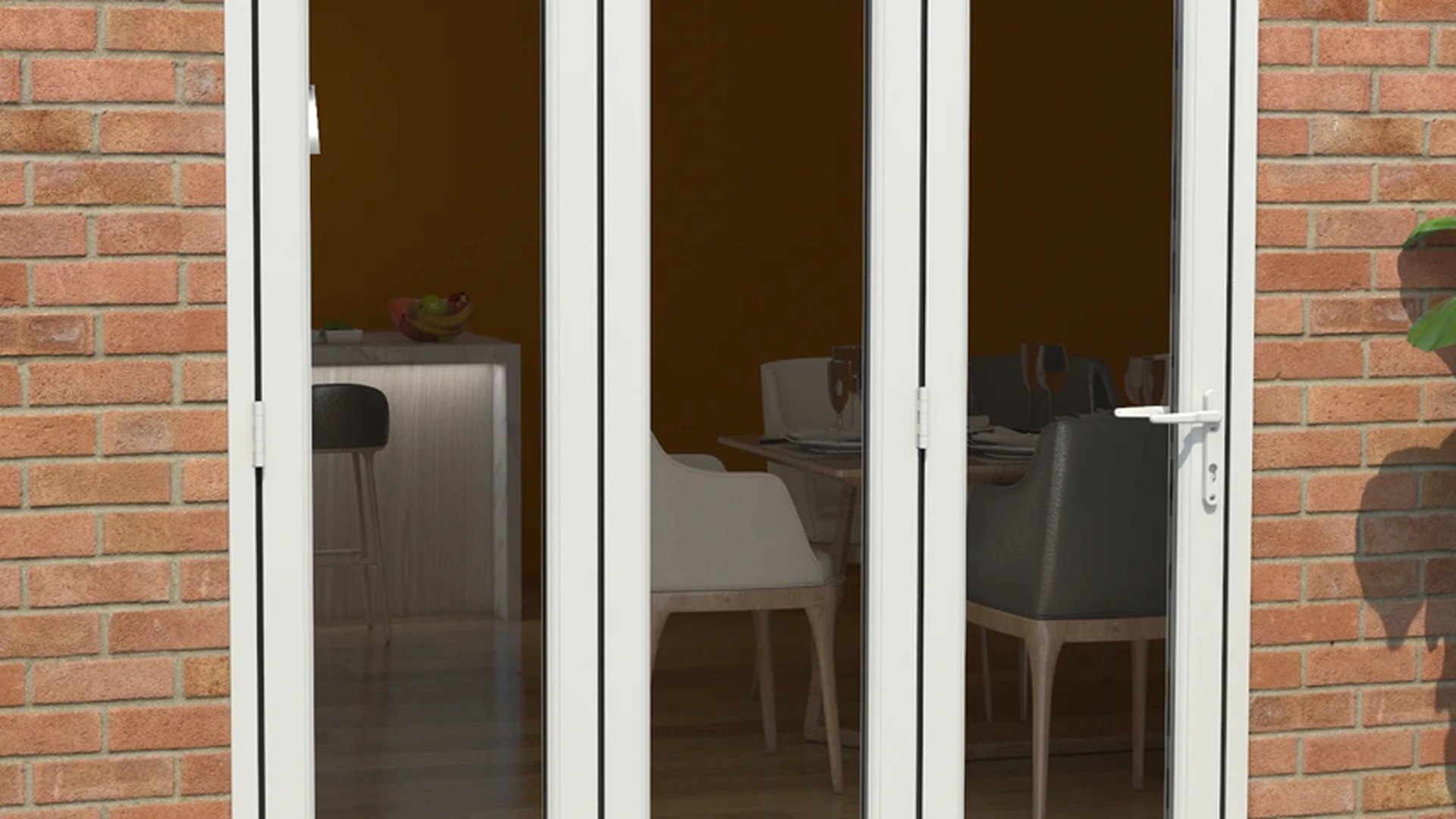
A wide opening is not simply a bigger version of a normal one, and the reasons it fails are predictable. Four decisions carry almost all of the risk, and all four are made before production starts — which is exactly why they are a better test of bifold door manufacturers than any price list. The suppliers worth shortlisting raise all four before they quote, and the systems those folds are built from are collected on the aluminium bi-fold door systems range.
Panel count, leaf width and where the leaves stack
A folding run is divided into leaves, and the first question is how many. More leaves make each one lighter and easier to move, and reduce the depth the stack occupies when the door is open; fewer, wider leaves give a cleaner elevation when closed and fewer joints to seal. The constraint on either choice is the width the stacked leaves occupy against the wall or jamb, because that space has to exist in the room or on the terrace once the door is open. A supplier worth using will ask where the stack can live before it asks what colour you want, and will tell you when the answer means the panel count has to change.
The running track, the threshold and the floor detail
Folding leaves travel on a top track and are guided at the bottom, and the bottom detail is where most real-world problems appear: a threshold high enough to drain water is a step somebody will trip over, while a threshold flush enough to walk through is harder to weatherproof. The system chosen sets the available options, and the installation detail that follows from it — how the frame is packed, fixed and sealed at the sill — is the point at which a folding door that is specified correctly either stays square and drains, or starts to bind and leak. The fixing and sealing detail for these thresholds is collected on the window and door installation page, with the corresponding remedy guidance on the correction page.
Sealing and weather performance across many leaves
Every joint between leaves is a place where air and water can get past, so a folding door earns its weather performance in its gaskets, its compression and the way the leaves are set against each other — not in the frame alone. This is why the same product can perform very differently in one market and another: the requirement is set by local wind and water performance standards rather than by preference, and a door that satisfies a mild inland climate is not automatically the correct specification for a coastal or cyclonic one. The certification a supplier has to hold for Australian and New Zealand projects is compared in our guide to AS2047 and NZS4211, the North American framework in the guide to Miami-Dade approved impact windows, and the documents to request are listed on the certification documents page.
Hardware load, hinge choice and security
In a folding door the hardware is the product. The hinges carry the leaf's weight and set its alignment, the carriers take the run along the track, and the locking arrangement has to secure a set of leaves that are designed to move rather than a single panel bolted into a frame. All of it wears at a rate that scales with the size and weight of the leaves, which is why the honest answers to hardware questions are about rated capacity and adjustment rather than about brand names alone. How locks, glass and screens are specified together as one security package is set out in our guide to how window and door security is specified, and the hardware itself is collected on the hardware page.
Aluminium or uPVC: Which Bifold Door System Fits the Opening?
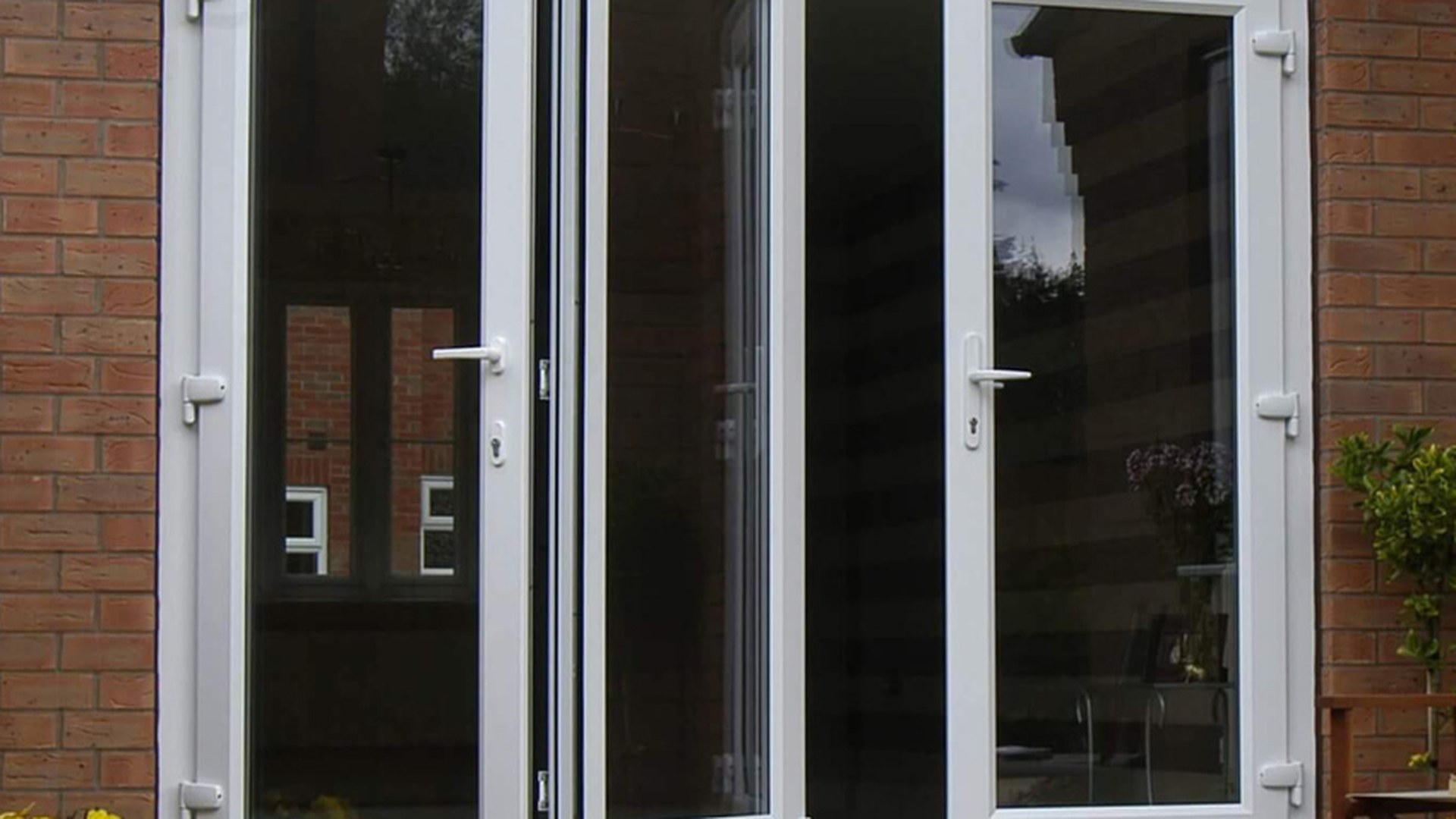
There is no universal winner here either, and a supplier that says otherwise is selling what it has. The material question is decided by span, sightlines, climate and budget, and the four factors interact.
| Factor | Aluminium bifold doors | uPVC bifold doors |
|---|---|---|
| Strength across wide spans | Preferred for long runs and large individual leaves, where the frame has to stay true under load | Well suited to domestic spans, where the leaves are shorter and lighter |
| Sightlines and glass area | Slimmer frames, more glass in the same opening | Chunkier frames, more frame around the glass |
| Thermal performance | Good in a thermally broken system; the thermal break is what does the work | Strong, because multi-chamber profiles trap still air |
| Finish and colour | Powder coating and anodising, with the option of a different colour inside and out | Colour and woodgrain bonded to the profile rather than painted on |
| Maintenance | Low, but a powder-coated surface can be chipped and is then a repair | Low, with no repainting and no surface that can peel |
| How the price is built | Higher material cost, offset by what the slimmer frame allows | Generally lower for the same opening, with the difference largest on small leaves |
| Best fit | Full-height runs, corner openings and commercial elevations | Residential openings, humid and coastal climates, energy-focused projects |
The rule of thumb is the same one that applies to sliding doors: the longer and heavier the run of leaves, the more the advantage moves to aluminium and to a thermally broken system in particular; the more the opening is a domestic one where insulation and maintenance matter more than slim sightlines, the more a uPVC folding set makes sense. Many projects in fact use both materials on the same building, in different openings, and a supplier that can build either is easier to hold to one specification. The wider comparison between the two materials is set out in our guide to uPVC against aluminium, the aluminium-specific questions on the aluminium systems page, and how a custom price is built up item by item — which is where the material decision finally turns into money — in the guide to how custom window and door pricing works and on the prices explained page.
How to Verify a Bifold Door Manufacturer (Nine Questions)
These are the questions that separate a folding door fabricator from a page that describes one. They are deliberately the same questions you would ask any window and door supplier, sharpened for a multi-leaf assembly, and they work whether the supplier is on this list or not. Ask them in writing and against a drawing, and the answers will sort the shortlist for you; the custom folding doors range is a useful reference point for what a supplier should be able to answer from its own production files.
- Show me a folding set you have built, with its panel count and opening size. A fabricator answers from its own order book. A trading company has to go and ask somebody else, and the delay is visible.
- Where does the stack sit when the door is open? If the answer is not specific about the space the leaves occupy, the design work has not been done.
- Which carriers, hinges and track does the set use, and what are they rated for? The right answer names the parts and their rated capacity; the wrong answer names a colour.
- What threshold options does the system offer, and which one suits my drainage? A folding door's threshold is a design decision with a weather consequence, not a trim item.
- How is the door certified for my market, and can I see the report for this system? Compliance is per system and per market, so a generic certificate is not an answer.
- Who signs the inspection report on my order? This is the single fastest way to find out who is really making the door.
- What happens if a leaf arrives out of alignment? The answer should describe an adjustment procedure and the spare parts route, not a warranty sentence.
- Which operations are in-house and which are subcontracted? Ask it in writing, so the answer is on the record with the quotation.
- Can I have one set first, and what will you send with it? Where a minimum order quantity of one piece exists, the buyer gets to inspect a welded leaf, a hinge, a carrier and a sealed unit on a real door before a project release, and the acceptance points that make that useful are set out in our guide to sample orders and first orders.
Three of those answers you can check without the supplier's help. Look at whether its factory page describes production processes rather than product categories; look at whether certificates are published per product line rather than as one scanned sheet; and ask for a section drawing of the track and threshold detail, which is the one drawing a real folding fabricator always has. The same three tests applied line by line to a uPVC window plant are set out in the guide to choosing and verifying a window manufacturer, and the wider commercial picture — quantities, timing, shipping, payment — in the guide to how to import windows and doors from China.
About ROPO Windows
ROPO Windows has been manufacturing custom aluminium and uPVC windows and doors for more than 16 years, from a factory in Fuzhou, Fujian Province, China, and ships to clients in more than 100 countries and regions. The product range is built to order rather than held as standard sizes, which is what makes a wide folding opening a normal job rather than a special case: panel counts, stacking positions, thresholds, finishes and glazing are set per opening, and the same workshop that builds the folding sets also builds the sliding, lift-and-slide and hinged doors on the same project. The full family of wide-opening folding doors is built this way — one specification per opening, released against a confirmed drawing.
Compliance and warranty are stated as documents rather than as promises. The door and window systems are offered with AS2047 and NZS4211 compliance for the Australian and New Zealand markets, Miami-Dade approvals for the North American hurricane market, and the certification portfolio is published per product line on the quality and certification page and the certificate page. Every product carries a 10-year warranty, listed line by line on the warranty list, and a minimum order quantity of one piece applies, so a buyer can test the product before committing to a project. The factory itself, and what it does, is documented on the about factory page and the About ROPO page, and completed work in the field is collected in the project case studies.
For specifiers, the route is the same as for any other system decision. The relevant drawings, performance documentation and compliance detail for a specific opening can be provided against a project, and the questions architects and builders usually start with are answered on the builder and specifier page. Homeowners buying directly will find the step-by-step route on the homeowner guide, and distributors and dealers evaluating a long-term supply relationship will find the programme questions on the dealer and wholesaler page.
Custom Production Process
A custom folding door is made in five stages, and the buyer's visibility of those stages is what turns a quotation into a specification that can be held against a delivered product.
- Design confirmation — door type, folding direction, panel count, stacking position, profile system, colour and finish, glazing build-up, hardware and handing are reviewed and confirmed in writing before production begins. This is the stage where a folding door stops being a description and becomes a drawing, and where the aperture dimensioning the drawing depends on is settled rather than assumed — the difference between hole size, frame size and installation gap is explained in the guide to measuring window and door openings.
- Profile preparation — frames and leaves are cut and machined to the approved dimensions, reinforcement is inserted where the system requires it, and corners are joined and cleaned so that the joint is continuous and airtight. On a folding set this stage also fixes the relationship between the master leaf, the folding leaves and the jamb, which is the geometry the whole run depends on.
- Hardware and glazing — hinges, carriers, guide rollers, handles, the specified sealed units and the threshold detail are fitted and adjusted by trained operators, and the assembled set is operated so that the leaves line up along their full height when closed. Because the hardware is designed for the system it is fitted into, the door arrives as the assembly that was specified rather than as leaves plus whatever was available.
- Five-step quality control — an order review before any material is cut, incoming inspection of profiles, reinforcement, glass and hardware, semi-finished inspection at the stage where dimensions can still be corrected, finished product inspection with the assembled set operated and its seals, carriers and hardware verified, and a final inspection report issued before packing. For an importer, the last two are the ones to ask for, and the assembly and testing stages are shown running in the factory production and inspection videos.
- Documents and traceability — test reports, compliance certificates and packing documentation are prepared for each order, and every unit is barcoded so that its production record can be traced from installation back to the batch it was built in. That record is what makes it possible to supply a matching component years later rather than a visually similar one, and the test evidence is collected on the certification documents for each product line.
Because the specification is agreed in writing and held against the order, a project that has to be staged — one elevation now, one later, with the same finish and the same hardware across both — can be produced as a single specification released in parts, and the scheduling and documentation questions that go with that are covered in the guide to commercial and multi-unit projects. Buyers who want to understand what is inside the door they are approving, and how it is specified from the opening outwards, will find the component-by-component explanation in the guide to specifying type, opening, glazing and certification, while the door families this process is applied to are listed across the aluminium folding door family and the uPVC folding door range.
Packaging and Shipping
A folding door that is damaged in transit has no specification at all, and the parts of a folding set that are most easily damaged are exactly the parts the specification cannot protect: leaf corners, the hinge and carrier positions, glazing edges and the track components. Units ship from Fuzhou to clients in more than 100 countries and regions, so packaging is treated as part of the product rather than a cost to be minimised; the bifold door manufacturers that ship into these markets regularly are the ones that treat it that way. Frames and leaves are protected with sturdy timber crating and corner guards, glass surfaces are covered with protective film, and loose hardware is packed separately where necessary so that it cannot damage a unit in transit. The film is worth leaving in place until installation, because it protects the frame and the glass through the dirtiest stage of any building project, after which it strips away cleanly — the same principle that applies to the hardware and accessories travelling with the order. The approach is set out in full in the site's windows and doors packaging guide.
ROPO ships from the ports of Fuzhou and Xiamen by sea, with full container and shared LCL options, so a single sample set and a project release can both be shipped without waiting to fill a container — which is what makes a sample-first approach practical when you still have a specification to test against a real opening, and what makes a mixed consignment of folding, sliding and hinged doors workable in one shipment. Lead time is managed through a system rather than a promise: profile and hardware inventory is kept in stock and orders are followed up at every production stage, so the schedule can be confirmed at any point rather than guessed. The installation detail that decides whether a folding door performs as specified once it lands — fixing positions, packing, threshold sealing and the adjustment of the leaves — is collected on the window and door installation page, with the corresponding remedy guidance on the correction page, and completed work is documented in the project case studies.
On payment, the two structures that matter to a first-time importer are the terms attached to the order and the protection attached to the transaction. Terms should be agreed with the same entity that signs the inspection report; on a first order, placing it through a platform that holds payment against delivery and documents the agreement adds a layer of security that is worth more than a small price difference. That structure is described under Trade Assurance for a first order, and local support in Australia is described on the Australian local partners page.
Bifold Door Sourcing FAQ and Quote Request
These are the questions buyers send us about folding doors, and they apply to any of the bifold door manufacturers you shortlist rather than only to us.
How many panels should a wide bifold door have?
Enough that each leaf stays light enough to move comfortably, and few enough that the stack does not occupy more wall than the room can spare. Beyond that, the number follows the opening: a run is normally planned around a master leaf that carries the handle and the lock, with the remaining leaves folding back towards the stack position, and the panel count changes when the stack has to move. The trade-off between leaf width and stack depth is set out in the bifold doors guide.
What drives the price of a custom folding door?
Almost everything that moves the price is a specification decision rather than a supplier's margin: the profile system and its depth, whether the frame and leaves are reinforced, the number and size of the leaves, the glazing build-up, the hardware set, the threshold detail and the finish. That is why three quotes for the same nominal opening can legitimately differ, and why the breakdown is worth understanding before comparing numbers — the structure of a custom price is explained in the guide to how custom prices are built up and on the prices explained page.
Can a folding door be certified for my market?
Yes, where the system and the fabrication are documented together, but the requirement is set by the market rather than by preference. Australia and New Zealand work to AS2047 and NZS4211, the North American hurricane market to Miami-Dade approvals, and a door that satisfies a mild inland climate is not automatically the right specification for a coastal or cyclonic one. What each framework asks for is compared in the guides to AS2047 and NZS4211 and Miami-Dade approvals, and the documents to request are listed on the certification documents page.
Aluminium or uPVC for a folding door — and does the supplier matter more than the material?
The material question is decided by span, sightlines, climate and budget rather than by quality, and the comparison is set out in the guide to uPVC against aluminium. What matters more than the material is the profile of supplier behind it: a fabricator can be held to the specification whatever the material, while an intermediary cannot be held to it in either. Buyers comparing folding with the other large-opening options will find the alternatives on the custom window and door systems overview, and the cleaning and hardware-care routine that keeps either material performing is set out in the site's guide on maintaining uPVC windows and doors.
Can I order a single folding set before committing to a project?
Yes, and for a folding door it is the most useful test available, because the parts that decide the outcome — the hinge alignment, the carrier travel and the way the leaves meet when closed — cannot be judged from a photograph. A minimum order quantity of one piece exists precisely so that a buyer can inspect a welded leaf, a carrier and a sealed unit on a real door before a project release. The acceptance points that make a sample useful, and what to measure, operate and photograph, are covered in the guide to sample orders and first orders, and the handle installation sequence that most often needs to be repeated on site is documented for folding doors and for uPVC folding doors.
What should be in the enquiry?
To move from research to a quotation, send the opening width and height per opening, the panel count and stacking position you want, the folding direction, the destination market and the certification you need, the colour and finish, the hardware level, the quantity and the port. That is enough to come back with a priced, like-for-like quotation and the supporting documents, and it also allows a supplier to flag where a cheaper option would perform identically and where it would not — which is the one piece of advice a ranking page can never give you.
Start with the quick selection and quotation form for a free price, send your window and door inquiry or contact the ROPO export team directly, review completed work in the custom windows and doors project case studies, and browse the folding families on the custom aluminium folding doors range and the custom bifold doors in uPVC range. The door collection is on the custom doors page and the wider range on the door systems overview, with the other formats covered in the guides to types and benefits of aluminium doors and uPVC door styles and sourcing. Folding assembly and installation walk-throughs are collected in the uPVC videos collection and the aluminium videos collection, and further sourcing and technical guides are published on the ROPO windows and doors blog. Buyers assessing a long-term supply relationship can start from the dealer and wholesaler programme, and specifiers from the builder and specifier page.