Top 5 Louver Window Manufacturers for Tropical Climates
- Share
- publisher
- ROPO Windows
- Issue Time
- Oct 29,2026
Summary
Louver windows are the one window type whose whole mechanism is the blade, and in a tropical climate that mechanism is asked to do ventilation, rain shedding, salt-air survival and insect control at the same time. This guide ranks five louver window manufacturers, separates the factory-direct exporter from the louvre system specialist and the fabricators who build that system into their own frames, and lists the blade, screen, drainage and certification questions to settle before an order.
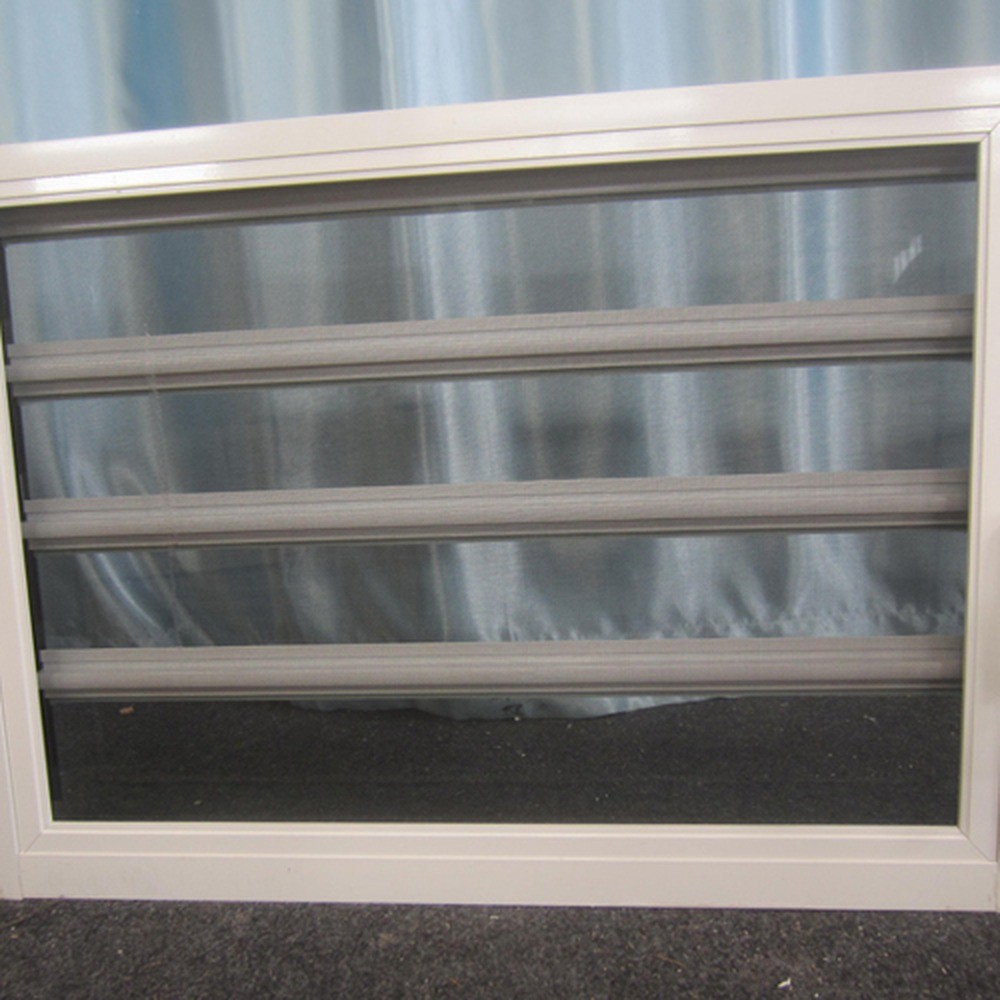
Which Louver Window Manufacturers Should You Shortlist for Tropical Climates?
For tropical climates the louver window manufacturers worth shortlisting are ROPO Windows, Breezway, Jason Windows, Trend Windows & Doors and Wideline Windows & Doors. Two are factories and three are fabricators: one builds louver units factory-direct for export, one makes the louvre hardware and blade systems, and three build those systems into their own frames.
What a louver window is once the climate is tropical
A louver window is a frame full of horizontal blades that all rotate together on a linkage, so that a single handle opens the entire opening. In a temperate market that is a ventilation device: you open it in summer, you close it in winter, and the rest of the elevation does the work. In a tropical market the same window is asked to do four jobs at once and to do them every day of the year — move air through a room without air conditioning, shed rain while it is still open, survive salt and ultraviolet light without corroding or chalking, and keep insects and intruders out while all of that is happening.
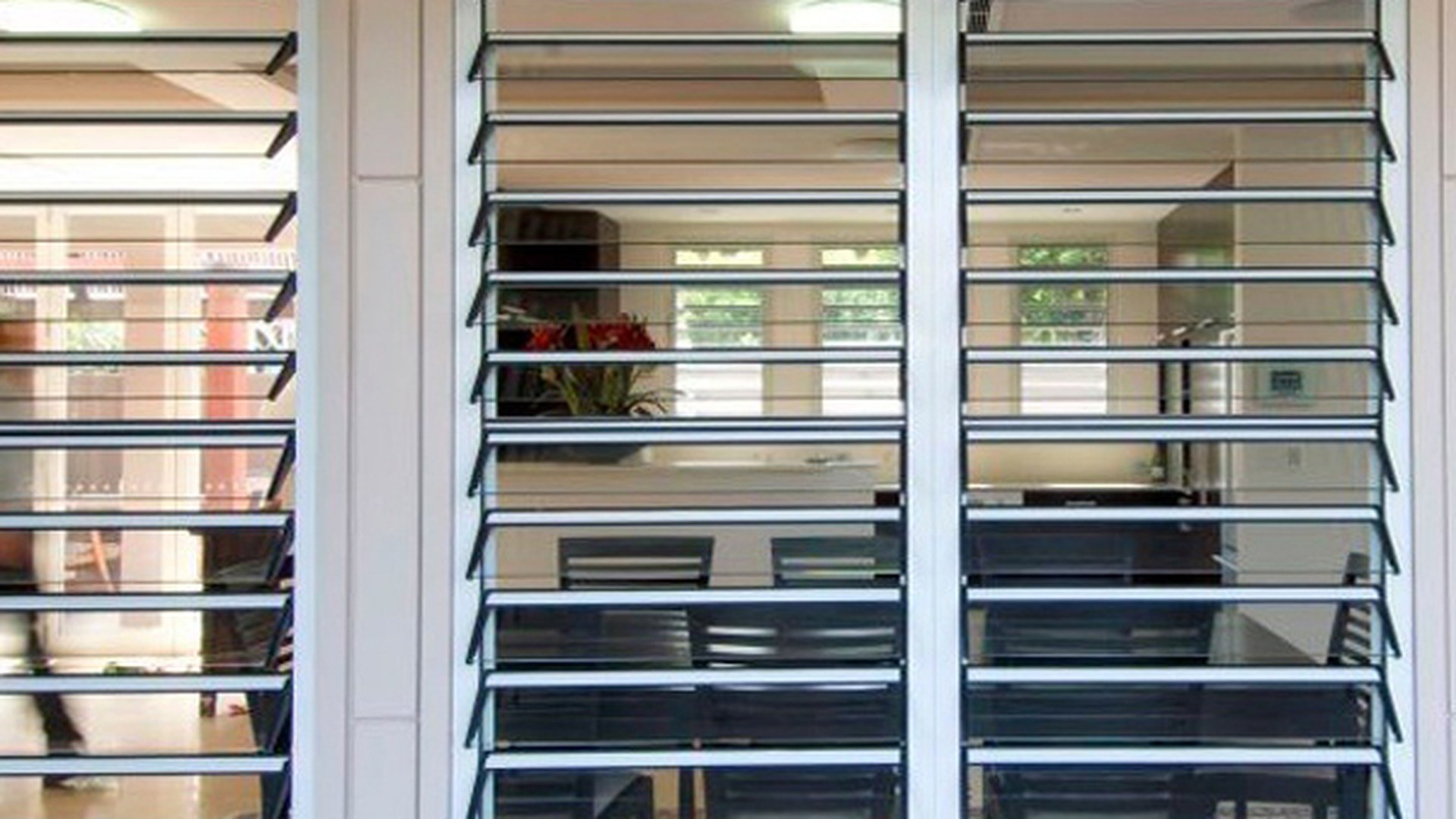
That combination is why louver windows never really left the tropics. Look at the first photograph in this article: two galleries of glass blades in a wall, wide open, with the view intact and no sash standing in the room. Nothing else in the window catalogue opens that far while occupying that little space. But the same geometry that makes it work is what makes it hard to buy well, because every one of those four jobs is decided by a part that is invisible when the window is closed — the blade clip, the linkage, the gasket behind the blade, the drainage path under the sill, the screen that covers the whole opening.
Why the word manufacturer means less in this category than in any other window type
In most window categories you can assume that the company selling you the window made the window. Louver windows break that assumption more often than any other type. The louvre gallery — the blades, the clips, the linkage and the handle mechanism — is a specialist component that a small number of companies actually manufacture, and a large number of window companies buy it and fit it into their own framing. Search for a louver window supplier in Australia and you will find, within three results, three different brands selling the same gallery.
This matters commercially rather than pedantically. When you ask what happens if a blade clip fails in year four, the answer depends on which of the three you bought from: the component maker, the fabricator who assembled it, or an exporter who bought the whole unit. Those are three different warranties, three different spare-part routes and three different ideas about who owns the defect. The list below is organised around that question deliberately, because it is the question a tropical project actually gets wrong.
What this guide covers, and what it leaves to the other louver articles
This article is about choosing who supplies the louver windows and how to test what they send you. It does not re-explain the window type — frame systems, blade options and where each performs are set out in the louvers window buying guide and the louvered windows explained guide — and it does not repeat the blade material science, which sits in glass louver blades and panels. Nor does it cover facade louvres, which are a different product bought by a different person and are dealt with in the aluminium louvre and shutter manufacturers comparison.
The ventilation case for the window type, written for a Caribbean audience, is in how to pick windows for natural ventilation in the Caribbean. What is left — and what this article is for — is the commercial question: among the louver window manufacturers you can actually buy from, which one is set up to supply a hot, wet, salt-laden site, and what do you have to put in writing before they start?
One boundary to set at the start. A louver window on a beach house in Queensland, a jalousie window on a hotel corridor in Trinidad and a glass louver window on a school in the Philippines are the same product family bought three different ways: retail, project and tender. This guide is written for the second and third, and it says where the first one diverges.
The Five Louver Window Manufacturers, Ranked for Tropical Climates
The five louver window manufacturers below are ranked by how well each route fits a buyer supplying a tropical site — imported, project-purchased or locally fabricated — and not by size, revenue or brand recognition. Each entry states only what the company publishes about itself: its country, the type of business it is, the product lines it names and how it sells. No output figures, headcounts, prices, lead times or market shares are published in this article, and none should be inferred from the order of the list.
1. ROPO Windows — factory-direct glass louver units to a schedule
ROPO Windows is a window and door manufacturer in Fuzhou, Fujian Province, China, with 16 years in the trade and customers in more than 100 countries. The relevant point here is the model rather than the catalogue: the louver units are cut, assembled, glazed and packed in the same factory that builds the casements, awnings and doors around them, so a tropical elevation can arrive as one schedule, one finish and one tolerance instead of a mixed container from three suppliers.
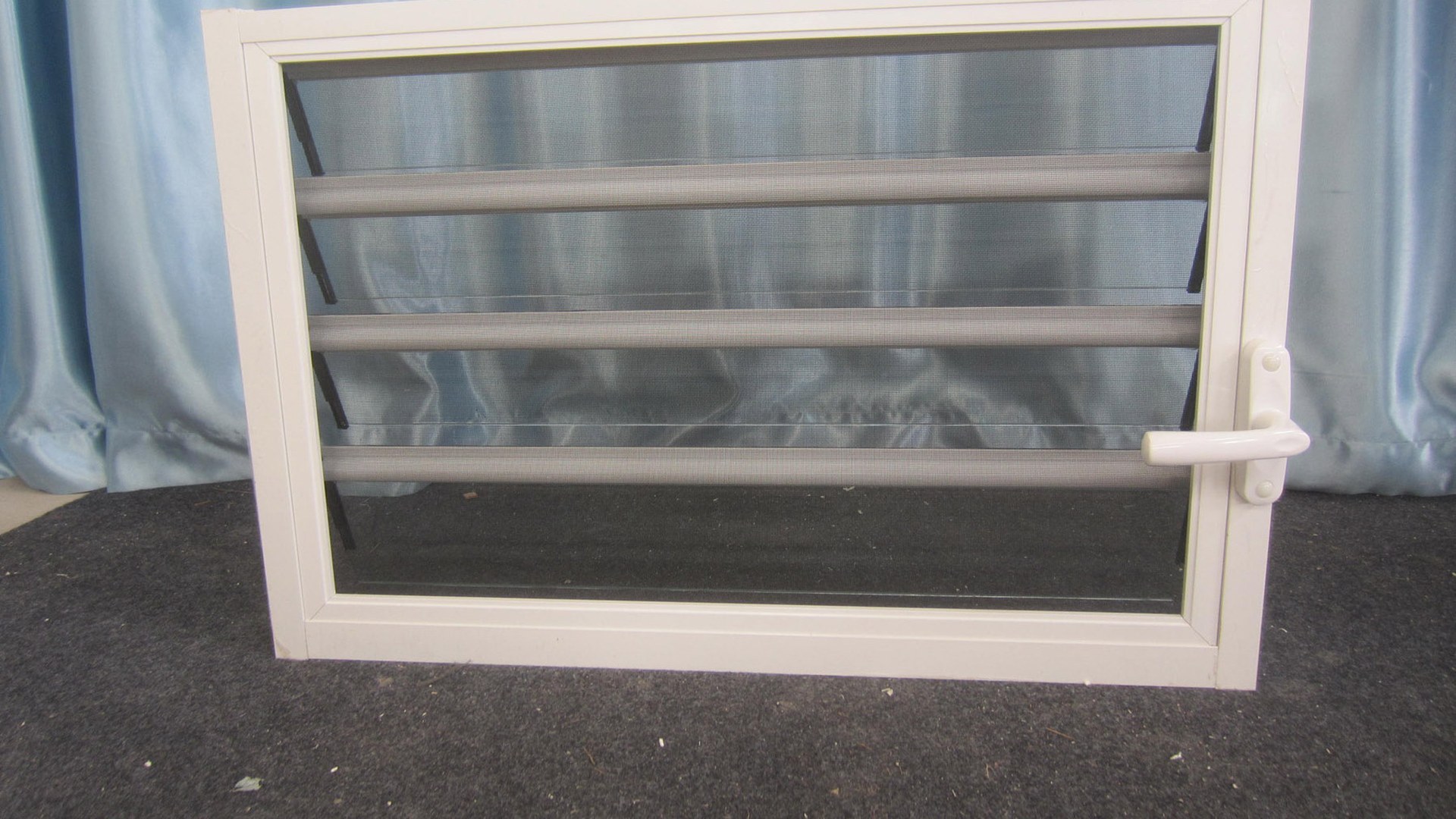
The louver range is published as a category of its own — aluminium louver windows in three listed models: a Caribbean-style glass louver window, an Australian-style glass louver window with screen options, and an aluminium jalousie window offered as fixed or adjustable louver. The published listing information is unusually specific for this product category: 6063-T5 aluminium frame, non-thermally broken, 1.60 mm listed profile thickness, 6 mm toughened glass as the base glazing, EPDM seals, powder coat finish, and fixed flyscreen and security screen options with the selected system to be confirmed per model. Anything beyond that — blade limits, section drawings, hardware — is quoted per model rather than published as a single figure.
Three configurations matter on tropical work and are listed as individual products: a hurricane impact glass louver window on 6 mm tempered glass, an AS2047 aluminium louver window for Australian projects, and an aluminium jalousie window for bathrooms and service areas where privacy and airflow both matter. What this route gives a buyer is one party for the frame, the blades, the glass, the screens and the packing list, and a factory that will build one unit before a container is committed. What it does not give is a local warranty holder or a local installation crew, and that trade-off is the same one described at the end of this section.
2. Breezway — the louvre gallery specialist
Breezway is an Australian manufacturer whose published position is that it solely manufactures louvre windows and sells them through a network of window fabricators rather than direct to site. That single sentence explains most of the Australian market: the company makes the Altair Louvre Window and the mechanisms around it, and the companies that put it into a wall are its fabricators. Its published product range covers the base gallery, the Altair Powerlouvre automated system, the Altair Stronghold fall-prevention configuration for windows where a barrier is required, and the Altair IGLU double-glazed louvre system.
Its site states that it tests Altair louvre windows for compliance with Australian and international standards, that each window is made to order, and that the customising options — blades, control, colours, security, frames and sizes — are chosen at the point of order. For a tropical buyer this is the route to a documented system rather than a catalogue item: you are buying a gallery whose behaviour is published, and the quality of the finished window then depends on the fabricator who frames it. That is a real distinction on a coastal site, because the gallery is the part that has to survive the salt and the fabricator is the part that has to get the drainage right.
3. Jason Windows — a fabricator building galleries into its own framing
Jason Windows is an Australian window manufacturer that publishes louvre windows as part of its own product range and states plainly how they are built: Breezway louvre galleries fitted into the Jason commercial framing system. That disclosure is more useful than it looks. It tells a buyer exactly which part is proprietary, which part is the fabricator's own, and therefore who to ask about the frame and who to ask about the blade.
The published range covers the operational side in detail that matters in the tropics: standard handles with integrated keylocks, ring-pull handles on a rod for high openings, and electronic remote openers; face-mounted flyscreens over the whole opening with fibreglass mesh as standard and aluminium, steel or fine mesh as upgrades; and security screens where the concern is children and pets rather than insects. Glazing is specified as toughened glass, with toned, low-E and obscure options listed. The company sells through showrooms and a builder channel, so this is the route a project takes when it wants a local name, a local showroom and a locally held warranty on the frame.
4. Trend Windows & Doors — a brand with three louvre ranges
Trend Windows & Doors is an Australian window and door brand that publishes three separate louvre window ranges — Botanica, Crestlite and Quantum — each described as Breezway louvre windows. The distinction between the three is finish and framing rather than function, which is exactly how a fabricator-branded range works: the gallery is common, the frame system and the colour range are what the brand adds.
For a specifier this is the route that is easiest to compare on appearance and hardest to compare on performance, because the published pages describe the ranges as products rather than as test reports. The practical use of a brand like this on a tropical project is availability and after-sales in the market where the building stands, and the practical caution is that two of the three ranges may not be offered in the same configuration for a coastal exposure. Ask which range is being quoted before you compare prices, because a quote for one range against a quote for another is not a like-for-like comparison.
5. Wideline Windows & Doors — a fabricator range with louvre listed
Wideline Windows & Doors is an Australian window and door maker whose published product range includes a louvre window alongside its awning, casement, sliding, bi-fold and double-hung ranges, sold through showrooms and a distributor network with published warranty and spare-part pages. It belongs on this list for a reason that has nothing to do with the product: it is the clearest example of the fourth buying route, where a buyer selects a louvre window from a general window fabricator's catalogue rather than from a louvre specialist.
That route suits a renovation or a house lot where the louvre windows are a small part of a larger window order and the value of one supplier for the whole schedule outweighs the value of a louvre-only specialist. It is a weaker route for a full louvre elevation on an exposed coast, where the questions in the next two sections need someone who answers them daily. The same test applies to any general fabricator: ask for the gallery they build into the frame, and the answer tells you whose mechanism you are actually buying.
How the five routes compare
| Supplier | Country / type | What is publicly documented | Route to buying |
|---|---|---|---|
| ROPO Windows | China, window and door factory | Three louver models including Caribbean and Australian styles, 6063-T5 frame, 6 mm toughened base glazing, EPDM seals, flyscreen and security screen options, MOQ one unit | Factory-direct export, sample first |
| Breezway | Australia, louvre gallery manufacturer | Altair Louvre Window plus automated, fall-prevention and double-glazed louvre systems, made to order, sold through a fabricator network | Through an authorised fabricator |
| Jason Windows | Australia, window fabricator | Breezway galleries in Jason commercial framing, keylock and remote control options, face-mounted flyscreens and security screens, toned and low-E glazing | Showroom and builder channel |
| Trend Windows & Doors | Australia, window brand | Three published louvre ranges — Botanica, Crestlite and Quantum — described as Breezway louvre windows | Brand channel, range-dependent |
| Wideline Windows & Doors | Australia, window fabricator | Louvre listed within a general window range, distributor network, published warranty and spare-part pages | Showroom and distributor |
Read the table as a map of who owns which part rather than a ranking of quality. On the factory-direct route, the party accountable for the blades, the frames, the screens and the glass is the factory and its packing list. On the specialist route, the gallery is the specialist's and the frame is the fabricator's, which is a clean split as long as both are named in the order. On the general-fabricator route, one company owns everything except the gallery, which is why the question "whose gallery is this" is the first one to ask.
A second note on how to use the list: it is deliberately mixed, and comparing a factory-direct quote for a complete louver window range with a branded quote for the same opening is only meaningful if the scope is written down — what is included (frame, blades, glass, screens, fixings, cills, trims), who measures, who certifies, who installs, and who is called when a blade arrives chipped. The mechanics of that first order are set out in sample orders and first orders, and the specification language a project buyer needs is on the builder and project buyer page.
Finally, a statement about what this article will not do. It does not publish, estimate or infer capacity, revenue, headcount, export volume, market share, price or lead time for any company named here, including our own beyond the facts published on this site. Where a manufacturer's own site states a position — a product type, a range name, a sales model — that statement is used; where it does not, the entry stays silent rather than guessing. Buyers comparing glass louver windows should treat every unverified number in a comparison article, including a competitor's, as marketing until it appears in a document they can attach to a purchase order.
What a Louver Window Has to Do in a Tropical Climate
Four conditions define the tropical brief, and they pull against each other: heat that wants the window open all day, rain that arrives sideways while it is open, salt and sun that attack every finish and every seal, and insects and people that have to be kept out of an opening with no sash to close against a frame. Buyers who compare louver window manufacturers without translating those four conditions into parts end up comparing colours.
The blade is the whole mechanism
On a casement the sash carries the glass and the hinge carries the sash; on a louver window the blade carries the glass, the clip carries the blade, and the linkage ties every clip together. There is no second line of defence. If one clip loses tension, that blade sits proud of its neighbours, the overlap changes, and the window starts to leak at exactly the height where the rain arrives. This is why blade thickness, clip material and linkage stiffness are the real specification on a louver window, and why a quotation that lists only the frame alloy has not described the product yet.
It is also why the number of blades matters more than it looks. The same opening glazed with fewer, deeper blades has fewer joints to seal and a stiffer blade to resist wind, while more, shallower blades open wider and ventilate more evenly. Neither is universally better; the choice has to be made against the exposure of the elevation, and it is the supplier's job to say which blade set they are quoting rather than to leave the drawing to imply it.
Rain, wind and the open-blade condition
Every window has to keep water out when it is closed. A louver window also has to behave when it is open, because in the tropics it is open during the rain — that is the point of it. Two details decide whether that works. The first is the blade profile: a blade with a hooked or lipped edge throws water off instead of letting it run around the edge and down the inner face, and the overlap between adjacent blades is what stops wind-driven rain from being pushed straight through. The second is the sill: a louver window drains through the frame, not through a sash, so the sill needs an upstand, a slope and an outlet that is not blocked by the screen frame.
This is the detail most often lost when a louver window is specified from a photograph. Ask for a section through the sill and a section through the blade overlap, and ask what happens to water that reaches the bottom of the lowest blade. A supplier who can send those sections has built the window before; one who sends a rendered elevation has not. The wider question of what a coastal site does to a window assembly is covered in sourcing for Caribbean and coastal US projects.
Salt air, humidity and the finish
Salt does not attack aluminium quickly, but it attacks everything attached to it: fixings, clips, the linkage, the handle spindle and any steel in the screen frame. In a coastal tropical site the failure sequence is predictable — a plated screw rusts, the rust stains the powder coat, the stain is read as a coating failure, and the argument starts about the wrong component. The specification that avoids it is unglamorous: stainless or coated fixings throughout, clips and linkage in a material that does not galvanically couple with the frame, and a powder coat that has been specified for the exposure rather than for the colour card.
Humidity adds a second problem that has nothing to do with corrosion: condensation on the inner face of a single-glazed blade in an air-conditioned room. A louver window is the hardest window in the catalogue to keep condensation-free, because the blade is a small cold plate with an edge all the way around it. Where a room is air-conditioned and the window is a feature, that is a reason to discuss glazing options early rather than to add them after the first complaint. The material and colour options for both frame families are published on the aluminium section page and the uPVC material and colour pages.
Screens, security and the occupied room
In a tropical building the screen is not an accessory; it is the reason the window can stay open at night. That changes the specification in three ways. The screen has to cover the whole opening rather than the clear opening, because the blades swing inward as well as outward. It has to be removable or hinged for cleaning, because a louver window behind a fixed screen cannot be cleaned. And it has to be strong enough to be leaned on where the window is at floor level, which is a security screen question rather than a mesh question.
The screen also decides the ventilation rate you actually get, because a fine mesh stops more air than a coarse one and a security mesh stops more again. Buyers who specify a louver window for airflow and then fit the densest available mesh have specified two products that work against each other. The mesh options and their trade-offs are explained in the flyscreen guide, and where the opening is also a storm opening, the shutter and screen logic overlaps with custom hurricane shutters.
Blade, Frame and Screen: The Three Decisions That Set Performance
Three decisions decide what a louver window does on a tropical site, and only one of them is usually discussed: the blade, the frame, and the screen. A fourth decision — the control — decides who can use the window, which on a school or a hotel matters more than any of the other three. Buyers comparing custom louver windows should be able to get all four answered in writing before a price is agreed.
Blade material and glass build-up
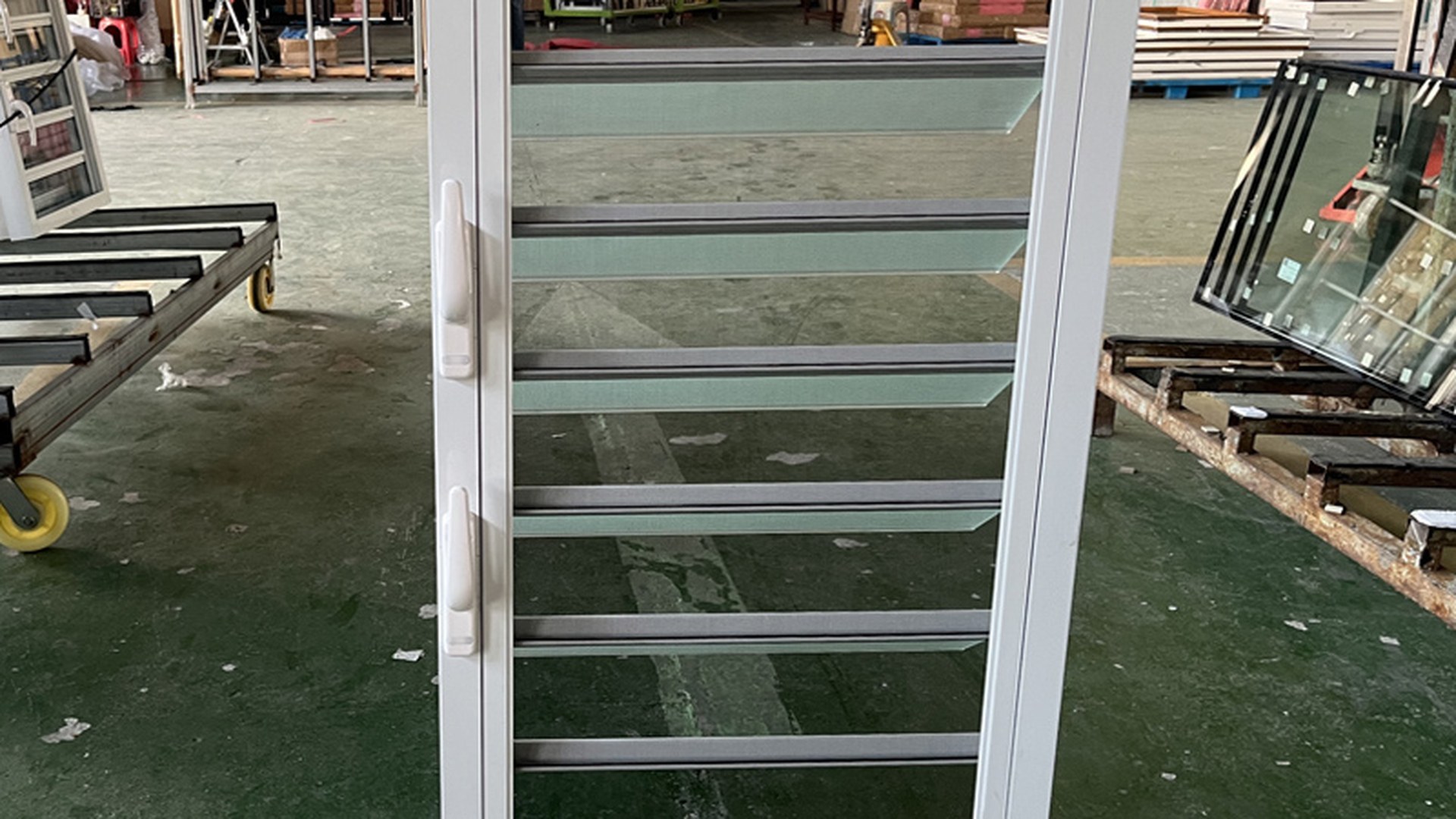
Blades come in glass, aluminium and PVC, and the choice is not a style choice. Glass blades give the most light and the least visual weight, and in 6 mm toughened form they are the default on the models published by most manufacturers, including ours. Aluminium blades take abuse, block sightlines and cost less to replace, which is why they appear on service areas, plant rooms and industrial elevations. PVC blades are the cheapest and the least dimensionally stable in heat, and they belong on the lower end of the market rather than on a coastal elevation.
Glass build-up is where tropical specifications are usually decided badly. A single 6 mm toughened blade is the standard answer and it is a defensible one, but it is also a single pane of glass with an edge all the way around, so it is thermally the weakest element in the room. Laminated blades are used where the window is also a barrier at height or beside a pool. Double-glazed louvre systems exist — Breezway publishes one — but they are a different product with a different gallery, not an upgrade you bolt onto a single-glazed window. The material science behind these choices is set out in glass louver blades and panels and, more generally, in the glass options page.
Frame, profile and the fixing detail
A louver window frame carries less dead load than a fixed light and more torsion than any other window type, because the linkage pulls the whole frame every time a handle is turned. That is why the frame section matters and why the fixing detail matters more. The frame has to be stiff enough that the galleries stay parallel along a long run; the fixings have to be set so the frame cannot rack when the blades are operated; and the perimeter has to be sealed with a backer and a sealant that can take movement, not a bead laid over the reveal.
On a long tropical elevation the practical question is how the galleries are coupled. Three separate windows side by side, each with its own frame, behave differently from one continuous run with intermediate mullions, and they drain differently too. Neither is wrong, but the elevation, the drainage and the price all change with the choice, so it belongs in the enquiry rather than in the factory's default. Where the louver window sits next to fixed glazing, the sightline question is the same one described in the fixed window range.
Screens, controls and the people who use the window
The control decision is the one most often made by default. A pull handle is fine on a window at waist height and unusable on a gallery that starts at floor level and runs to the ceiling. Ring pulls on a rod, chain or remote operation, and automated opening all exist for exactly that reason, and so do restrictors where the opening has to be limited for safety. On a school, a hotel corridor or a stairwell, the control is the difference between a window that ventilates and a window that stays shut because nobody can reach it.
Screens follow the same logic. A face-mounted flyscreen over the whole opening is the standard tropical answer, with aluminium or steel mesh where the site is exposed or bushfire-rated, and a finer mesh where the problem is midges rather than mosquitoes. A security screen is a different product with a different frame, and it changes the cleaning access. Handles, restrictors and screen frames are listed on the accessories page, and where the project uses a screen as the fall protection instead of a restrictor, that decision has to be made before the frame is ordered.
How to read the specification table on a louver window page
Most louver window pages now publish a listing table, and it repays reading closely because it separates what is known from what is quoted. Our own page for the louver window systems range is a fair example of the genre: it states the frame alloy and that it is non-thermally broken, the listed profile thickness, the base glazing and its thickness, the seal material, the finish, and the screen options — and then, deliberately, says that dimensions and blade limits are available on request as a model-specific size schedule with section drawings.
That last line is the most important one on the page. A louver window has a blade limit — a maximum span at which the blade stops being stiff enough to hold its overlap — and the limit is different for every gallery. A supplier who publishes a table without a blade limit has published a brochure. A supplier who tells you the limit is confirmed against your schedule has told you the truth, which is that the number belongs to the model and the span, not to the product family.
| Decision | The cheap answer | The answer that survives a tropical site | What it changes |
|---|---|---|---|
| Blade | Thinnest glass that fits the clip | Blade depth and set chosen against the exposure, with the clip and linkage named | Overlap, wind resistance, how far the window opens, and the leak path |
| Frame | Standard section, fixed all round | Section stiff enough for the run, one fixed point, movement allowed elsewhere | Racking, blade alignment and water at the reveal |
| Sill and drainage | Bead of sealant under the frame | Upstand, slope and an outlet clear of the screen frame | The most common leak path on a louver window |
| Screen | Whatever mesh is in stock | Mesh chosen against the insect, the exposure and the airflow requirement | Ventilation actually delivered and cleaning access |
| Control | One handle at the bottom | Control chosen against the height of the gallery and who operates it | Whether the window is used at all |
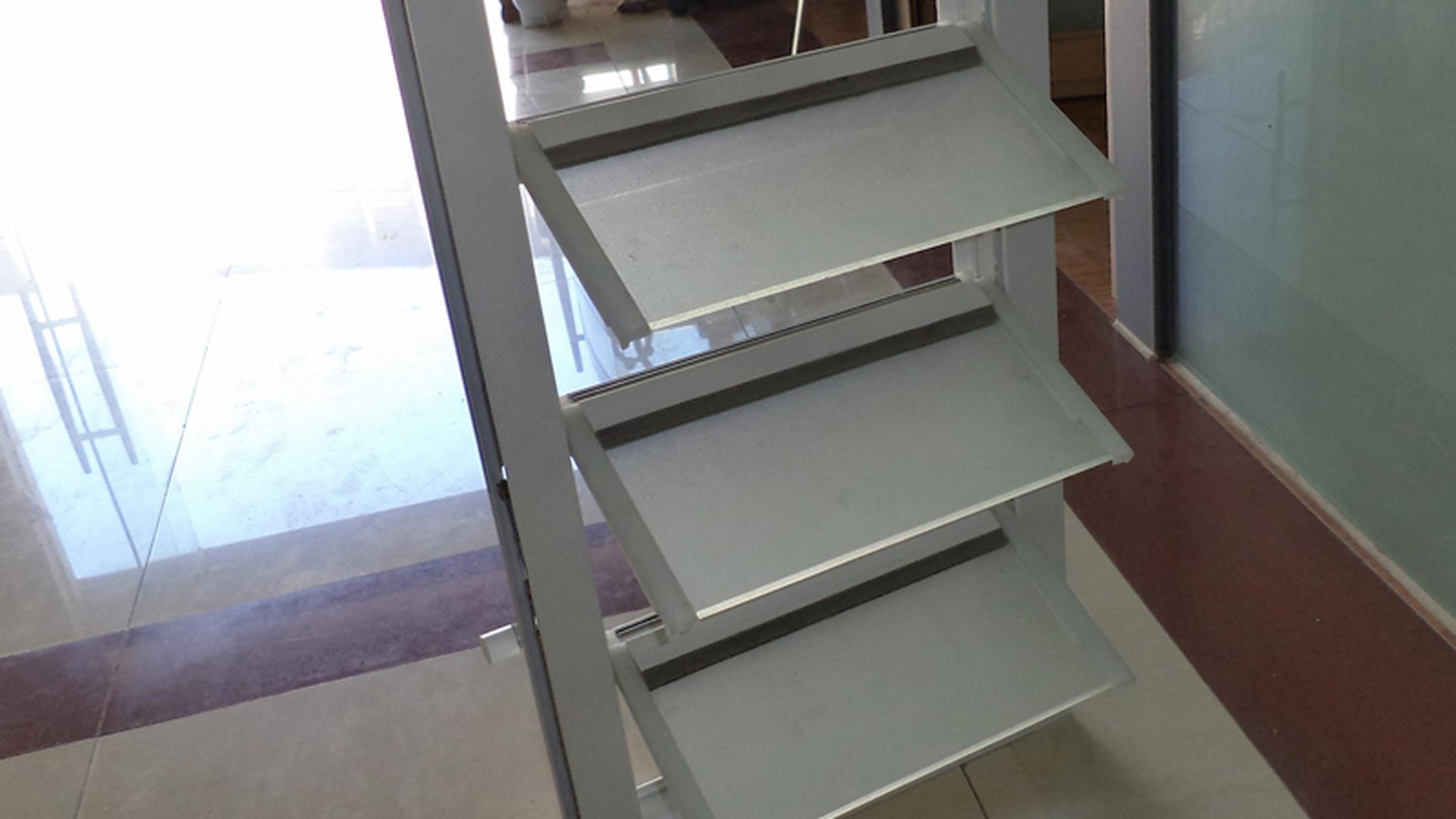
Certification, Test Evidence and the Questions That Decide an Order
Certification is where tropical louver window projects are most often misread, because the certificate that gets forwarded is usually a window system certificate and the product being ordered is a louver gallery in a different frame at a different size. Buyers comparing louver window manufacturers should treat every certificate as a question rather than an answer, and the question is always the same: does this document cover the size, the glazing, the blade set and the fixing condition I am ordering?
What AS2047, NZS4211 and Miami-Dade actually cover
AS2047 is the Australian window standard and NZS4211 is the New Zealand one; both test a complete window assembly for structural and water performance, and both attach to the tested configuration rather than to a profile. The differences between them, and what a certificate under each actually asserts, are set out in AS2047 and NZS4211 compared. In North America the equivalent frameworks are NFRC rating, ENERGY STAR qualification and, on the Florida coast, Miami-Dade product approval — explained in the NFRC, ENERGY STAR and Miami-Dade guide.
Our own position is stated the same way: our window systems are tested to AS2047 and NZS4211 and the range includes Miami-Dade approved impact products, but each approval attaches to the specific tested configuration and product it was issued for. A louver window built to a different blade height, a different glazing or a different fixing condition needs evidence that matches it. Anyone who tells you a system certificate covers every louver window made from the same extrusion has told you something the certificate does not say.
Ten questions to send with the enquiry
- Which gallery is being quoted — is the blade, clip and linkage set yours, or a bought-in system, and whose name is on the warranty for it?
- What is the blade height and maximum blade span for this opening, and what overlap do I get between blades?
- What is the frame section and the visible face width, and does it match the fixed or opening units beside it?
- What glass or blade material is quoted, at what thickness, and is it toughened or laminated on the exposed face?
- What section is used at the sill, where does the water leave the frame, and how is the outlet kept clear of the screen?
- How is the frame fixed, where is it restrained, and how much movement is allowed at the perimeter?
- What screen system is quoted, what mesh, and how is it removed for cleaning?
- Which test report or approval covers this exact size, glazing and fixing condition, and can I see the scope page?
- How are the units packed for sea freight, and how are blades protected against racking in the crate?
- What is excluded — screens, cills, trims, installation, sealant, site handling — and what does the sample or first order include?
Three checks you can do without the supplier
First, the arithmetic of the elevation: add up the widths of the frames and compare them with the structural opening. A run that only works if the frames are butted with no setting allowance has been drawn by someone who has not installed one. Second, the sightline: stand in front of an existing louver installation and look along the bottom blade. If the blades do not sit on a common line across coupled windows, the galleries were not aligned when the frames were set. Third, the paper trail: ask for the blade overlap section and the sill section before the order. A supplier who has them sends them the same day.
There is one more check that costs almost nothing and catches most of the serious problems: buy one unit first. On a louver window a sample tests three things a photograph cannot — whether the blades arrive parallel, whether the linkage moves freely after a sea freight cycle, and whether the screen frame was cut to the same opening as the window. The mechanics of that first order are in sample orders and first orders, and the measurement conventions that decide whether the unit will fit are in how to measure window and door openings. The certification behind our own process is documented on the quality and certification page and the certificate page.
About ROPO Windows
ROPO Windows is a door and window manufacturer based in Fuzhou, Fujian Province, China, with 16 years in the trade and customers in more than 100 countries. The factory builds aluminium and uPVC windows and doors, and louver units run through the same profile preparation, glazing, assembly and export packing operation as the opening windows beside them — which is what makes a mixed tropical elevation practical, because the louver galleries and the casements or awnings next to them are cut to the same schedule and the same finish rather than sourced from two catalogues.
Import and project buyers usually want four things from a factory before they commit, and all four are answered here rather than in a sales call. The first is a warranty: ROPO products carry a 10-year warranty. The second is a minimum order small enough to test: MOQ is one unit, so a single louver window can be built, shipped, unpacked and operated before a container is committed — which matters more on this product than on a casement, because a louver window either arrives with its blades parallel or it does not, and no amount of site adjustment fixes a twisted frame. The third is certification, and it needs to be stated precisely: our window systems are tested to AS2047 and NZS4211 and the range includes Miami-Dade approved impact products, but each approval attaches to the tested configuration and product it was issued for, so the evidence supplied must match the size, glazing and blade set you are ordering rather than the system name on the brochure. The fourth is payment protection: orders can be placed under Trade Assurance, with the terms recorded in one place.
Where the louver range sits
The range is published on the aluminium louver window category page, with the three configurations that generate most enquiries listed individually: a Caribbean-style glass louver window for hurricane-exposed coasts, an Australian-style glass louver window with screen options, and an aluminium jalousie window for bathrooms, service areas and privacy-sensitive openings. The wider range matters on a tropical elevation because a louver window is rarely alone in the wall. The opening units either side usually come from the aluminium casement range, the aluminium awning range or the aluminium sliding range; fixed glazing from the fixed range; and where the brief is a louvred screen rather than a window, the published options sit under glass louvers and PVC louvers. The umbrella pages are the custom aluminium window range and the custom uPVC window range.
What a factory-direct order does and does not remove
Buying factory-direct removes a layer of markup and a layer of interpretation between the drawing and the blades. It does not remove the building work. The opening preparation, the flashing, the sealant, the screen fitting and the site handling are still site responsibilities in most contracts, and on a louver elevation those are the parts that decide whether the window stays dry and operable. What changes is who answers for the parts that are made together: the frames, the blades, the linkage, the glass and the screens come from one factory to one schedule, and the answer to "why does this gallery sit proud of the one below" comes from the people who assembled it.
That suits buyers with a competent installer and a dimensioned schedule, and it is the wrong route for a project that needs a local warranty holder on the same street. Dealers and distributors who want to test the relationship at a larger scale can start on the dealer and wholesaler programme page, and Australian projects can check the local partner network for installation support. Background on the company is on the about page and the factory page.
Custom Production Process
Every louver unit starts from an opening schedule and an elevation drawing — not from a stock size, and not from a photograph of a window someone liked. The process below is the one used for the windows built in the Fuzhou factory, and it is deliberately the same for a one-unit sample and for a container.
From drawing to released production
The first step is a drawing review, and on louver windows it is the step where most problems are caught. The structural opening, the frame size, the number of blades, the blade height, the gallery layout, the glazing or blade material, the sill height, the screen type, the finish and the fixing condition are checked against what can actually be built and against what the site can actually receive. Anything ambiguous is returned as a question before production is released — which is why a first louver order with a dimensioned elevation moves faster than one with a sketch and a promise.
Profiles are then cut and machined, the frame is assembled and checked for square against the diagonal, and the blades are cut and fitted with their clips and linkage before glazing. The gallery is operated through its full travel on the bench, because a linkage that binds at the end of its travel will bind worse once the glass is in and the screen is on. Glass is cut to the released sizes with the edge condition specified for the build-up that was approved, and the blades are assembled with the gasket and end seals in the orientation the drawing shows rather than the one that is quickest to fit.
Five-step quality control
Inspection runs in five stages: incoming material and glass check, dimensional check against the released drawing including the diagonal, assembly check with the gallery operated, the clips and linkage verified and the drainage paths confirmed clear, finish and component check against the schedule including the screen frame, and a final packing and marking check before the crate closes. Each stage is recorded against the order and the record travels with the shipment, so a question raised after arrival can be traced to the stage that handled it. Personnel numbers are not published; what is published is the sequence, because the sequence is what a buyer can audit. The certification behind the process is documented on the quality and certification page, the factory itself on the factory page, and the material options on the aluminium section and the uPVC material and colour pages.
Traceability and the documents in the crate
A louver window is one unit but not one component: frame, blades, clips, linkage, glass, seals and screen are all matched to the opening, and on a multi-unit order they are matched to a position. Each unit is labelled to the order and to its position in the elevation, with the handing and the operating height marked, so a site does not have to work out which gallery belongs where by offering it up. On a hotel or school elevation that labelling is what keeps the sequence right: the units for the first floor have to be identifiable before anything is lifted.
The packing list, the inspection record, the glass or blade schedule and the finish schedule are packed with the goods rather than emailed separately, which matters when the receiving party is the installer rather than the person who placed the order. Where a unit includes a factory-fitted screen frame, cill or cover, its fixing detail travels with it, because the installer on site will not have seen the drawing.
Packaging and Shipping
A louver window is the most easily damaged product in the catalogue in transit, for one reason: the blades hang on clips inside an open frame, so anything that racks the frame also loads the linkage. It cannot be stacked flat, it cannot be nested, and a unit that arrives twisted is a unit whose blades will never sit on a common line.
How a louver unit is packed
Units travel upright and are blocked so they cannot rack, with the frame's corners protected ahead of its faces and the blades restrained so they cannot swing against each other. The screen frame is packed separately or fixed in place with protection at the edges, because a screen that shifts in the crate arrives with a bent frame and a mesh that no longer tensions. Crates are built to the height of the tallest unit rather than to a standard pallet, because a full-height gallery packed in a standard crate travels on its edge.
Three packing details are worth writing into the purchase order. First, whether the units are crated by elevation and floor or by size, because a louver window is delivered to a position, not to a warehouse. Second, whether the screens, cills, covers, trims and fixings travel in a labelled bag per opening. Third, whether the blade material and glazing build-up are marked on each unit, because on a project with two different build-ups in the same elevation, one swapped unit is a performance failure nobody notices until the first storm. The packing method itself is described in the packaging guide, and on-site handling in how to store windows and doors.
Ports, containers and payment protection
Shipments leave from Fuzhou or Xiamen, by full container or as LCL cargo consolidated with other orders, and the route is chosen against the destination port and the construction programme rather than by default. Louvre units are bulky and do not nest, so the loading plan is about protecting the frames and about the order of unloading — the elevations needed first should be the last loaded. Long runs are crated by elevation rather than by size, and the heaviest units travel where they can be braced rather than where they happen to fit.
Orders can be placed under Trade Assurance, which keeps the payment schedule and the delivery terms in one record. That is useful when the louver windows, the opening windows, the doors and the trims are bought together and the programme depends on them arriving as one shipment. The commercial detail — what a container holds, how LCL is consolidated and how payment terms are staged — is covered in the guide to importing windows and doors from China, the pricing structure in custom window pricing explained, and the warranty terms on the warranty list.
Louver Window Sourcing FAQ and Quote Request
Can louver windows be made to any size?
Not any size, and the limit is different from other windows. A louver window is constrained by the blade span — the distance a single blade can cross while still holding its overlap and its stiffness — and by the number of blades the gallery needs to fill the height. A supplier who quotes a size without naming the blade height and the gallery layout has quoted a drawing, not a product. On our side that is why the listing page says dimensions and blade limits are confirmed against a model-specific size schedule rather than published as one number.
Are glass louver windows secure?
They are as secure as the hardware specified on them, and the hardware is a choice rather than a property of the type. A standard handle with an integrated keylock, a restrictor that limits the opening, security bars or a security screen all change the answer, and so does the height of the lowest blade. A louver window at ground level with no screen and no lock is an open window; the same window with a keylock handle, a security screen and a restrictor is a different building product. The logic that ties glass, frames and accessible openings together is set out in the window and door security guide.
Do louver windows leak in heavy rain?
A correctly built louver window sheds ordinary rain when open and heavy rain when closed; a badly built one leaks in both states, for two different reasons. When closed, the leak path is the blade overlap and the end seals. When open, it is the blade profile and the sill. Both are decided by the section drawings rather than by the assembly, which is why the sill section and the blade overlap section are the two documents worth asking for before an order rather than after a complaint.
Can louver windows be double glazed?
Yes, but not by changing the glass in a single-glazed gallery. A double-glazed louvre window is a different product with a heavier blade, a different clip and a different linkage, and it is published as its own system by the manufacturers that offer it. Retrofitting a sealed unit into a gallery designed for a single blade loads the clips in a way they were not designed for. If thermal performance is the driver, compare the double-glazed louvre system against a fixed light with an opening window beside it, because the louver window's advantage is airflow and the fixed window's is insulation.
What is the difference between a louver window and a jalousie window?
In practice they are the same family: horizontal blades, common linkage, one control. The words carry a regional accent — jalousie is the term used in North America and the Caribbean, louver or louvre in Australia, the UK and Asia — and the products differ in blade material and in the depth of the frame rather than in principle. Where a supplier lists both, the difference is usually that the jalousie model is offered with aluminium blades and a fixed or adjustable configuration, while the louver model is offered with glass. The window type itself is explained in the louvered windows guide.
Do louver windows work with air conditioning?
They work beside it rather than instead of it, and the combination is common in tropical hotels: the louver window handles the hours when the room can be naturally ventilated, the air conditioning handles the hours when it cannot. Two details make that combination work. The first is a control that closes the blades fully, because a gallery left fractionally open defeats a split system. The second is condensation, which forms on the inner face of a single-glazed blade faster than on any other window type; where a room is cooled hard, the glazing choice and the position of the window relative to the air outlet both matter. Where a project needs both ventilation and a controlled internal environment, the honest comparison is against a fixed light with an opening casement beside it, and the fixed range sets out what that option looks like.
What do you need for a quotation?
Send the opening sizes, the quantity, the elevation or schedule, which units are louver and which are fixed or opening, the height of the lowest blade from the floor, the blade material and glazing you want, the screen requirement, the finish, the destination port, and whether the order is a sample, an LCL shipment or a container. A dimensioned schedule is worth more than a photograph, and the difference between a hole size and a frame size is explained in how to measure window and door openings.
For a project already in progress, the fastest route is to send the elevation with the blade heights marked and let us come back with a gallery layout, a sill detail and a quotation against them. Most louver windows built to order are priced from a schedule; fewer come back with the drainage and the screen detail already resolved, which is the part of the quote that decides whether the rooms stay dry in the wet season. If the louver windows are part of a larger package — opening windows, doors, or a hotel elevation with a documented programme — say so in the first message: commercial and multi-unit sourcing runs on different paperwork, and the sequencing of a coastal project is covered in the Caribbean and coastal US guide. For a single elevation the quickest start is the quick selection and quotation form, and for anything else send an inquiry or contact the team. Aftercare is covered in the maintenance guide, and installation support on windows and doors installation.
If you are still choosing between window types rather than between louver window manufacturers, the useful next step is to write down what the opening has to do: ventilate a room with no air conditioning, keep rain out while open, survive salt, or all three. A louver window is the only type that answers the first two at once, and it is the wrong answer where insulation or acoustic separation is the priority — those briefs belong to awning windows, casement windows and sliding windows for high-rise and coastal projects. Where the tropical brief also includes storm protection, the shutter and roller options sit in the roller shutter window manufacturers comparison.