Top 5 Tilt and Turn Window Manufacturers for European-Style Openings
- Share
- publisher
- ROPO Windows
- Issue Time
- Oct 22,2026
Summary
A tilt and turn window is two windows in one frame, so the manufacturer has to own the corner gear, the hinge side, the sash weight and the closing sequence — not just the profile. This guide ranks five tilt and turn window manufacturers for European-style openings, separates window makers from system and profile houses, and lists the ten questions to settle before a purchase order is raised.
Which Tilt and Turn Window Manufacturers Should You Shortlist for European-Style Openings?
The tilt and turn window manufacturers we shortlist for European-style openings are ROPO Windows, Internorm, Schüco, REHAU and VEKA. Two build complete windows, one is an aluminium system house, two are polymer system suppliers whose windows are fabricated by licensed partners — so the first question is not price but which of those three roles you are actually buying from.
What "European-style opening" means in a purchase order
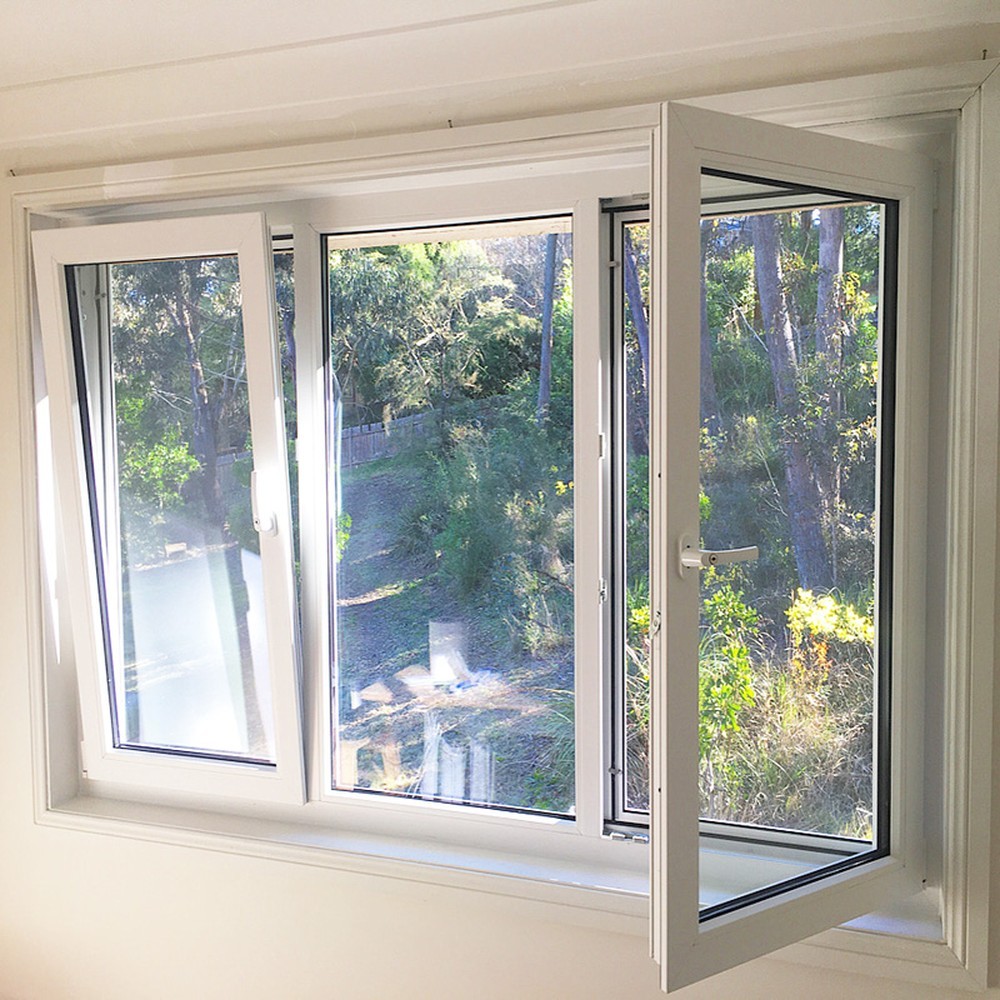
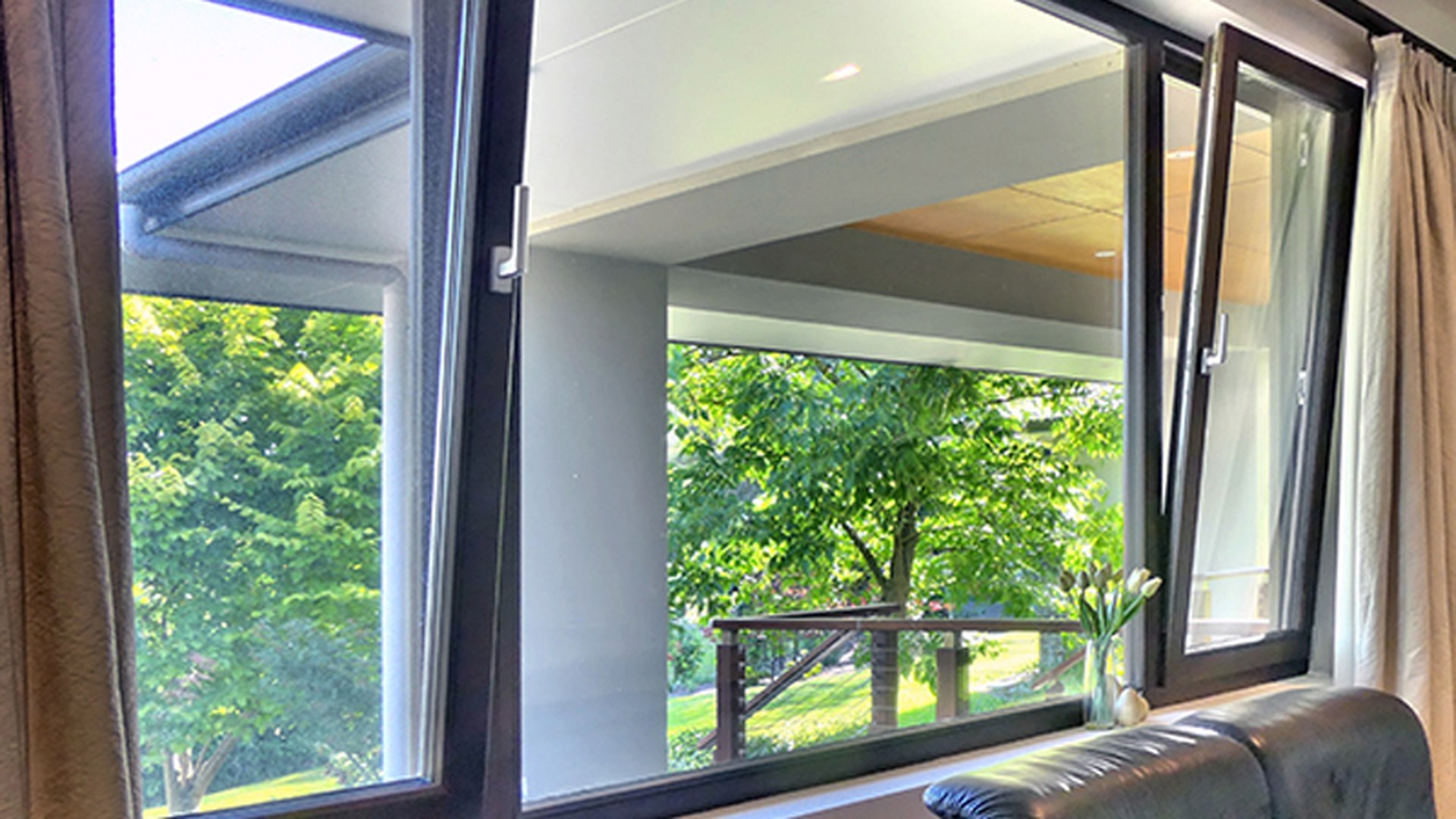
A tilt and turn window is a single sash hinged on one vertical side and carried on bottom hinges at the same time, driven by one handle through three positions. Handle down: the sash is locked. Handle at ninety degrees: the sash tilts inward at the top, hanging on the bottom hinges, and the opening is a slot across the head. Handle at one hundred and eighty degrees: the sash swings inward on the side hinges like a door. The same handle, the same sash, two completely different types of opening.
That arrangement is the default in Germany, Austria, Switzerland, Poland, the Czech Republic and most of Scandinavia, and it travelled with European specification into the Gulf, North Africa and much of the former Soviet market. It is unusual in Australia, New Zealand and North America, where the inward-opening sash conflicts with flyscreen conventions, egress rules and the habit of opening a window outward. So when a project says "European-style", it is usually saying three things at once: the sash opens inward, the hardware is a tilt and turn system rather than a casement hinge, and the air change is expected to happen through the tilt position rather than through a fully open sash.
Why the tilt position is a ventilation decision, not a convenience
Buyers who have not lived with the window tend to treat the tilt position as the "slightly open" setting. It is more specific than that. A tilted sash opens at the head, and the opening is a long, narrow slot above the glass line, so incoming air is thrown upward along the ceiling and mixes before it drops into the occupied zone. That is why a tilted window is comfortable in a bedroom at night and draughty in a room with a low ceiling: the air has somewhere to go before it reaches people. It is also why the tilt position is safe for a room occupied by children — the gap is at the top, not at the floor — and why it is the position most European households leave a window in for hours at a time.
The trade-off is security and free area. A tilted sash is held by the bottom hinges and the corner gear, not by a multipoint lock across the whole perimeter, so the resistance it offers an intruder is not the same as the resistance of a closed, locked window. Where a ground-floor room needs to ventilate while the house is empty, the answer is usually a restrictor, a lockable handle or a dedicated ventilation unit rather than leaving the sash tilted. The security side of that argument, including how locks, glass and screens are specified together, is covered in the window security guide.
What this guide covers, and what belongs on other pages
This page is a sourcing guide: which uPVC tilt and turn windows and aluminium equivalents are worth shortlisting, how the five routes to the product differ, and what to verify before a purchase order is raised. The window type itself — how the mechanism works, where it is used, the arguments for and against it, and the wholesale sourcing overview — is already set out in the complete guide to tilt and turn windows, and the handle fitting detail lives on the tilt turn window handle page and the uPVC tilt turn handle page. None of it is repeated here.
Three adjacent subjects also have their own pages. The outward-opening alternative is compared in the casement window guide, with the hardware families on the aluminium casement window range and the uPVC casement window range. Where a project wants a full-height opening rather than an inward-opening sash, that sits on the aluminium sliding window range or the uPVC tilt and turn door range. Fixed glazing beside the opening is on the aluminium fixed window range, and glass build-ups on the glass options pages. This guide only handles the buying decision.
The Five Tilt and Turn Window Manufacturers, Ranked for European-Style Work
The five tilt and turn window manufacturers below come up once the window is being bought as a working mechanism with a drawing and a hardware schedule rather than as a facade element. They are not the same kind of company, and that is the point of the list. One builds complete windows and sells them factory-direct. One builds complete windows and sells them through a partner network. One sells an aluminium system to fabricators. Two sell polymer profiles or systems to window manufacturers. All five put a tilt and turn window into the market; each does it from a different position in the chain, and that position decides who answers your questions and who carries the risk when a unit arrives wrong.
Two things about this list before you read it. First, the order is our judgement of fit for one specific job — tilt and turn windows procured for a European-style specification by an importer, a project buyer or a specifier working outside the manufacturer's home market — and it is not a ranking of size, quality or market position. A company lower down may be a far larger business than one above it. Second, we publish no capacity, revenue, staff or export figures for any company named here, including ourselves, because figures of that kind cannot be checked from outside the company. What follows is public, verifiable description of the role each company plays, plus the one or two things worth verifying with each.
1. ROPO Windows (China) — the factory-direct tilt and turn manufacturer
ROPO is an in-house door and window factory in Fuzhou, Fujian Province, China, that builds tilt and turn windows in both uPVC and thermally broken aluminium alongside its casement, sliding, awning, fixed and louvre ranges. For a European-style order the relevance is that the sash, the corner gear, the hinge side, the screen and the packing are handled by one party, so a change to the opening direction or the glazing weight does not become a negotiation between a system owner, a fabricator and a trader. The factory's window systems are tested to AS2047 and NZS4211, and the range includes Miami-Dade approved impact products for hurricane-zone buyers.
The tilt and turn range covers a thermally broken aluminium tilt and turn window, a uPVC tilt and turn unit in the European style and a double glazed aluminium tilt and turn window with a WERS certificate, which is the configuration most often asked for by Australian buyers who want the European mechanism in a market that does not use it by default. What to verify with ROPO, or with any factory claiming this position: which operations are genuinely in-house and which are bought in, who signs the inspection record on your order, and which test evidence attaches to the tilt and turn configuration you are quoting rather than to a casement in the same system.
2. Internorm (Austria) — the European window maker selling through partners
Internorm is an Austrian window manufacturer whose published programme is organised by material combination rather than by opening type: uPVC windows, timber-aluminium windows and uPVC-aluminium windows, all made to measure, with the company's own hardware and shading innovations sitting across the range. For a European-style opening that structure is useful, because the question a buyer actually faces is not "do you make a tilt and turn window" — the tilt position is the default in that market — but which material build suits the climate, the budget and the planning rules of the destination.
The route to market is the important part. Internorm sells through a network of sales partners rather than direct, and its own site directs buyers to a partner for quotation, so the entity answering a technical question may be a local dealer working from a catalogue rather than the factory that extrudes the profile. Verify with Internorm or its regional partner: which material combination and which design style the quote refers to, whether the sash hardware is specified by the factory or chosen by the partner, what documentation travels with an export order, and who holds the warranty in your country. For a buyer outside Europe, confirm the export route before the window type is discussed.
3. Schüco International KG (Germany) — the aluminium system house
Schüco is a German systems supplier, and its published aluminium window programme documents the opening types explicitly: the AWS system is described in the company's own system literature as a complete system of tilt turn, side hung and bottom hung inward opening windows. The AWS 75.SI system is published for punched openings, ribbon windows and façade insert units. For a specification-heavy project the value of a system house is documentation — the vent type, the hardware that drives it and the interface with the façade are described in one system manual, which is what a façade consultant or a certifier wants to read before accepting a submittal.
The trade-off is the route to market and the definition of "manufacturer". Schüco sells the system; the window is fabricated by an approved partner, so the party quoting you is a fabricator working to a manual, and the tilt and turn vent may be a configuration of a system rather than a catalogue product with a stock size. Verify with Schüco or its local partner: which system and which vent type are being quoted, whether the corner gear and the handle are inside the system scope or bought in by the fabricator, which partner will build the units, and who carries the installation responsibility when the reveal differs from the drawing.
4. REHAU (Germany) — the polymer system house with a tilt and turn window type
REHAU is a German polymer systems group whose window division publishes tilt and turn windows as a named window type in its own right, alongside casement, flush-fit, fully reversible and vertical sliding windows, with a colour range and a steel reinforcement programme behind them. It also publishes accreditation and specification material for specifiers and a design and ordering platform for its fabricators. The practical meaning for a buyer is that a tilt and turn window on REHAU profiles arrives through a fabricator who has bought into a documented system, which is a different proposition from a fabricator assembling from mixed sources.
What that route asks of you is precision in the enquiry: the profile system and the reinforcement have to match the sash size, and the tilt and turn hardware has to suit the sash weight the profile can carry. Verify with REHAU or the fabricator: which system is being quoted, whether the reinforcement is steel or an alternative, which hardware brand drives the corner gear, and whether the fabricator holds the accreditations for your destination market or only for its home market. REHAU's published material is aimed at the trade, so the answers usually come from the fabricator rather than the group.
5. VEKA (Germany) — the PVC profile supplier behind fabricated windows
VEKA is a German extruder of PVC profile systems for windows, doors, roller shutters and sliding doors, with more than fifty years of profile production behind it by its own account, and it publishes its profile systems by series rather than by window type. It does not sell a finished window: the tilt and turn window on a VEKA profile is fabricated, glazed and assembled by a window manufacturer, and VEKA supplies the profile, the surface finishes and the technical documentation that the fabricator builds to.
That makes VEKA the right name to know when the real question is "which profile is behind this quotation", and the wrong name to put on a purchase order. Verify with the fabricator: which VEKA series is being used, whether the reinforcement matches the sash size and the glazing weight, which tilt and turn hardware is being fitted to that profile, and whether the finished window — not the profile — carries the certificate your market requires. A profile certificate and a finished-window certificate are not the same document, and on an import order the difference decides whether the units can be signed off on site.
Which of the five fits which project
| Manufacturer | Role in the chain | Tilt and turn range as published | Best fit |
|---|---|---|---|
| ROPO Windows (China) | Window manufacturer, factory-direct, MOQ one unit | uPVC and thermally broken aluminium tilt and turn windows, tested to AS2047 / NZS4211, WERS-certificated aluminium units, Miami-Dade impact products in the range | Import programmes and custom projects where the buyer controls the drawing and wants one party for sash, hardware, screen and packing |
| Internorm (Austria) | Window manufacturer, sold through a sales-partner network | Made-to-measure windows in uPVC, timber-aluminium and uPVC-aluminium, organised by design style, with the company's own hardware and shading innovations | European projects that need a recognised brand, a local partner and a material build matched to climate and planning rules |
| Schüco (Germany) | Aluminium system house, sold through approved fabricators | AWS aluminium window programme documented as tilt turn, side hung and bottom hung inward opening windows; AWS 75.SI published for punched openings, ribbon windows and façade insert units | Commercial and façade work where the vent is one part of a documented system and a consultant has to accept the submittal |
| REHAU (Germany) | Polymer system house, sold through fabricators | Tilt and turn windows published as a named window type alongside casement, flush-fit, fully reversible and vertical sliding ranges, with colour and reinforcement programmes | Projects that want a documented polymer system and a fabricator accountable for build quality in the destination market |
| VEKA (Germany) | PVC profile extruder, windows fabricated by partner manufacturers | Profile systems for windows and doors published by series; the finished tilt and turn window is built by the fabricator | Buyers specifying or auditing the profile behind a quotation, and fabricators choosing a profile platform |
How to use this list
Comparing tilt and turn window manufacturers starts with deciding which role you need. If you are buying a container of windows against your own drawing, you want a manufacturer and the argument is about tooling, hardware and inspection. If you are buying into a European brand for a local project, you want a manufacturer with a partner network and the argument is about the partner's competence and the warranty chain. If you are building a façade package, you want a system house and the argument is about documentation. If you are auditing a quotation you have already received, you want the profile supplier and the argument is about whether the profile can carry the sash you have specified. Comparing a profile price with a finished-window price is the most common mistake in this category, and it is not a price comparison at all.
Shortlist two, not five, and compare them on the same four questions: the vent type and hardware they are quoting, the screen or shading package inside the rebate, the glazing weight the hinge side is rated for, and the person who signs the inspection record. A comparison run that way settles in one meeting. A comparison run on price per square metre, for European tilt turn windows, tends to settle in a variation order six months later.
How the Tilt and Turn Mechanism Changes What You Specify
Every window type has one part that decides whether it works, and on this type it is the hardware sequence rather than the profile. A tilt turn windows supplier can offer the same profile, the same glass and the same colour as its competitor and still deliver a window that leaks air at the corner because the corner gear was set up wrong, or that jams after a year because the sash was glazed heavier than the hinge side was rated for. The three characteristics below are what separates a working window from a catalogue photograph.
One handle, three positions, and a sequence that must not be forced
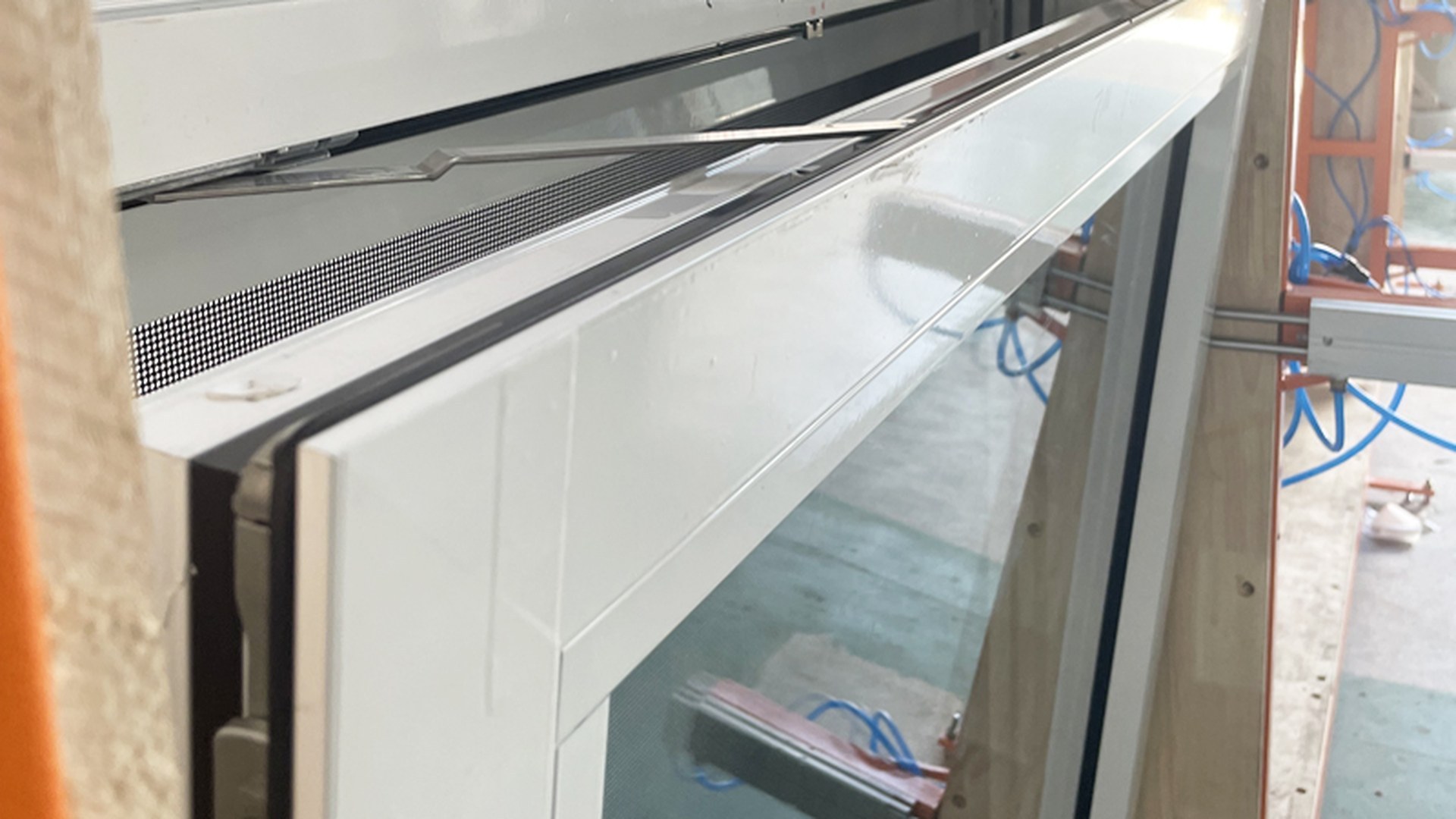
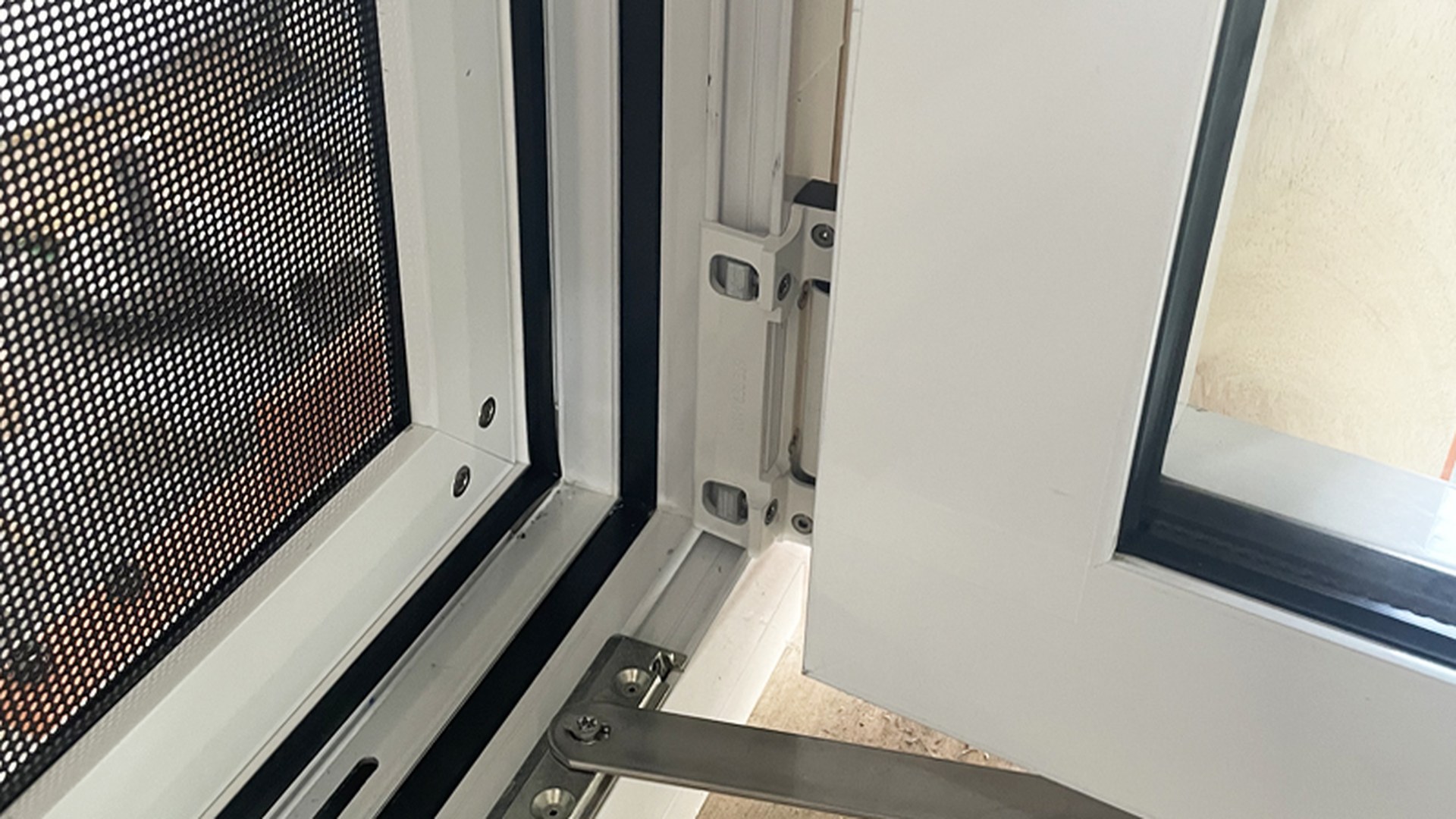
The handle drives an espagnolette — a continuous bar of locking points running around the sash — through a corner gear at each corner. In the locked position the points pull the sash onto the frame gasket all the way round. Turn the handle to the ventilation position and the bottom hinges take the sash while the top corner releases, so the sash leans in at the head. Turn it fully and the side hinges take over and the sash swings in like a door. The mechanism is mechanically interlocked so that only one of those two openings can happen at a time, and the interlock is what fails first when the window is abused: a user who tries to swing a sash that is still in the tilt position, or who forces the handle past its stop, bends the corner gear or strips the strike plates.
That has three consequences for a buyer. First, the hardware brand and its document set matter more than the profile brand, because the interlock, the hinges and the espagnolette are what the user touches every day. Second, the handle must be specified with the restrictor or the child-safety function in the same conversation, because a handle that can be locked in the tilt position is a different product from one that cannot. Third, the installation has to be square: a tilt and turn sash is much less forgiving of a twisted frame than a casement, because the corner gear needs the sash to sit evenly to engage. If the units are going to a site where the openings are built by others, the frame tolerance belongs in the contract, not in a site instruction afterwards.
The tilt position moves air at the head, not at the floor
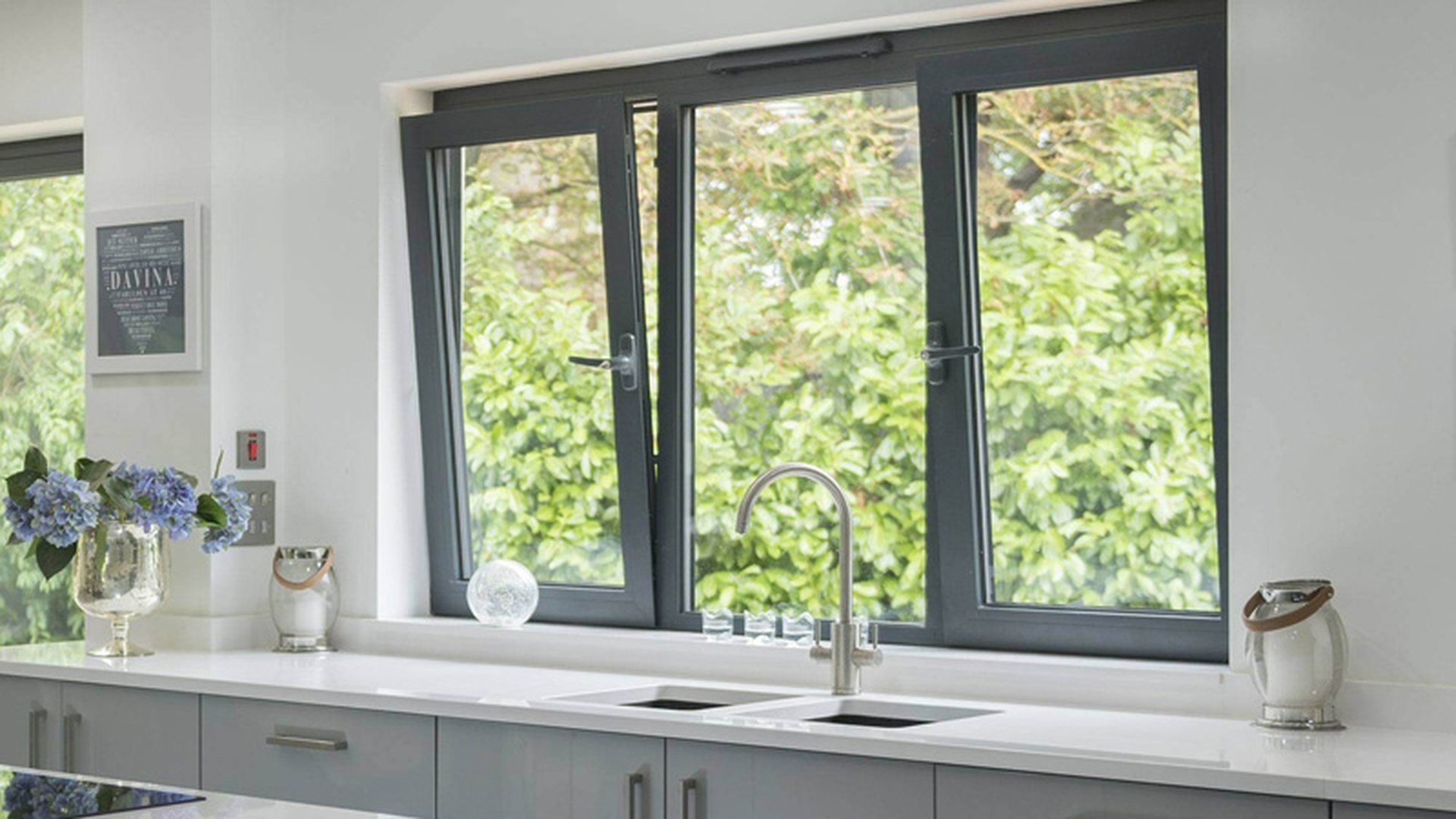
A tilted sash opens at the top, so the vent slot sits above the glass line and the incoming air is directed upward. In a room with a normal ceiling that means the air mixes before it reaches anyone sitting down, which is why the position is comfortable for sleeping and for a room occupied for hours. It also means the tilt position does very little for a room that needs air at floor level, such as a plant room with heat sources low down, or a room where the ceiling is close above the window head and the incoming air has nowhere to go.
Two numbers decide whether the tilt position is useful in a given room: the gap the sash opens to, and the free area that survives the screen. A flyscreen across the opening reduces the effective free area, and a fixed screen in front of a tilted sash also blocks access to the handle, which is the most common usability failure on this window type in markets where screens are standard. Where the window is expected to ventilate continuously — a bathroom, a kitchen, a bedroom in a warm climate — the screen needs an access flap, a retractable screen, or a handle position that stays reachable with the screen in place. Ask for a photograph of a finished unit with the screen fitted and the handle operated, not a rendering.
What tilt and turn windows are bad at
Three things, stated plainly. First, egress: an inward-opening sash is not a rescue opening in most codes, so a bedroom that must provide one needs a different type on that wall — which is exactly why the type never became standard in Australia and North America. Second, outward views and flyscreens: the sash opens into the room, so curtains, blinds, furniture and screens all have to be planned around its swing, and in a small room a fully turned sash can be genuinely in the way. Third, very large sashes: as the sash grows, the hinge side carries more weight, the corner gear has to drive more locking points, and the unit stops being a standard product. Where a project wants a wide opening to a terrace, a sliding window, a lift and slide door or a tilt and turn door is usually the better answer, and where the priority is weather-protected airflow with the sash opening outward, an awning window does the job that a tilt position does on this type.
uPVC or Aluminium, and the Four Other Decisions That Set the Price
Five decisions sit above price on a tilt and turn window, and they are usually made in the wrong order. The material decides how large the sash can be and how the frame behaves thermally; the glazing decides how much weight the hinge side carries; the hardware decides how the sash is driven and how well it resists being forced; the screen or blind decides whether the opening is usable; and the certification decides whether the unit can be signed off at all. The tilt and turn window systems sold factory-direct are configured in that order, and a bespoke order that skips a step tends to come back as a site problem.
uPVC or thermally broken aluminium
uPVC is the default for this window type in Europe for good reasons: the profile conducts little heat, the multi-chamber section carries reinforcement where it is needed, the corner is welded rather than mechanically jointed, and the price suits the volume residential market where tilt and turn dominates. Its limits show up on large sashes, on dark colours in hot climates, and on specifications that want a slim sightline — a uPVC frame is deeper front to back than an aluminium one at the same performance level, and colour is usually a foil or laminate rather than a painted or anodised finish.
Aluminium gives a slimmer sightline, a wider size range, a much broader finish palette and better behaviour on large sashes, but only when it is thermally broken — an unbroken aluminium frame conducts, and on an inward-opening sash the cold bridge sits exactly at the point where the room-side surface is coldest, which is where condensation appears first. On a European-style order the practical question is therefore not "uPVC or aluminium" but "uPVC, or thermally broken aluminium at a higher price for a slimmer frame and a larger sash". Both are built the same way: by opening size, hardware and glazing weight. The material comparison across the whole catalogue, including how the two behave in different climates, sits on the uPVC material and colour pages and the aluminium window section.
Glazing weight and the hinge side
The single most common specification error on this window type is a glazing upgrade that nobody re-checked against the hinge side. A double-glazed unit, a laminated pane for safety or acoustics, or a triple-glazed build-up adds weight, and on a tilt and turn window that weight is carried by two bottom hinges and a hinge side that also has to allow the sash to swing. The hardware has a rated capacity, the profile has a reinforcement limit, and the two are not the same number. When a buyer asks for a heavier glass build-up, the correct answer is not "yes" but "yes, at this sash size, with this hinge set".
Three glazing decisions travel with the weight question. Laminated glass on the room side is worth specifying where the window is at low level or where the room is a bedroom, because the tilt position puts the glass within reach of a child. Acoustic build-ups change the frame interface, because a heavier unit needs a deeper rebate and a different gasket compression. And solar control matters more than it looks on an inward-opening sash, because the glass is shading the room rather than the outside of the building. The glass options themselves are set out on the glass options pages, and the acoustic route is on the uPVC sound proof window range.
Standard, concealed or security-rated hardware
Tilt and turn hardware comes in three practical levels. Standard visible hardware puts the hinges and the espagnolette on show and is the cheapest and the easiest to service. Concealed hardware hides the hinge side inside the frame and gives a clean sightline, at a higher price and with a stricter installation tolerance — a concealed hinge on a frame that is out of square is a service call. Security-rated hardware adds mushroom cams and a locking sequence designed to resist levering, and is normally specified with a laminated or security-glazed unit; the two make sense together or not at all.
Whichever level is chosen, ask for the hardware brand and the manufacturer's own document for the configuration, not just a brand name. The hardware page lists the families used across this range, and the maintenance routine that keeps a tilt and turn mechanism working — cleaning the drainage slots, lubricating the moving points, checking the hinge screws — is the same as for any opening window and is set out in the windows and doors maintenance guide.
Screens, blinds and what fits in the rebate
An inward-opening sash leaves the outside face of the frame free, which is why this window type suits external screens and external shading better than an outward-opening one: the screen can be fixed outside without interfering with the sash. Internal blinds are the other route, and an integral blind sealed between the panes avoids the dust and cord problems of a hung blind, at a price. What does not work is a fixed internal screen in front of an inward-opening sash unless the handle stays reachable — the same failure described above, and the one most often discovered after installation.
The specification question to settle early is therefore: is the screen or blind inside the rebate, outside the frame, or between the panes? Each answer changes the frame depth, the reveal, and who supplies what. Where the window is expected to be open for long periods in an insect-heavy climate, the screen is not an accessory and should be quoted with the window rather than added at the end.
Certification: which document covers which unit
Certification is where European-style specifications and non-European destinations collide. A tilt and turn window sold in Europe is covered by the CE marking regime and by national test evidence; a window sold into Australia is assessed against AS2047; a window sold into New Zealand against NZS4211; into North America against NFRC and, in hurricane zones, against Miami-Dade or Florida product approval. None of those documents transfers automatically to a different configuration, a different size, a different glazing build-up or a different hardware set. The relationship between the two southern-hemisphere standards is explained in AS2047 versus NZS4211, and the North American set in the NFRC, ENERGY STAR and Miami-Dade guide.
So the question to put to any manufacturer is narrow and answerable: "which certificate covers this exact tilt and turn unit, at this size, with this glass and this hardware". A supplier who answers with a system name, a profile brand or a brochure page has not answered it. The certificate that matters is the one issued for the tested configuration, and the evidence has to travel with the order.
| Decision | The cheap answer | The answer that survives | What it changes |
|---|---|---|---|
| Frame material | uPVC in a standard section | uPVC with reinforcement matched to sash size, or thermally broken aluminium for large sashes and slim sightlines | Maximum sash size, condensation risk, finish options |
| Glazing | Standard double-glazed unit | Build-up re-checked against hinge rating, laminated on the room side where reachable | Hardware capacity, rebate depth, gasket compression |
| Hardware | Visible hinges, basic espagnolette | Branded system with documented interlock, security cams where the room needs them | Security, service access, installation tolerance |
| Screen or blind | Added after the windows arrive | Specified with the window: external screen, integral blind, or internal with a reachable handle | Rebate depth, frame depth, handle reach |
| Certification | System or profile certificate | Certificate for the tested configuration, size and hardware, supplied with the order | Whether the units can be signed off on site |
Ten Questions to Ask a Tilt and Turn Window Manufacturer
Ten questions separate a supplier who can deliver a working tilt and turn window from one who can deliver a frame with two opening modes and a handle. Ask them in this order, in writing, before a drawing is issued. They apply to tilt and turn window manufacturers in Europe, the Gulf and China alike; what changes is the document set, not the questions.
- Which hardware system are you quoting, and what sash size and glazing weight is it rated to drive?
- Is the bottom hinge and the hinge side sized for that weight, and what is the maximum sash you will build in this configuration?
- How is the interlock between the tilt and the turn position implemented, and what stops a user forcing the handle?
- What is the frame depth, how does the unit sit in the wall, and where does water leave the frame?
- Which glazing build-up is quoted, and is the room-side pane laminated where the glass is reachable?
- What screen or blind is supplied, and is the handle still reachable with it in place?
- What restrictor, child-safety catch or lockable handle is included, and what gap does it leave?
- Which test evidence covers this exact tilt and turn configuration, size and hardware?
- What is excluded — reveals, sills, flashing, installation, screens, restrictors, internal trims?
- Who signs the inspection record on my order, what does it cover, and how is the unit packed?
Three things you can check without the supplier
First, the arithmetic: multiply the sash area by the glazing weight and compare it with the hardware the quote describes. A hinge set quoted on a sash far heavier than the units it normally drives is a question, not a bargain. Second, the handle and the screen: ask for a video of a finished unit being tilted, locked and turned with the screen fitted. If the answer is a rendering or a showroom unit without a screen, the detail has not been built. Third, the paper trail: a supplier who can send a hardware schedule, a test report and a packing list before the order has the documents; a supplier who says documents follow the goods does not yet have them.
One more check is worth the effort on a project with many identical units: ask what happens to a unit that arrives with a bent hinge or a damaged corner gear. A factory that can supply a replacement sash and hardware set against the original unit number is a different proposition from one that only sells complete windows, and the answer tells you how the order was recorded.
Samples, mock-ups and the first order
Order one unit before the main order, and operate it more times than feels reasonable: tilt it, lock it, turn it, close it, and do it again. Check that the handle moves through its three positions without binding, that the sash holds in the tilt position without drooping, that the corner gear engages at every locking point, that the hinges do not squeal, that the screen does not foul the sash, and that water put into the bottom rail finds a way out. Then check the label: a unit marked with the order number, the position and the opening direction was built against a drawing rather than picked from a stack. The sample process itself is covered in how to test a window supplier before you commit, and the same logic applies to the custom tilt and turn windows in this range: MOQ is one unit precisely so this test is affordable.
Where a project has a repeated condition — a hotel elevation, a school façade, an apartment stack — build a mock-up of the worst case rather than the typical one. On this window type the worst case is usually the tallest sash on the most exposed elevation, because that is where hinge load, wind load and user behaviour all arrive at once.
About ROPO Windows
ROPO Windows is a door and window manufacturer based in Fuzhou, Fujian Province, China, with 16 years in the trade and customers in more than 100 countries. The factory builds aluminium and uPVC windows and doors, and the tilt and turn range runs through the same profile preparation, glazing, hardware assembly and export packing operation as the rest of the catalogue, which is why a project can order tilt and turn windows, fixed glazing and doors against one colour schedule and one shipment.
Commercial and import buyers usually want four things from a factory before they commit, and all four are answered here rather than in a sales call. The first is a warranty: ROPO products carry a 10-year warranty. The second is a minimum order small enough to test: MOQ is one unit, so a sample tilt and turn window can be bought, opened, tilted and inspected before any volume order. The third is certification, and it needs to be stated precisely — our window systems are tested to AS2047 and NZS4211 and the range includes Miami-Dade approved impact products, but each approval attaches to the tested configuration and product it was issued for, so the evidence supplied must match the tilt and turn unit, size and hardware you are ordering rather than the system name on the brochure. The fourth is payment protection: orders can be placed under Trade Assurance, with the terms recorded in one place.
Where the tilt and turn window sits in the range
The tilt and turn family covers the cases that generate most European-style enquiries. uPVC frames are listed on the uPVC tilt and turn window range, thermally broken aluminium frames on the aluminium tilt and turn window page, and the tilt-only variant — a sash that opens at the head but does not swing — on the uPVC tilt window range and the aluminium tilt window range. Three configurations are commonly specified: a thermally broken tilt turn window with triple glazing for cold or noise-exposed sites, an AS2047 uPVC tilt and turn unit for Australian projects, and an AS2047 aluminium tilt and turn window where the specification is written around a slim aluminium frame.
The wider range matters when one room needs more than one opening type, which is normal on this window: a European elevation usually pairs a tilt and turn vent with a fixed pane, and a balcony often needs a tilt and turn door rather than a window. Those combinations sit on the custom aluminium windows and custom uPVC windows ranges, the door equivalents on the aluminium tilt and turn door range and the uPVC tilt and slide door range, and the fixed panes beside them on the aluminium fixed window range. Where a project needs a Passive House envelope, the tilt and turn units are specified against the same standard as the rest of the range, listed on the uPVC passive house window range.
What a factory-direct order does and does not remove
Buying factory-direct removes a layer of markup and a layer of interpretation between the drawing and the product. It does not remove the engineering. The hardware system, the sash weight, the screen interface and the local approval still have to be resolved, and on an import order the party responsible for installation is still the installer on site. What changes is who answers: one manufacturer answers for the profile, the glass, the hardware, the screen and the packing, and the answers come from the people who made the parts. That suits buyers with a competent installer and a clear drawing, and it is the wrong route for a project that needs a local warranty holder on the same street.
Custom Production Process
Every tilt and turn order starts from a drawing and a set of opening sizes, not from a stock list. The process below is the one used for the windows and doors built in the Fuzhou factory, and it is deliberately the same for a one-unit sample and for a container.
From drawing to released production
The first step is a drawing review: the opening sizes, the frame depth, the reveal, the handing, the hardware system, the screen or blind and the finish are checked against what can actually be built. Anything ambiguous is returned as a question before production is released, which is why a first order with a clear schedule moves faster than one with a rough sketch. Sash size against hardware rating is checked at this stage rather than after cutting, because on a tilt and turn window it is the one mistake that cannot be corrected later without rebuilding the sash.
Profiles are then cut, machined for drainage and for the hardware — and on this window type that machining is the critical operation, because the corner gear and the hinge pockets have to be positioned so that the sash closes evenly on all four sides — and assembled, welded for uPVC and mechanically crimped for aluminium, with the corner and drainage details inspected before glazing. Glass is cut to the released sizes with the edge condition and spacer specified, the sash is glazed and checked for weight against the hardware schedule, and the handle, hinges and espagnolette are fitted to the released positions. Units are dry-fitted before packing so that the sash tilts and turns on the bench, not on site.
Five-step quality control
Inspection runs in five stages: incoming material and glass check, dimensional check against the released drawing, assembly and hardware check including a full tilt–lock–turn cycle, finish and screen check before packing, and a final packing and marking check against the order list. Each stage is recorded against the order, and the record travels with the shipment, so a question raised after arrival can be traced to the stage that handled it. Personnel numbers are not published; what is published is the sequence, because the sequence is what a buyer can audit. The certification that sits behind the process is documented on the quality and certification page, the hardware families on the hardware page, and the factory itself on the factory page.
Traceability and the documents in the crate
Every unit is labelled to the order and to its position in the installation, with the handing and the opening direction marked, so a site does not have to identify a window by measuring it. The packing list, the inspection record and the finish schedule are packed with the goods rather than emailed separately, which matters when the receiving party is not the person who placed the order. On a European elevation the label is also what keeps the sequence right on the floor: the tilt and turn vent that belongs beside a fixed pane has to be identifiable before anything is lifted into place.
Packaging and Shipping
A tilt and turn window is harder to pack than a fixed window and easier than a lift and slide door, because the sash is a moving part with a mechanism attached and a handle standing proud of the frame. The method below is the one used on export orders from Fuzhou, and it is also the part of a quotation that tilt and turn window manufacturers most often leave undescribed.
How a tilt and turn window is packed
Units leave the factory with the sash closed and locked, so that the corner gear is in its engaged position and the sash cannot travel against the frame in transit. The handle is either protected in place or packed separately and labelled, because a handle that takes a knock in a container can bend the spindle and turn a five-minute site job into a hardware replacement. Corners take corner protectors, the frame is wrapped against abrasion, and units are stood or crated so that they cannot flex — a tilt and turn frame that has been allowed to rack in transit will not tilt cleanly on site even if nothing is visibly damaged.
Two packing details are worth writing into the purchase order. First, whether loose hardware, restrictors and screen fittings travel in a labelled bag inside the crate or in a separate carton; on a project with many identical units, a missing bag of restrictors stops a whole elevation. Second, whether screens ship fitted or flat-packed separately, because a screen packed against a tilting sash is a screen that arrives with a crease in the mesh.
Ports, containers and payment protection
Shipments leave from Fuzhou or Xiamen, by full container or as LCL cargo consolidated with other orders, and the route is chosen against the destination port and the construction programme rather than by default. Windows are bulky and light relative to their volume, so the loading plan is about protecting the units and about the order of unloading — the elevations needed first should be the last loaded. For a mixed order, tilt and turn windows are usually crated with the fixed glazing for the same room so that a floor can be closed out in one delivery.
Orders can be placed under Trade Assurance, which keeps the payment schedule and the delivery terms in one record. That is useful when the windows, the doors and the screens are bought together and the programme depends on them arriving as one shipment. The commercial detail — what a container holds, how LCL is consolidated and how payment terms are staged — is covered in the guide to importing windows and doors from China, the pricing structure in custom window pricing explained, and the warranty terms on the warranty list.
Tilt and Turn Window Sourcing FAQ and Quote Request
Can I buy a single tilt and turn window as a sample?
Yes. MOQ is one unit, which is how most buyers start: one window with its hardware and screen, tilted and turned on the bench before the main order is placed.
Do AS2047 or Miami-Dade approvals cover every tilt and turn window you make?
No. Those approvals attach to the specific tested configuration and product they were issued for. The evidence we supply has to match the tilt and turn unit, size and hardware in your order, and we state that plainly rather than let a system certificate imply blanket coverage.
Is a tilt and turn window suitable for Australia or North America?
It can be built to those standards and it is used in both markets, but it is not the local default: the inward-opening sash conflicts with flyscreen conventions and with egress rules in some jurisdictions. Check the egress requirement for each room before choosing the type, and confirm which certificate the finished unit carries, not which certificate the profile carries.
Which hardware should I choose for a large or heavy sash?
A branded system whose published capacity covers the sash size and the glazing weight you have specified, with the hinge side and the bottom hinges confirmed by the factory rather than assumed. Where the glass is laminated or triple-glazed, re-check the hardware rating: the upgrade that adds weight is the one that most often goes unchecked.
Can the window be left tilted for ventilation?
Yes, that is what the position is for, and it is comfortable because the air enters at the head and mixes before it reaches the room. It is not a security position: a tilted sash is held by the bottom hinges and the corner gear, so a ground-floor room that needs to ventilate while empty is better served by a restrictor or a lockable handle.
How do I keep the mechanism working?
Clean the drainage slots, lubricate the moving points once a year, and check the hinge screws and the corner gear engagement. The routine is the same as for any opening window and is set out in the windows and doors maintenance guide; the handle fitting detail is on the uPVC tilt turn handle page.
What do you need for a quotation?
Send the opening schedule with width, height and sill height for each unit, the wall construction and reveal depth, the handing and opening direction of each sash, the hardware system you want, the screen or blind type, the glazing requirement, the finish, the destination port, and whether the order is a sample, an LCL shipment or a container. Sizes are measured to the opening, and the difference between hole size and frame size is explained in how to measure window and door openings.
For a project already in progress, the fastest route is to send the schedule and let us come back with a hardware recommendation, a screen detail and a quotation against it. Most tilt and turn window manufacturers will price from a schedule; fewer will come back with the hinge rating and the screen interface already resolved, which is the part of the quote that decides whether the units work on site. If the tilt and turn windows are part of a larger package — fixed glazing, doors, or a commercial elevation with a documented programme — say so in the first message: commercial and multi-unit sourcing runs on different paperwork, and the tilt and turn window factory quotation is cheaper to coordinate before either package is drawn than after both are released. The quickest starting point for a single window is the quick selection and quotation form.